
Agriculture and Climate Change (Commonwealth Union) _ The latest report from the World Meteorological Organization (WMO) has unveiled alarming trends in climate indicators, with records being broken or exceeded across various parameters. The WMO’s State of the Global Climate 2023 report highlights unprecedented levels of greenhouse gases, surface temperatures, ocean heat, and acidification, among other concerning phenomena.
The report paints a grim picture of the impact of climate change, with heatwaves, floods, droughts, wildfires, and intensifying tropical cyclones wreaking havoc worldwide. These extreme weather events have disrupted the lives of millions and resulted in significant economic losses amounting to billions of dollars.
According to the WMO, 2023 marked the warmest year on record, with the global average near-surface temperature surpassing the pre-industrial baseline by 1.45 degrees Celsius. This temperature increase is the highest observed in the past decade.
UN Secretary-General Antonio Guterres emphasized the urgency of the situation, stating that climate change is pushing the world closer to the lower limit of the Paris Agreement’s target of limiting global warming to 1.5 degrees Celsius.
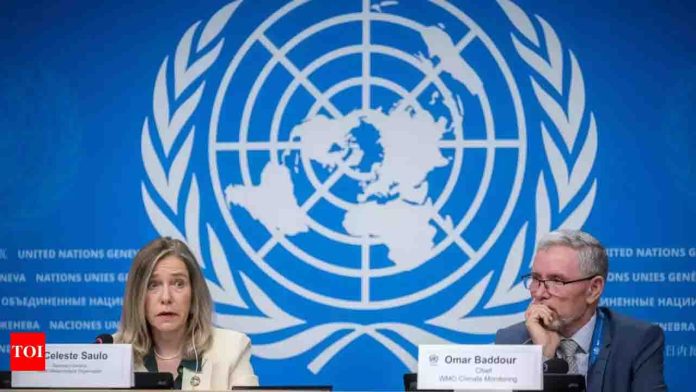
WMO Secretary-General Celeste Saulo echoed these concerns, emphasizing the need for immediate action in response to the unprecedented climate trends observed in 2023. She highlighted the alarming levels of ocean warmth, glacier retreat, and Antarctic Sea ice loss as particularly worrisome.
The report revealed that nearly one-third of the global ocean experienced marine heatwaves on an average day in 2023, posing significant threats to marine ecosystems and food systems. By the end of the year, over 90% of the ocean had been affected by heatwave conditions at some point.
Furthermore, the global set of reference glaciers recorded the largest loss of ice since 1950, driven primarily by extreme melt in western North America and Europe. Antarctic sea ice extent also reached a record low, with the maximum extent at the end of winter shrinking by 1 million km2 compared to previous years.
Saulo emphasized the interconnected nature of the climate crisis and other global challenges, such as inequality, food insecurity, population displacement, and biodiversity loss. She called for urgent and concerted efforts to address these pressing issues and mitigate the impacts of climate change on a global scale.