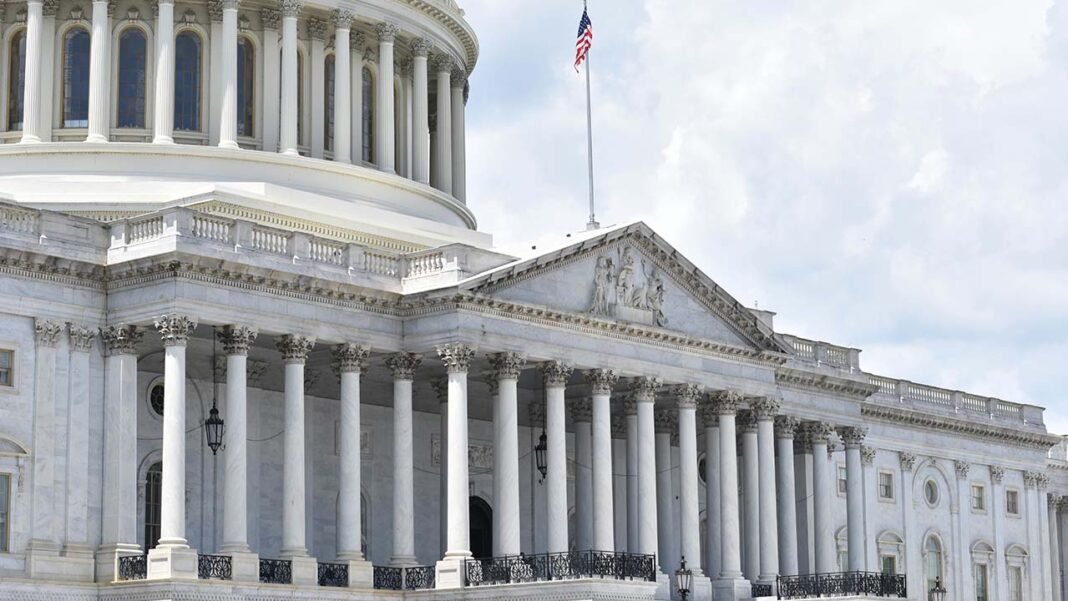

President-elect Donald Trump and Republican leaders in Congress are exploring the use of budget reconciliation to advance strict immigration and border security plans, bypassing typical Senate rules that would require Democratic support; a move that aims to tackle one of Trump’s top priorities: reducing the flow of migrants across the U.S.-Mexico border through increased border wall construction, a larger Border Patrol workforce, and tighter controls on how migrants can apply for asylum. Using reconciliation would enable Republicans to push through these reforms with only a simple majority in the Senate, thus sidestepping a potential Democratic filibuster.
However, a major obstacle remains with Senate Parliamentarian Elizabeth MacDonough enforcing the Senate’s Byrd Rule, limiting budget reconciliation to provisions with a direct impact on government spending or revenue. While funding for the border wall, increased detection technologies, and additional Border Patrol agents could likely fit these criteria, other core immigration reforms in the GOP’s Secure the Border Act (H.R. 2) may not. For instance, the reconciliation process could disqualify tightening asylum standards and restricting parole powers as “incidental” to budget impact.
While it would be controversial, several Republicans are considering challenging the parliamentarian’s decision if she rules against including these measures as a way to expedite Trump’s immigration priorities. However, overruling the parliamentarian rules risks setting a precedent that Democrats could later use to bypass procedural safeguards on other issues.
In recent correspondence, multiple GOP leaders emphasized that securing the border is a top priority for the new administration, arguing that durable legislative changes are needed to prevent future administrations from reversing these policies and returning to more lenient immigration practices. Mark Krikorian of the Center for Immigration Studies agreed with this reasoning, highlighting that legislative reforms would offer stability over executive actions, which can be undone by a new administration.
As Republicans gear up to seize control of the Senate, Trump’s allies are elevating border security to the forefront of their legislative agenda. They aim to implement long-lasting reforms aimed at reducing border crossings and reforming the asylum process, seeing this as a unique chance to tackle the nation’s divisive immigration debate. This push, however, will ultimately depend on how far Republicans are willing to stretch Senate rules and procedural norms to fulfill Trump’s agenda.