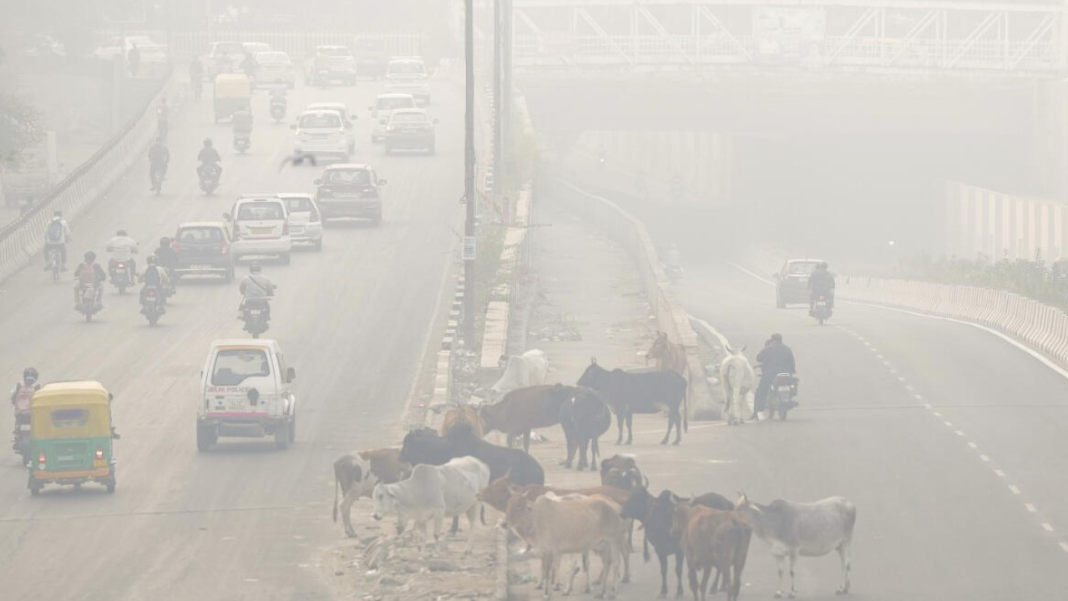

Delhi, the national capital of India, witnessed the worst air quality on Tuesday with AQI (AIr Quality Index) plunging into the ‘severe’ category at 423. It continued to remain in the ‘severe’ category on Wednesday morning (November 12, 2025) for the second day with AQI reading at 414. The Central Government has applied strict ani-pollution measures under stage III of the Graded Response Action Plan (GRAP) in the wake of deteriorating air quality.
Each winter, New Delhi’s skyline turns a gray, air becoming the enemy for millions, with stinging eyes, slowing down transportation, closing down schools and surging respiratory cases in hospitals.
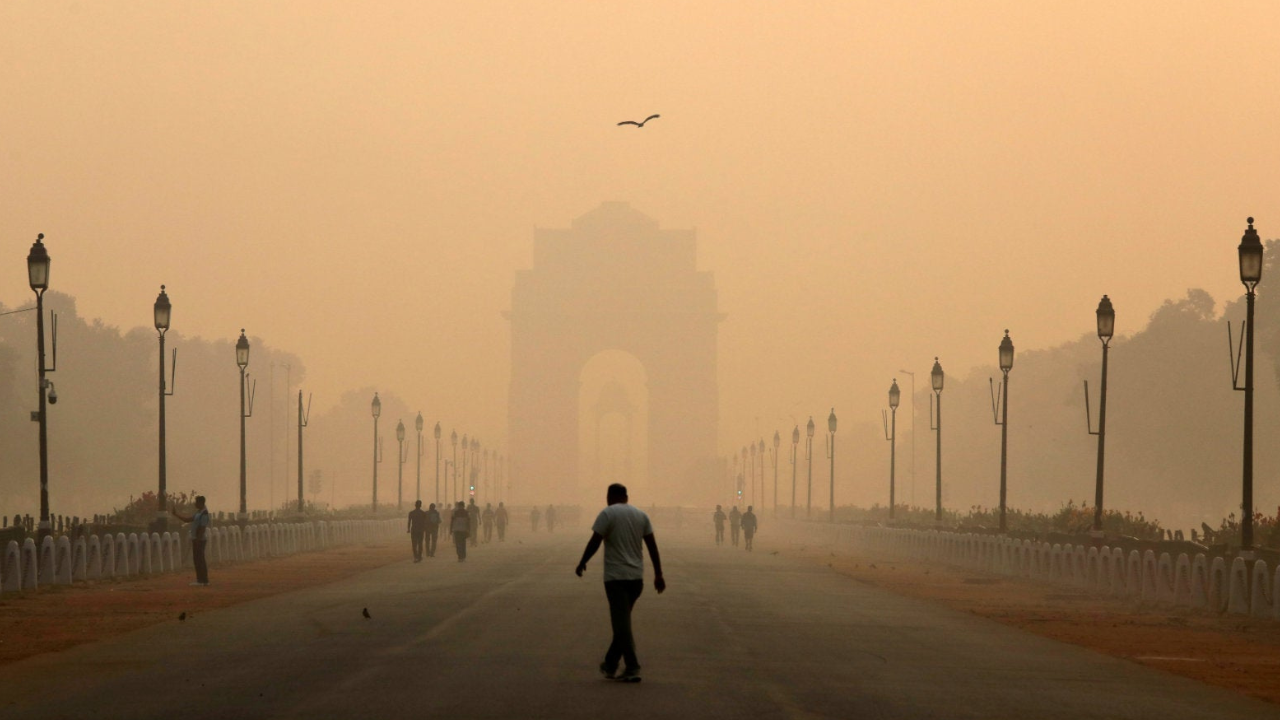
In Delhi the smog season span from late October to February with November to January being the worst months.
Why does this happen? This is the post-monsoon crop residue burning season in Delhi especially in Punjab and Haryana. These seasonal agricultural fires add pollutants to the atmosphere while the cooler temperatures and calm winds during the season trap pollutants near the ground, leading to the first thick smog episodes over Delhi and the Indo-Gangetic Plain. In December and January, visibility often drops sharply and air quality frequently falls into the severe or hazardous category, marking the peak smog period. Millions of residents in Delhi should await February winds and the rise of temperature to see disperse of pollutant.
Manageable haze turns to international crisis
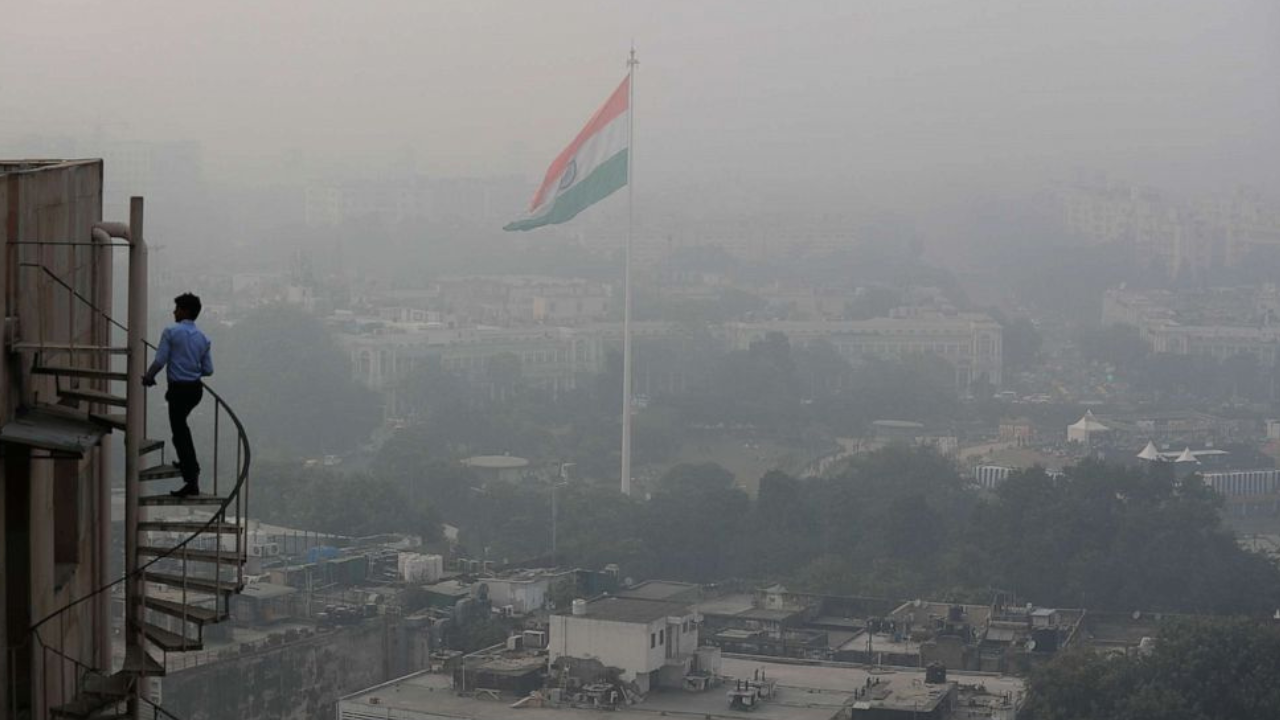
Late 20th century as Delhi’s population, vehicles and industries began to expand, the air quality began deteriorating noticeably. Early policy changes like bans on leaded petrol and the 1998 Supreme Court-led push to convert public transport to CNG brought about temporary improvements. Yet they were soon outpaced by vehicle growth, construction dust and urban expansion. By the year 2010, Delhi’s winter Air Quality Index spikes turned into a public-health emergency. Long-term studies show PM2.5 levels exceed India’s national standards on a large share of days, and wintertime inversions trap pollutants near the surface, turning a mix of emissions and smoke into thick, health-threatening smog.
The toxic convergence
Why winter gets so bad in Delhi? Several factors contribute to create the infamous Delhi smog. The list is headed by local emissions. Millions of vehicles including many old, high-emission cars, construction dust, diesel generators and industrial sources add primary particulates and nitrogen oxides into the atmosphere.
Next is the seasonal agricultural burning. After harvest, farmers especially in Punjab and Haryana burn rice stubble to clear fields quickly. The plumes of smoke emanated by the burning travel 300–600 km and form a massive blanket of fine particulates. Then the cooler nights and a temperature-inversion layer during winter prevent vertical mixing and keep the pollutants at breathing level.
Regional transport is another contributor to the creating of the Delhi smog. Pollution does not have borders. Thus, emissions from across the Indo-Gangetic Plain also add to Delhi’s burden.
The human and economic toll
Air pollution is not just another statistic. The Global Burden of Disease and Lancet analyses show fine particulate matter (PM2.5) in the outdoor air is leading to a major environmental risk factors. These tiny pollution particles smaller than 2.5 micrometers can penetrate deep into lungs and even enter bloodstream. It leads to hundreds of thousands of premature deaths annually across the country. Children, the elderly and people with preexisting heart and lung disease are worst affected. The global State of Global Air and Lancet reports have repeatedly underscored that PM2.5 exposure threatens lives and raises hospital admissions, imposing significant costs on healthcare.
Interventions taken
Delhi’s response has two ways. Firstly, long-term structural measures such as tightened vehicle emission rules, Bharat-stage fuel upgrades, incentivizing electric vehicles, industry relocation and subsidies for farm machinery alternatives were introduced to tackle the issue. Delhi also introduced emergency or short-term measures such as the Graded Response Action Plan (GRAP) which activates restrictions such as construction bans, diesel generator curbs, odd-even vehicle rules and school closures when AQI crosses thresholds. Although GRAP reduces immediate exposure, by design it is a stopgap, not a structural cure. Surely, these policies have had a positive impact on lives but they have not eradicated the seasonal spikes because many root drivers like crop burning, regional coal/diesel emissions and legacy vehicle fleets still persist.
The recent cloud-seeding experiment
In late October 2025 Delhi launched its first high-profile cloud-seeding trial. This was carried out in partnership with IIT Kanpur and state authorities. In this experiment, they dispersed silver-iodide and salt-based flares into clouds over and upwind of the city using flying sorties to trigger rainfall and wash out particulates. The results were not what they expected. No significant measurable rainfall occurred over central Delhi and only a drizzle was reported at some outskirts. Scientists cited very low cloud moisture (humidity ~10–20%) as the main reason seeding failed to trigger showers. However, the project’s published costs and per-sortie expenditures sparked discussion about cost-effectiveness.
Does Delhi’s smog reach Sri Lanka?
Pollution over the Indo-Gangetic Plain can be transported long distances under certain meteorological conditions. Studies and regional monitoring show episodes when polluted air masses affect the Bay of Bengal and, via changing circulation patterns including cyclones, can alter air quality in Sri Lanka. Sri Lankan agencies and researchers have documented occasional deterioration in the island’s air quality attributable to transboundary plumes and seasonal circulation changes which is a reminder that South Asia’s air-quality crisis is regional, not national.
Treating the root causes
To avoid this issue, stubble burning at scale should be stopped or reduced. Accelerating the adoption of happy-seeder machines, introducing subsidised mechanised straw management, turning residue-to-bioenergy projects and market incentives so farmers have practical, affordable alternatives are some of the ways this issue’s toot causes can be handled. Phasing out older, high-emission vehicles using scrappage and incentives, expanding affordable urban mass transit, tightening inspection and maintenance and accelerating electric-vehicle usage powered by clean electricity are also on cards.
Controlling of construction and dust with stricter enforcement will cut coarse particle loadings. Replacing coal and high-sulfur fuel in nearby industries, clamping down on illegal burning and open waste fires and shifting power generation toward renewables will also help treat the root cause of the smog.
Regionally coordinated action should also be in place as air pollution is transboundary. Coordinated seasonal measures across Punjab, Haryana, Uttar Pradesh and Delhi, harmonised timelines for restrictions, joint incentives for residue-management and shared forecasting will be far more effective than unilateral measures. Many of these measures need stronger implementation, financing and political coordination to scale up their effectiveness.