
A new era of Egyptomania has emerged on the edge of the Sahara. Just two kilometres from the Pyramids of Giza, the Grand Egyptian Museum (GEM) opens a vast, bright door to 3,000 years of pharaonic spectacle and, with it, a recalibration of how the world will travel to Egypt‘s cradle of civilisation.
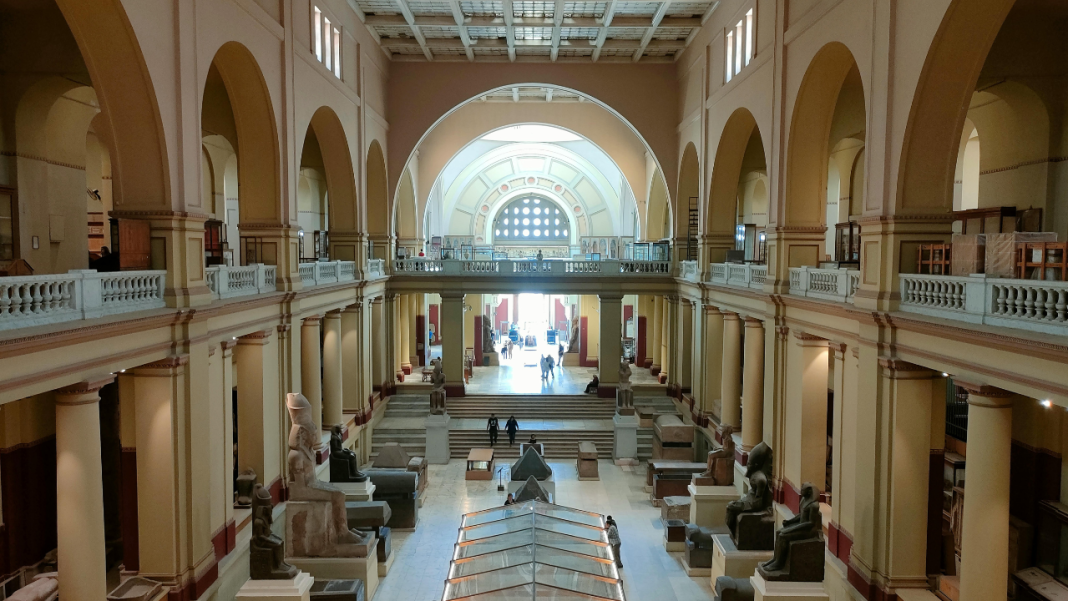
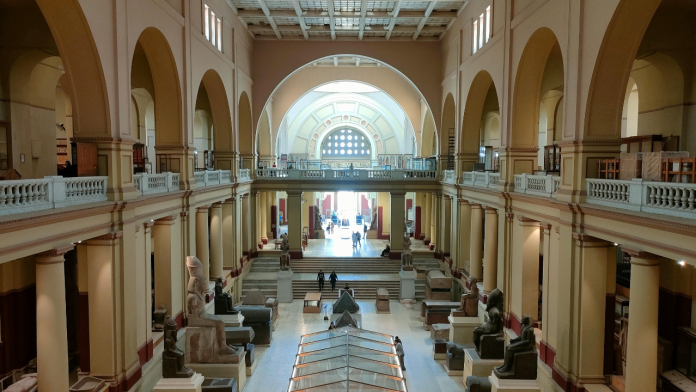
When you step into the museum’s cavernous atrium, you feel the scale immediately: a great hall with a glass roof framing the horizon and the pyramids in the distance, an 11-metre statue of Ramesses II that greets visitors, and galleries that merge blockbuster display with lab-grade conservation. The GEM contains an extraordinary collection of antiquities: thousands of objects newly conserved or seen in public for the first time, including all of the Tutankhamun collection in a place of dignity. For those who love King Tut, there are over 5,000 items from his tomb presented in a dedicated suite that aims to tell the story of the boy-king as a cultural drama and not just a treasure hunt.
There is an artful cadence in the museum’s alignments. Pathways and multimedia stages move you through social and everyday life into kingship and faith, and the larger objects—through monuments such as the restored Khufu solar boat and massive statuary—frame the experience in visceral scale. The architects intentionally organise sightlines so the pyramids remain part of the experience; GEM feels more like it is adding to, rather than replacing, Cairo’s old museum, and it is a new window onto the landscape to produce these objects.
For tourists, GEM arrives with practicalities: new transportation links around the Giza plateau and expanded visitor services—part of a larger push to encourage tourism growth that includes updating airports and infrastructure designed to bring millions more visitors through Egypt in the decades to come. It positions the museum firmly as a nexus of national tourism desires to revive and promote the tourism sector.
Beyond visual impact, GEM also claims sustainability and academic research. Its systems for energy and water efficiency have garnered international attention, making the complex a touchstone for new museum practice in hot, dry contexts. Meanwhile, conservation labs, educational spaces, and interactive exhibits will ensure that the museum is as relevant to scholars and school children as it is to casual visitors.
Whether you visit for Tutankhamun’s mask, the scale of Ramesses, or simply to stand where kings walked, the Grand Egyptian Museum reframes Giza: not just a space of monuments, but a living cultural site of exchange between the past and future — loudly, brightly, and with another set of arriving directions for curious visitors.