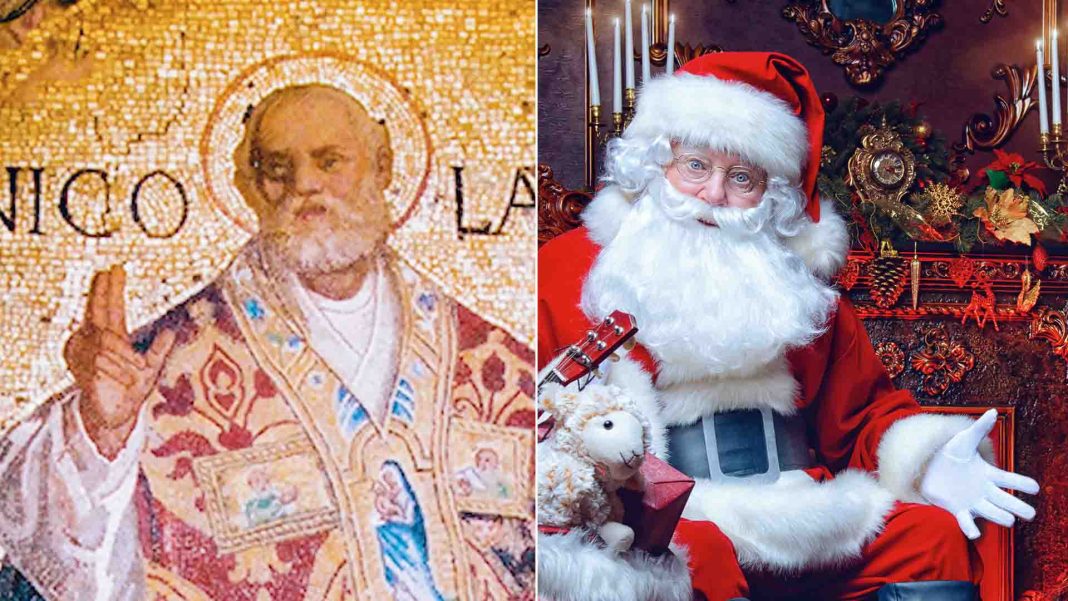
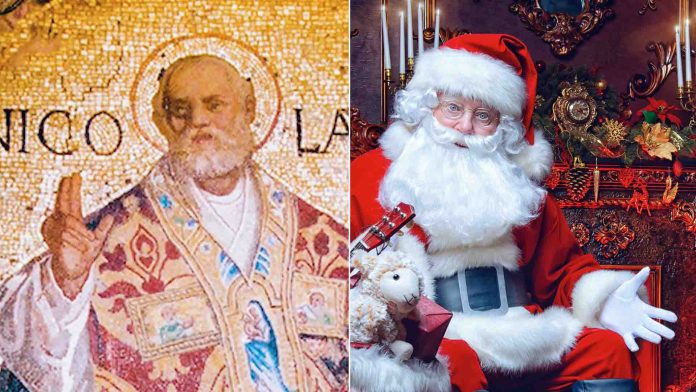

Feast of St. Nicholas was celebrated on December 6th. Nicholas was born in the third century in the southern Turkish town of Patara, which is located by the sea in Licia. He was raised as a Christian by his family. Obedience characterised his life from the very beginning. Reminiscent of the wealthy young man in the Gospel, Nicholas utilised his fortune to help the sick, the destitute, and the needy after becoming an orphan at a young age. After being chosen as Bishop of Myra, he was imprisoned and banished by Emperor Diocletian. He went to the Council of Nicea in 325 after being set free. On December 6, 343, he passed away in Myra. Numerous legends about Nicholas have been passed down, all of which attest to a life dedicated to helping the frail, small, and helpless.
The story of a man with three daughters of marriageable age is one of the oldest stories about Saint Nicholas. Due of the family’s poverty and the father’s inability to provide a sufficient dowry, the young girls were to be driven into prostitution. Nicholas visited the family’s house one evening, dropped a bag of coins through the open window, and then ran away before anyone could identify him. The father used the money to get his oldest daughter married. Nicholas made two more trips back, usually at night to avoid being recognised. On the third occasion, however, the father hurried out of the house to find his enigmatic benefactor. Nicholas pleaded with him to keep what he had done a secret.
Another tale describes what happened to three young theologians who were on their way to Athens. They came to a stop at an inn along the way, where the proprietor looted them, killed them, and concealed their bodies in a barrel. When Saint Nicholas, a bishop at the time, came to Athens, he made a stop at the same inn. He saw the crime his host had done in a dream. By turning to prayer, Saint Nicholas was able to convert the evil innkeeper and miraculously bring the three young men back to life.
A third narrative describes how Saint Nicholas set free Basileos, a young boy who had been abducted from his Myra home and had to be a cup bearer for a foreign ruler. As his parents prayed for him, Basileos saw Saint Nicholas, who miraculously returned him to his family while retaining the potentate’s golden cup. Saint Nicholas, the patron saint of children and youth, gained popularity as a result of these and related tales.
Additionally, seafarers and sailors are patronised by St. Nicholas. Nicholas boarded a ship as a young man to travel to the Holy Land on a pilgrimage. Following in the Lord’s footsteps, Nicholas begged for the opportunity to become closer to Jesus and partake in His sorrows. On his way back to Greece, a terrifying storm broke up, and the ship he was on was in risk of flooding. The seamen, who were afraid of a shipwreck, were amazed when Nicholas quietly prayed and the wind and waves abruptly stopped.
Following his passing, Saint Nicholas’ grave at Myra quickly turned into a site of pilgrimage; his relics were regarded as miraculous due to an enigmatic liquid that emerged from them, called the “manna of St. Nicholas.” Venetians tried to make him their patron after the Turks took over Licia in the eleventh century, but seamen from Bari were able to obtain his relics beforehand and transported them to their town in Puglia in 1087.
They were buried two years later in the crypt of a new church that the Baresi had constructed on the site of a former Byzantine palace. As the Norman kings of Puglia watched, the reigning Pope, Urban II, placed the relics beneath the altar. Devotion to Saint Nicholas “of Bari” (rather than “of Myra”) spread throughout the world as a result of the translation of his relics being viewed as a remarkable event during the Middle Ages and his sanctuary quickly became a major pilgrimage destination.
The custom of giving gifts on Saint Nicholas’s feast day originated in the Low Countries and throughout Germanic lands in general. On the eve of his feast, children would leave socks or shoes on a chair or next to the fireplace and go to sleep, believing that the next morning they would be filled with gifts. Saint Nicholas’s winter feast is known in Dutch as “Sint Nikolaas” and later “Sinteklaas.”