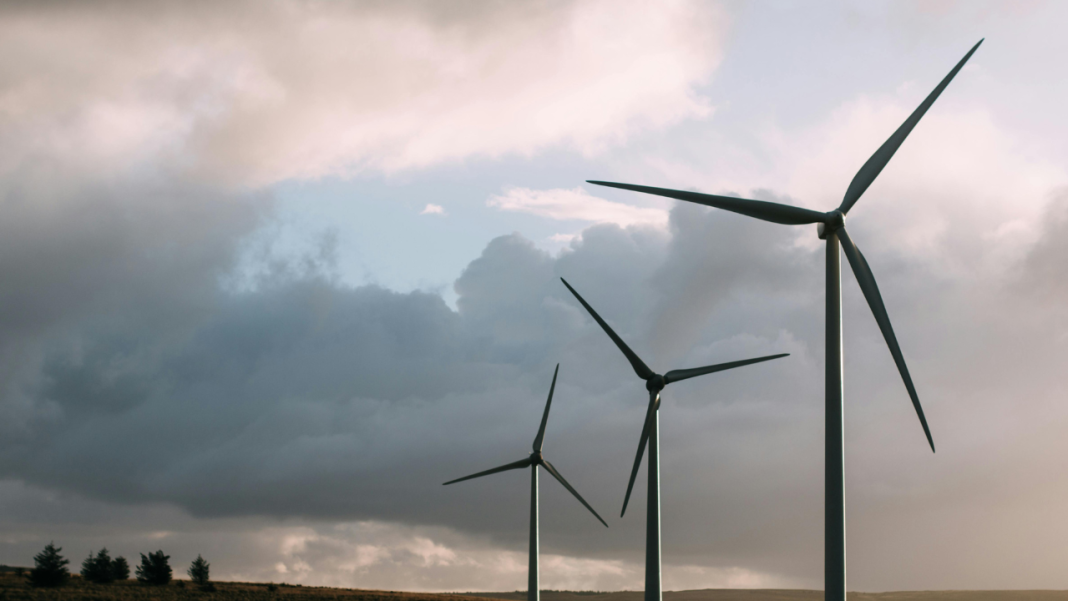

Announcing a new major supply agreement with Greenvolt Power, US-headquartered GE Vernova has signed this pact to install, supply and set up 42 high-capacity wind turbines for the upcoming Gurbanesti onshore wind farm in Călărași County, southeast Romania.
The Gurbanesti initiative represents the second significant partnership between GE Vernova and Greenvolt in Romania in a brief period: only weeks ago, GE Vernova pledged to supply 42 turbines for Greenvolt’s Ialomiţa wind farm. Together, the two wind farms are expected to provide close to 500 MW of clean, renewable energy capacity.
The Gurbanesti order was placed in the fourth quarter of 2025, and turbine deliveries are set to commence in 2026.
The turbines provided are GE Vernova’s 6.1 MW–158 m “workhorse” onshore models— a reliable, high-performance wind turbine platform intended for extensive onshore wind farms.
All 42 units will provide a nominal capacity of 6.1 MW each, indicating that the Gurbanesti farm will be a major enhancement to Romania’s renewable energy framework.
Including the Ialomiţa project significantly increases the overall power potential. The projections indicate that the two wind farms will produce enough electricity annually to power over 110,000 homes in Romania.
Beyond clean energy generation, these wind farm projects are expected to have progressive economic and social benefits. Amidst peak construction, hundreds of full-time jobs will be supported by these wind farms, mainly boosting local employment in Călărași County, and other benefits will be provided as well.
Moreover, one can see that by significantly expanding Greenvolt’s wind capacity across Europe, the projects align with wider efforts to heighten decarbonisation and reduce reliance on fossil fuels, supporting Europe’s and Romania’s renewable-energy ambitions.
Wind power is becoming a key component of the energy shift in Europe, especially in Romania. Greenvolt and GE Vernova are just two examples of projects that show how global technology companies and renewable energy developers could work together in unity to swiftly and effectively activate large-scale infrastructure. In just a few months, one can see how 84 turbines were installed in two wind farms in the same nation, showing the urgency and increasing need for renewable energy.
Romania may expect notable increases in the production of clean electricity by 2026 and beyond as turbine deliveries start. This will help meet domestic energy needs, lower carbon emissions, and advance decarbonisation objectives at the national and continental levels.
In addition, one can also identify that the jobs generated during these constructions and the wind farms’ ongoing operation may encourage local economic growth, significantly in areas like Călărași County, where the Gurbanesti site is located.
With the anticipated start of deliveries in 2026, the primary focus has shifted to the construction, installation, and eventual commissioning of the wind farms. If everything proceeds as planned, these wind farms could potentially supply clean, renewable electricity to hundreds of thousands of homes by the end of the decade, thereby enhancing Romania’s energy security and advancing Europe’s green energy goals.
These two announcements strongly highlight the goals of Greenvolt to increase its renewable imprint throughout Europe, as well as reveal that GE Vernova is also stepping up its “workhorse” turbines as a reasonable foundation for offshore wind deployment.
The Gurbanesti and Ialomița projects will be important turning points in Romania’s shift to renewable energy in the following years. Their combined capabilities, economic rewards, and long-term sustainability impact reinforce the relevance of strategic partnerships in advancing the expansion of renewable energy. Initiatives like these not only improve energy security but also demonstrate how coordinated investment and innovation can transform national power systems and produce long-lasting environmental success as Europe strives for a carbon-neutral future.