
Healthcare (Commonwealth Union) – Doctors and scientists often try to determine which medications a person has taken by either asking the patient directly or reviewing their medical records. However, this information is frequently incomplete. Patients may forget what they have used, take over-the-counter drugs, consume leftover prescriptions, purchase medications online, or encounter drugs unintentionally through food or environmental sources. As a result, important drug exposures can go undetected. It is important to know what substances are in the body because they can have health and biological effects that are not always obvious.
Scientists from the University of California, San Diego, together with their partners have formed an online reference library that everybody can make use of. It contains chemical “fingerprints” of thousands of drugs, their metabolites, along with other compounds that are associated with them.
The findings appeared in Nature Communications on December 9, 2025.
When contrasting compounds not known that are found in a patient’s blood, urine, or other biological samples with entries in the Global Natural Product Social Molecular Networking (GNPS) Drug Library, researchers can obtain a more accurate understanding of drug exposure than what might appear in medical records.
The team used mass spectrometry to make this library. This method charges drug molecules to separate them by weight and then breaks them up to make a unique chemical fingerprint. The library has information about each drug’s source (prescription, over-the-counter, etc.), therapeutic class, intended use, and how it works in the body.
To show that the library can find real-world drug exposures, the researchers used a kind of mass spectrometry called untargeted metabolomics.
This method examines thousands of molecules simultaneously to identify the breakdown products of drugs present in biological samples.
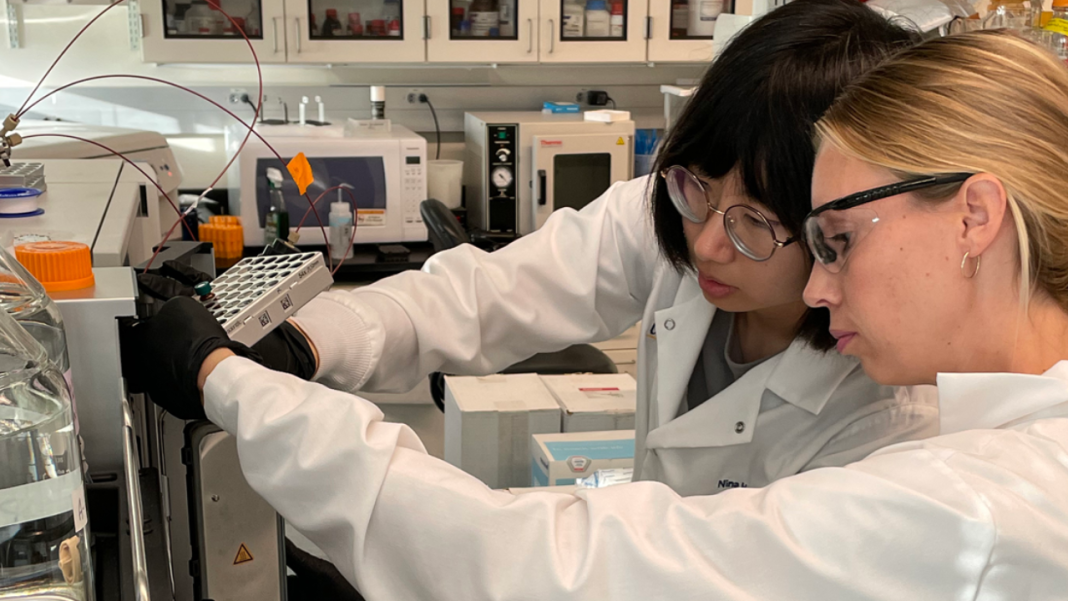
The co-first author Nina Zhao, Ph.D., who is a post-doctoral scientist in the laboratory of co-author Pieter Dorrestein, Ph.D., professor at UC San Diego Skaggs School of Pharmacy and Pharmaceutical Sciences and professor of pharmacology and pediatrics at UC San Diego School of Medicine indicated that whichever sample they placed into the mass spectrometer, from urine, breast milk or even an environmental water sample, it has the ability to mark all of the chemicals inside the sample.
Samples from individuals with inflammatory bowel disease, Kawasaki disease, or dental cavities frequently contained antibiotics, consistent with the standard treatments for these conditions. Skin swabs from people with psoriasis were often abundant in antifungal compounds, reflecting typical antifungal therapies for skin lesions.
The research team further tested the library on samples from nearly 2,000 participants in the American Gut Project, which examines gut microbiome diversity across the United States, Europe, and Australia. This analysis identified 75 unique drugs, representing the most commonly prescribed drug classes and medications in these regions.
The co-first author Kine Eide Kvitne, a postdoctoral researcher in the lab of co-author Shirley Tsunoda, Pharm.D., professor of clinical pharmacy and associate dean for pharmacy education at the Skaggs School of Pharmacy and Pharmaceutical Sciences indicated that they anticipated that these drugs would appear most frequently, and that’s exactly what they observed, which verified that the library functions as intended.
The study also found that participants from the USA had a higher level of detectable drugs per person when contrasted with European or Australian individuals. On top of that, pain medications were more frequently seen in females, while erectile-dysfunction drugs were mainly seen in males.
In samples from a clinical study involving people with human immunodeficiency virus (HIV), the library identified not only antiviral medications but also cardiovascular and psychiatric drugs, reflecting the elevated rates of heart disease and depression commonly seen in individuals living with HIV. This enabled the researchers to classify participants according to the medications they were actually taking. Additionally, they found that certain HIV treatments were linked to specific alterations in gut-derived molecules, highlighting how drug exposure can influence and reshape the microbiome.