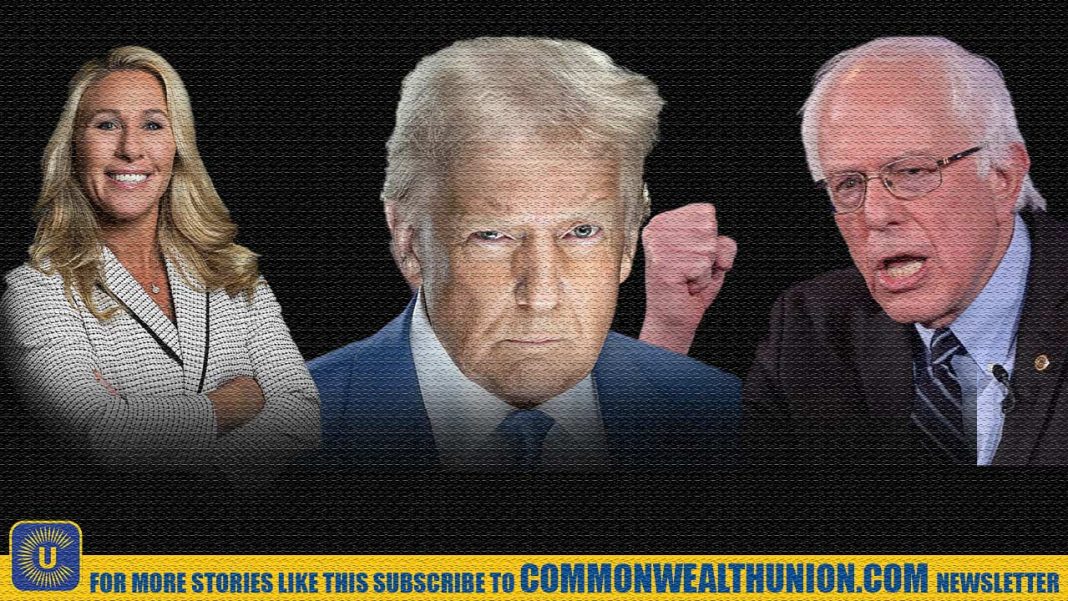

Several prominent U.S. political figures have voiced strong criticism of President Donald Trump’s military strikes in Venezuela, which culminated in the capture of Venezuelan President Nicolás Maduro and his wife. The reaction highlights sharp divides within American politics over the intervention.
Senator Bernie Sanders (I-Vt.) publicly condemned the attack, labelling it a unilateral act that bypassed Congress and violated the U.S. Constitution. According to Sanders, only Congress has the authority to declare war, and he warned that the strike risks global instability and a return to dangerous imperialist policies. Sanders’ statement, shared via social media and news outlets, emphasised that the president “does not have the right to unilaterally take this country to war” against Venezuela. He urged lawmakers to invoke the War Powers Resolution to end the military action.
Sanders’ remarks reflect a broader concern shared by progressive lawmakers and advocacy groups that the intervention could ultimately destabilise the region and undermine international sovereignty. Analysts debate that the operation deviated from constitutional checks and balances and could undermine the U.S.’s credibility abroad.
On the other side of the political spectrum, Representative Marjorie Taylor Greene (Republican representative from the state of Georgia) also broke from much of her party by criticising Trump’s Venezuela strategy, but from a domestic-focused conservative standpoint. Greene argued that the strike “doesn’t serve the American people”, contending that Trump should prioritise domestic policy issues such as health care, housing, jobs, and border security instead of intervening in South America. “We don’t consider Venezuela our neighbourhood,” she said, stressing that America First should mean focusing on problems within the United States rather than foreign entanglements.
While Greene made it clear she did not defend Maduro and welcomed the idea of Venezuelan liberation, she criticised the strike as part of the “same Washington playbook” of military intervention that she and many of her constituents oppose.
The rare bipartisan criticism, from the left and right, underscores unease about the legal, moral, and political implications of the Venezuela operation and signals ongoing debate over U.S. priorities over foreign policies.
One can see how these contrasting views from both Sanders and Greene show a rare moment of bipartisan disagreement, highlighting deep concerns over executive power, constitutional authority, and even the direction of U.S. foreign policy as lawmakers continue to debate America’s role abroad.