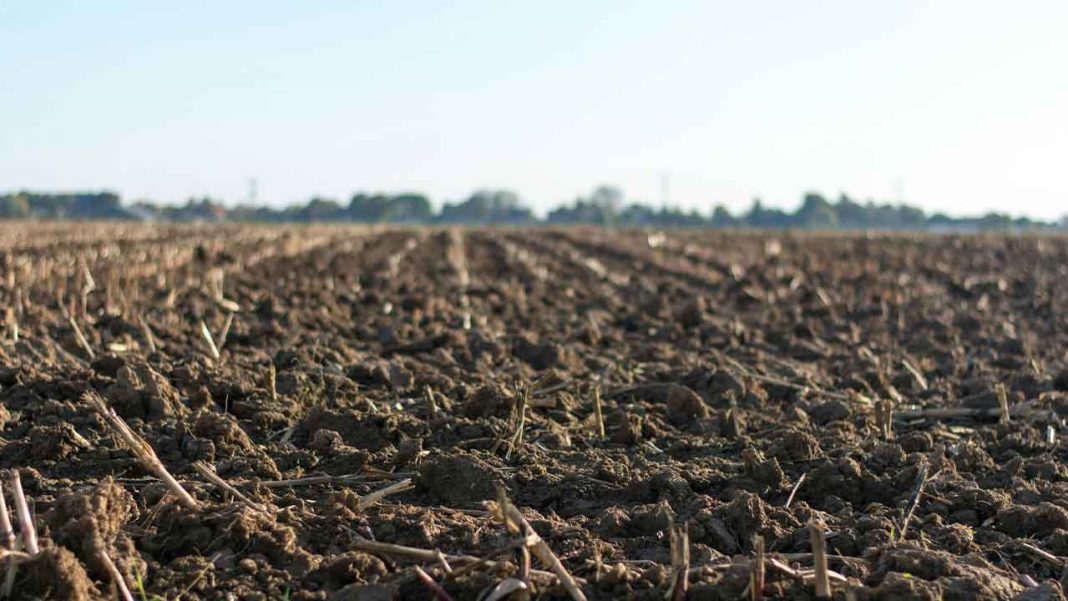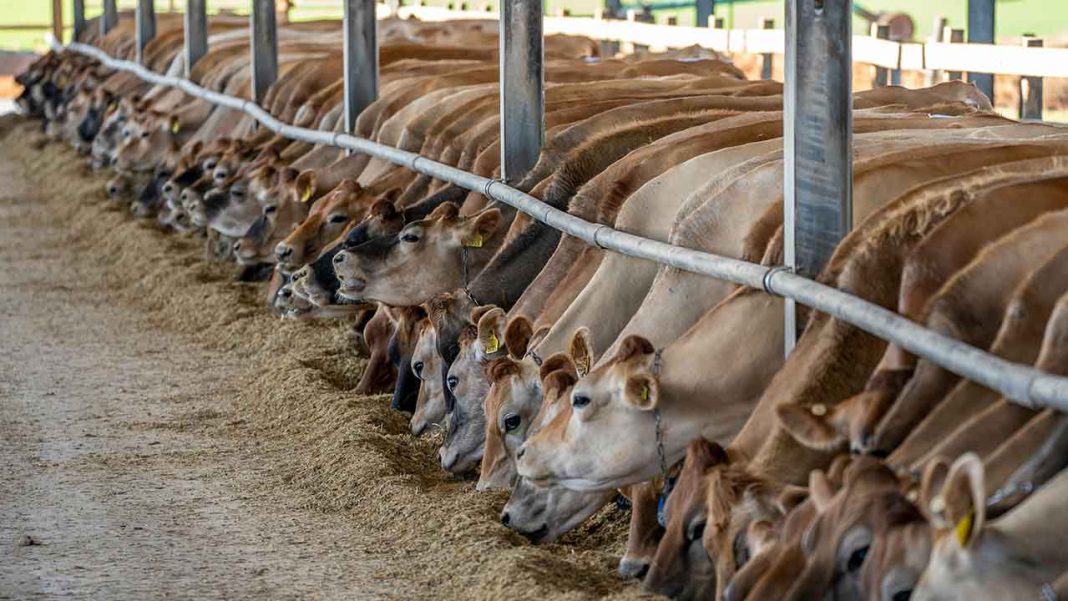

On the Preston family’s dairy farm in southern Michigan, 400 acres of soybeans stretch across the horizon. At first glance, it seems like any ordinary field. But these soybeans are far from ordinary. They are the result of an innovative collaboration with Michigan State University, a partnership that is not only easing the financial burden of feeding their herd, saving the Prestons tens of thousands of dollars each month, but also hinting at a future where dairy farming could be transformed for farmers everywhere.
At Preston Farms, a fourth-generation family operation in Michigan, a bold experiment has transformed the way they feed their cows, and the results have been remarkable. In the spring of 2024, Brian Preston, an MSU graduate who now manages the farm and its nearly 1,000 dairy cows, decided to dedicate almost a third of their 1,500 acres to growing a new type of soybean. These weren’t ordinary soybeans; they were high-oleic soybeans, developed through federally funded research at Michigan State University’s College of Agriculture and Natural Resources. The promise? The promise was improved milk quality and healthier cows.
“It was a risk,” Preston admits. “Those 400 acres could have gone to our usual corn and grain. We were gambling a bit on the science.” The gamble paid off sooner than expected. Once the soybeans were harvested and added to the cows’ diet, the farm saw a dramatic shift. Within just three days, milk fat and protein levels increased noticeably, making the milk more valuable. “There was a huge sense of relief,” Preston recalls. “And then that relief turned into real excitement; we knew we were onto something big.”
The benefits continued beyond that point. The farm’s feed costs experienced a monthly drop of about 20%, a significant difference for a business that heavily relies on careful expense management. Preston calls it “a once-in-a-generation change,” highlighting how a single crop could transform both farm operations and finances.
This success didn’t happen overnight. MSU researcher Adam Lock, a professor in the Department of Animal Science and interim chair of Large Animal Clinical Sciences, has been studying how dietary fats affect dairy cows for more than a decade. His team focused on high-oleic soybeans because they are rich in oleic acid, a naturally occurring fatty acid that can boost milk fat and protein.“Our work is about practical, science-based solutions that farmers can actually use,” Lock explains. “High-oleic soybeans are a perfect example of that science translated directly into the barn.”
Lock’s research, funded by USDA’s National Institute of Food and Agriculture and supported by organizations like the Michigan Milk Producers Association and the United Soybean Board, has shown that roasting the soybeans before feeding can amplify the benefits. For farmers, this means fewer costly feed additives like fat and amino acid supplements are needed.
Preston Farms was among the first in Michigan to adopt the crop, and other farmers quickly took notice. In fact, seed suppliers ran out of high-oleic soybean seeds last year due to overwhelming demand. For Lock, seeing the research make a tangible difference on farms is deeply rewarding. “This isn’t just theory in a lab,” he says. “It’s real impact: better milk, healthier cows, and stronger farm economics. That’s why public investment in agricultural research matters.”
As universities nationwide scale back dairy research, Michigan State’s new Dairy Cattle Teaching and Research Center promises that studies like Lock’s will continue to benefit both farmers and the state’s agricultural economy for years to come.
Stronger Farms, Better Dairy for Michigan
The partnership between Preston Farms and MSU spans generations. Brian Preston’s grandfather first connected with the university in the 1940s through an agricultural short course, and the family has collaborated with MSU and MSU Extension for more than 30 years. However, the work with high-oleic soybeans has significantly transformed the industry.
“These soybeans could transform the entire industry,” says Brian, noting how MSU’s research helps farms be more efficient and profitable. Glenn Preston, Brian’s uncle, adds, “MSU gives us access to some of the brightest minds in agriculture. Their work pushes the industry forward and keeps our farm thriving for the next generation.”
Michigan is home to over 850 dairy farms and 436,000 cows, contributing $15.7 billion to the state’s economy. Innovations like high-oleic soybeans mean better milk, cheese, and yogurt for residents, while helping farmers across the state optimize resources and improve dairy quality.