
A massive solar burst is headed for Earth, promising dazzling northern and southern lights but also potential disruptions to satellites, aviation, and astronauts. Scientists warn it could be the strongest storm in over 20 years, a vivid reminder that the Sun is a powerful force capable of reaching across millions of miles.
The Space Weather Prediction Center (SWPC), part of the National Weather Service, has classified the storm as an S4 solar radiation event, a severe level four out of five. “This is the largest solar radiation storm in over 20 years,” SWPC shared on X, formerly known as Twitter. The last storm of comparable strength struck in October 2003, causing power outages in Sweden and damaging transformers in South Africa.
Solar radiation storms happen when the Sun sends high-energy particles into space, some of which make their way to Earth. These charged particles can create stunning auroras close to the poles, but they can also affect technology and people in space. Higher radiation levels may expose astronauts on the International Space Station, and extra safety measures may be necessary for flights over polar routes.
To prepare, SWPC has alerted airlines, NASA, the Federal Aviation Administration, the Federal Emergency Management Agency, and electric grid operators across North America. “We’re in constant communication to make sure critical infrastructure operators know what’s happening,” said SWPC forecaster Shawn Dahl. Astronauts have moved to more shielded sections of the station during previous solar storms, a practice they could repeat if necessary.
Solar storms can affect satellites, especially those for GPS and communications. In May 2024, a major geomagnetic storm disrupted GPS-dependent systems, including some used in precision farming. Still, power grid operators and satellite controllers managed to keep systems stable and satellites on track. Experts say similar precautions should help reduce the impact of Monday’s storm.
The storm was triggered by a powerful X-class solar flare, the most intense type, accompanied by a coronal mass ejection (CME), a massive eruption of plasma and magnetic fields from the sun’s surface. When CMEs reach Earth, they can disturb the planet’s magnetic field, resulting in geomagnetic storms. Monday afternoon, a geomagnetic storm was already detected, which can also affect the electric power grid, whereas for skywatchers, the storm offers a spectacular opportunity.
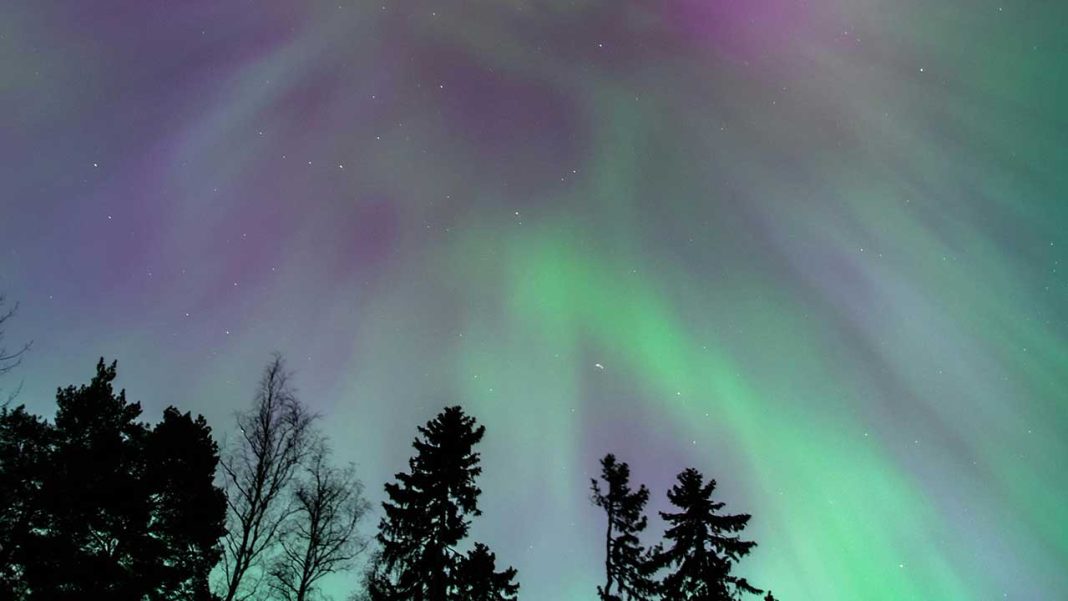
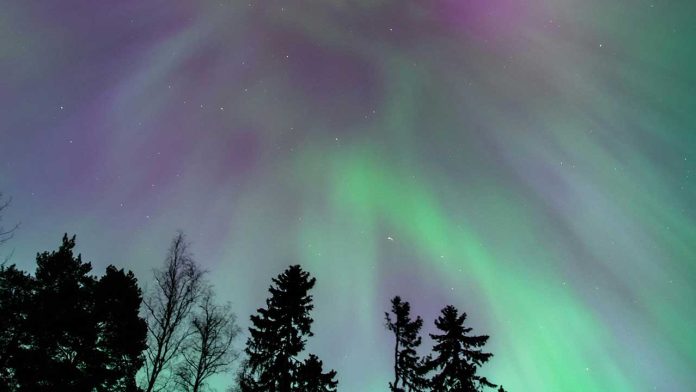
Auroras, or the northern and southern lights, appear when charged particles from the Sun hit Earth’s atmosphere, creating shimmering waves of green, red, and purple. This solar event could light up much of the northern U.S., with sights possibly reaching as far south as Alabama and northern California. Whether you’ll see the show depends on the weather. Clear skies are expected in parts of the Midwest, like Minnesota, while the Pacific Northwest, Northeast, and coastal areas might have patchy clouds that could obscure the view. “Even if the auroras aren’t visible to the naked eye, smartphone and camera sensors can pick up their glow,” noted Ryan French, a solar physicist at the University of Colorado Boulder.
Auroras often appear in short bursts called substorms, which last around 20 minutes. During these bursts, the lights can extend farther south than usual, giving viewers a rare chance to witness their full splendour. French also warned that additional solar flares from the sun’s active regions could produce more Earth-directed storms in the coming week.
While most people won’t experience disruptions in everyday life, the sky above may put on one of nature’s most extraordinary shows. From glowing curtains of light to vibrant ribbons sweeping across the horizon, this solar storm is a reminder of the sun’s immense power and its ability to both dazzle and disrupt.