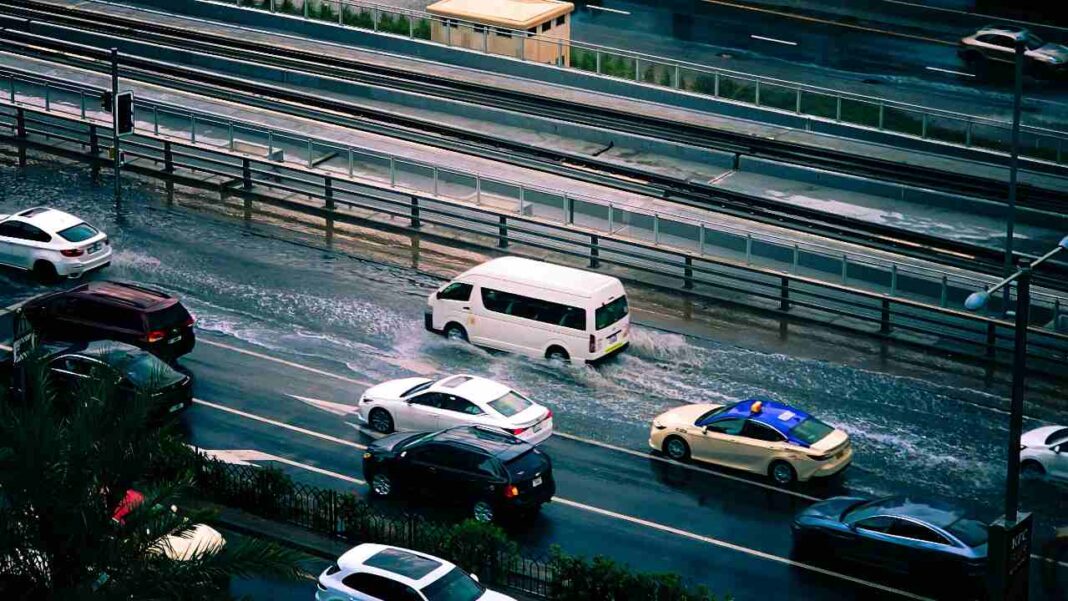
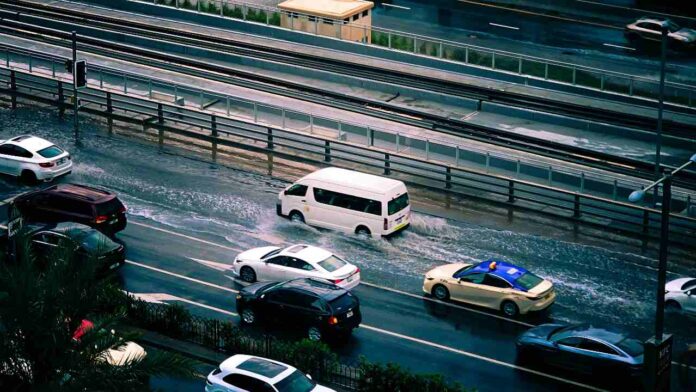

Floodwater can be very dangerous, even when it doesn’t look deep, says a new University of Canterbury study. Postdoctoral fellow Dr. Lea Dasallas led the research. She and her team found that the speed of moving water can make shallow floods powerful enough to knock people down or push cars away. Many flood maps used today mainly show how deep the water might get. They often ignore how fast the water is moving. According to Dr. Dasallas, this is a serious problem.
Water during a flood does not just sit in one place. It flows through streets, down hills, and across intersections. If it moves quickly, even water that looks safe can become life-threatening. The researchers explain that climate change is leading to heavier and more intense rainfall. As storms become stronger, cities need better tools to prepare. Static flood maps, which only show water depth, are no longer enough. Instead, cities should use dynamic models. These models can show how water travels through roads and transport systems in real time.
The project was part of a Horizon Europe program called Minority Report. This initiative focuses on protecting vulnerable people in cities from extreme climate events. The goal is to strengthen urban areas so they can better handle disasters such as floods. To test their ideas, the research team used central Wellington as a case study. They simulated an extreme rainfall event based on future climate conditions. First, they looked only at flood depth. Many streets appeared safe under this method.
When the researchers added water speed to the model, the results changed greatly. The model now portrayed previously safe roads and intersections as high risk. Some streets became like channels. They directed fast-moving water downhill, making flooding more dangerous.
These areas became especially risky for both drivers and pedestrians. People might still try to cross these roads, thinking the water is shallow enough. But once velocity was included, it became clear that these routes could be extremely unsafe. The study found that when water speed was considered, high-risk areas for pedestrians increased by more than 80 percent. Medium-risk areas, especially for children and older adults, more than tripled.
This evidence shows how much danger is missed when only depth is measured. The research was published in the Journal of Flood Risk Management. The team did more than just point out risky streets. They also studied whether people could still reach essential services during a major flood. They mapped flood risks onto the city’s transport network. Then they checked access to hospitals, public transport hubs, and important road connections. When only water depth was considered, most residents appeared able to reach key services. But after adding water velocity, some parts of the central business district were shown to be cut off, especially for people on foot. In certain instances, the peak of flooding rendered almost all walking routes to hospitals and other vital services unsafe. Car access was also reduced, particularly in areas with steep hills and narrow roads.
These features can create choke points where traffic gets stuck. The study shows how quickly city travel can break down during extreme weather. Even shallow floodwater can be dangerous if it moves fast. Strong flow can block roads and hide risks. The researchers did more than point out the problem. They created a practical system to help people make better decisions during floods. By combining flood models with traffic data, the system shows which roads to avoid. It can also suggest safer routes.
This method could help emergency planners, local councils, and the public. It may improve road closures, warnings, and access to hospitals and emergency services. The team warns that old flood maps can raise the risk of injury or death. Cities with steep hills and dense road networks face greater danger. As storms grow stronger in a warming climate, knowing how fast water moves is very important. The study shows that even ankle-deep water can be dangerous if it flows quickly.