
Projections about future food insecurity have been focusing mainly on regions that have already been struggling with poverty, drought, and political instability for decades. As some of the focal points for future hunger, one can see Sub-Saharan Africa, parts of South Asia, and the drought-prone areas of Latin America being considered. However, the latest generation of climate-food security models has challenged that narrative, bringing to light that even wealthy nations like the United States, members of the European Union (EU), Canada, and even Australia may face significant food system stress by the year 2040.
Variables such as climate, trade, agricultural production, and demographics were always treated as largely separate factors by traditional food security forecasts. However, the newest models view these drivers as interconnected elements inside a complicated global system. Data on soil degradation, water scarcity, trade flows, growth in population, and economic pressures have now been combined with climate projections by research.
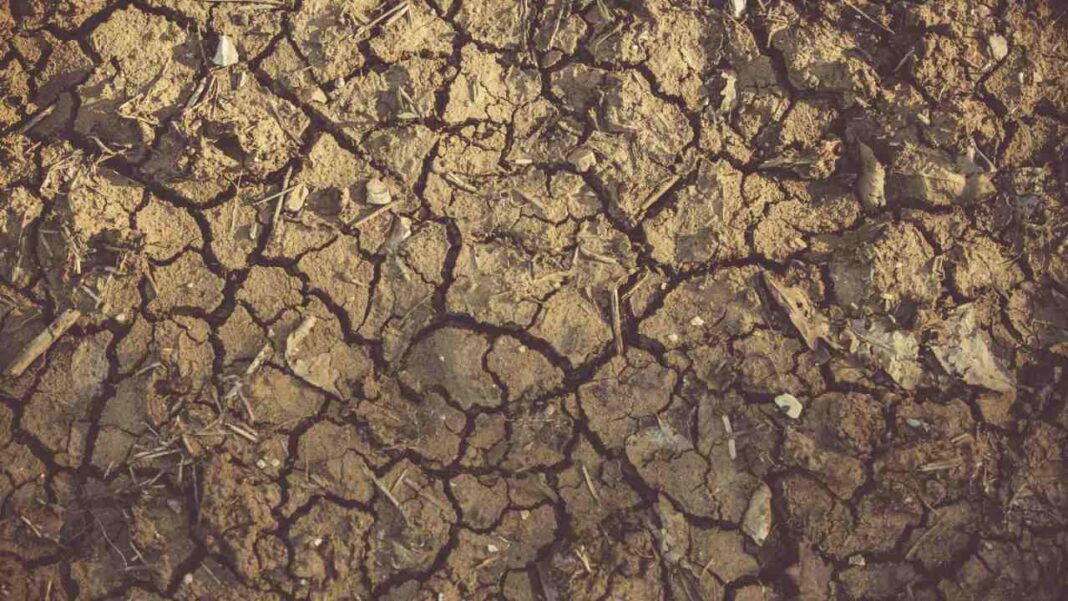
The surprising result, one may ask? Under scenarios where global warming reaches 2–2.5°C above pre‑industrial levels by mid‑century, global caloric production could fall significantly short of demand as early as 2040, and the shortfall isn’t only limited to poorer regions.
In wealthy countries, the assumption has long been that diversified supply chains, strong purchasing power, and reliable infrastructure would protect consumers when it comes to food shortages. But the new models highlight simultaneous risks across multiple “breadbasket” regions, the large, major agricultural zones that supply staple crops like wheat, maize, and soy.
If climate issues such as heatwaves, droughts, and water reduction occur at the same time in several of these important regions, the result is what climate scientists call “synchronized crop failure,” meaning crops in many places fail at the same time. Global markets would have significantly less food to trade, and the advantage of wealth would diminish more quickly due to the substantial decrease in worldwide food availability.
For example, the Ogallala Aquifer, which is important to irrigating roughly 30% of U.S. cropland, is being depleted faster than it can recharge, while major European river basins have already experienced increasing drought stress.
Why is 2040 now a key benchmark? Most climate impact discussions use 2050 or 2100 as reference points. But food security models are converging in 2040 because that is when population growth, warming trends, water scarcity, and soil degradation begin to intersect with enough intensity to strain even well‑resourced systems.
Population projections suggest around 9.2 billion people by 2040, increasing demand for calories and protein. Simultaneously, the world’s water resources, crucial for agriculture, are under stress. Agriculture already uses about 70% of freshwater withdrawals globally, so any reduction in water availability translates directly into heightened food risk.
The models are not just about calories. As production tightens, nutritional variety also suffers. Sustained reductions in the availability of foods like vegetables, legumes, and protein sources can lead to diets that are less balanced and less healthy. Also, even small crop failures tend to raise food prices, and research shows that price increases of 20–30% or more would put a strain on social safety nets, even in rich countries.
This issue has real consequences. In the United States, for instance, roughly 13% of households experienced food insecurity at some point in 2023, which is an indicator that even established safety systems are already being tested regarding food security.
What the latest models make clear is that food security is a global challenge no longer restricted to specific regions. Climate change affects the entire interconnected food system now, from the fields of Africa and South Asia to the farms of North America and Europe. Early action, informed by this new generation of modeling, could determine whether 2040 becomes a year of manageable adaptation or profound stress on food systems worldwide.