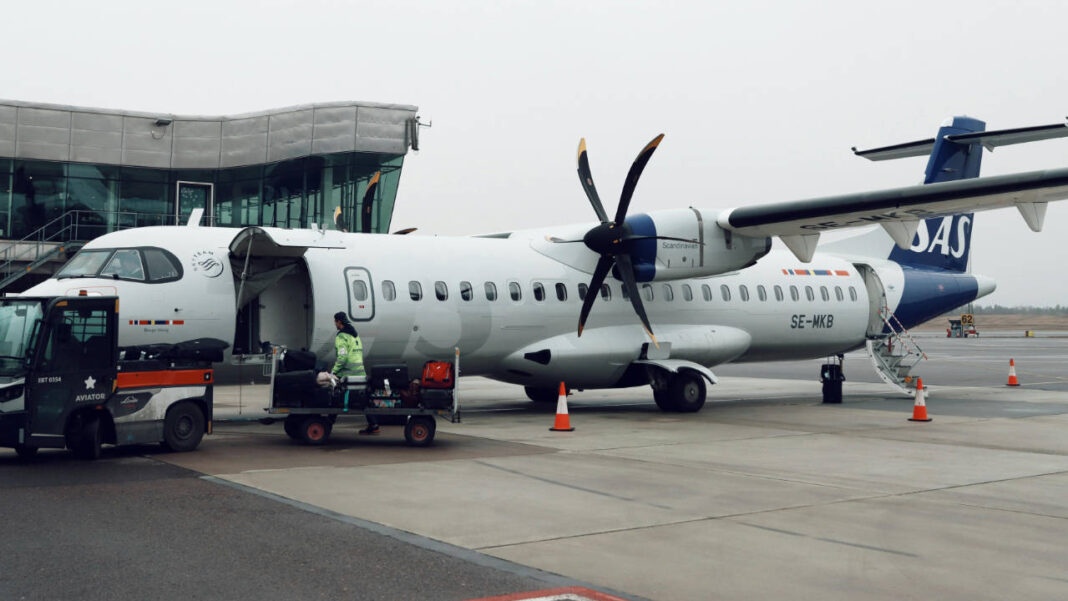

Singapore-based leasing company Avation has committed to buying an additional five ATR 72-600 aircraft, marking the final step in their long-standing relationship with turboprop producer ATR. The final five of Avation’s purchase rights were completed over the last few days for delivery in 2028-2029, bringing the total number of ATRs committed to via the Avation-Aviation relationship to 54. This further solidifies turboprop aircraft as vital to the long-term success of regional airlines around the world.
For aircraft leasing companies, options and purchase rights are necessary components of their fleet strategies; they are low-cost means to secure production slots that match demand for airline capacity. Avation’s recent confirmation of five purchase rights, which were part of a long-term agreement made in 2011, shows that they strongly believe there will still be a high demand for efficient turboprop aircraft in regional markets for many years to come, even into the late 2020s and beyond. These five aircraft will be delivered in 2028 and 2029.
One reason to consider betting on the ATR 72-600 aircraft is its highly effective ability to connect regional networks, thanks to its economical cost compared to other aircraft and its operational efficiency. With up to 78 passenger seats in a high-density configuration, the ATR 72-600 is powered by Pratt & Whitney Canada PW127 family engines, providing low operating costs per seat mile, excellent short-field performance, and the ability to operate on thin or remote routes where jets are not cost-effective. The ATR 72-600’s fuel efficiency and CO₂ output per seat have been highlighted as being major considerations for airlines to replace their older regional fleet, thus providing a compelling sales point for the ATR 72-600.
Jeff Chatfield, Avation’s Executive Chairman, has characterized the transaction as part of a long-term strategic plan of “growing its development pathway through 2028 and beyond” by providing aircraft to airlines that are operating in high-growth regional markets. Additionally, Nathalie Tarnaud Laude, the chief executive officer of ATR, has stated that lessors play an important role in providing access to the airlines to experience the ATR model, allowing them to evaluate it for direct purchase. The commercial dynamics of lessors as a bridge and manufacturers providing a step-change alternative are critical reasons why the ATR family continues to sell.
The timing of this order is purposeful. Numerous industry analysts and publications from year to year observe that there is a very high level of demand for this type of aircraft over the next couple of decades, with the most common estimates ranging in the low thousands; there are many factors driving this demand for turboprop aircraft, including, among others, replacement cycles of older aircraft, connection of island and archipelago locations, and the operational savings of flying short distances on turboprop vs. regional jet.
The current order by Avation for more ATR aircraft will lock in manufacturing slots and provide them with an inventory of aircraft to fulfill the requests from airlines for additional aircraft in their fleet renewal cash flow cycles as recovery continues globally and expansion is projected in a number of areas.
What will be intriguing to see next is which operators Avation places these five aircraft with. In the past six months Avation has also placed ATRs with many operators outside the normal geographic scope of where ATRs typically fly, indicating that the market potential for ATRs is expanding significantly. Airport facilities that have short runways, low traffic volume, and high costs to fly per passenger due to fuel will find a very financially sustainable and environmentally friendly option in the ATR 72-600. If Aviation’s new additions are leased into operating environments that meet these “typical” operating parameters, this order will send a very strong message that turboprop aircraft will continue to play an important role in the aviation industry.
In an age of varying fleets among airlines, which include ultra-long-range twin-engine fuselages, narrow-body aircraft, and regional jets, this recent decision is indicative of the continuing importance of the less glamorous but equally important “quiet workhorses” of aviation. Avation’s incremental investment in ATRIS is not a flashy move; however, in terms of regional aviation, an aircraft’s ability to deliver low-cost, reliable capacity is typically more significant than glamor—therefore, the five turboprop aircraft could easily become the foundation for a large number of shorter distances and many connections on a daily basis.