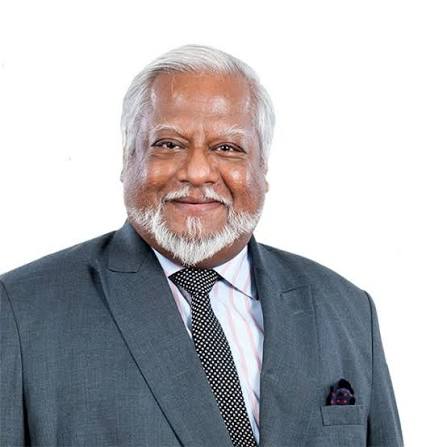


Commonwealth Secretary-General Hon. Shirley Botchwey delivered the keynote address at the Invest Lagos 3.0 Conference, held on Monday, June 8, ’26, in Lagos, Nigeria.
Botchwey said that it was a pleasure to join you here in Lagos. It’s one of Africa’s outstanding commercial capitals. It’s also one of the Commonwealth’s most dynamic investment destinations. It’s also increasingly one of the world’s most important gateways for growth.
She thanked the Lagos State Government for convening this platform. She also commended Governor Sanwo-Olu for the ambition behind it.
She recognized the Commonwealth Enterprise & Investment Council (CWEIC), under Lord Marland’s leadership. This award recognized the efforts to unite government, business, finance, and enterprise around a single practical purpose. It transformed opportunities into investments and enterprises, as well as creating jobs.
That matters as we meet at a decisive moment of time.
The global economy is not merely experiencing a passing period of turbulence. It’s moving through a structural shift. Trade tensions may be rising. Supply chains may be being rewired. Capital’s more cautious. Debt pressures may be heavier. Climate shocks tend to be more frequent. Technology is transforming every sector faster than many institutions may adapt.
For investors, the question is no longer solely about where the highest return may be. It may also be, where is the trust? Where may be the talent? Where may be the market? Where could there be regulatory confidence? Where could be the long-term growth story?
That is the reason why Lagos matters. She asked the audience to join her in a thought experiment by imagining it’s ’50.

The international system has undergone a transformation. It would be less divided and more practical as well as more objective. This shift is one of the competitive attractions of developing countries, in addition to the opportunities they offer. There would be a less-jaundiced calculation of risk outside traditional markets.
The energy transition has become one of the greatest engines of growth in trendy history. Africa is the world’s largest, besides being the youngest continent. It moves with its cities, setting the pace of trade, technology, and culture as well as investment.
Lagos stands tallest amongst them: clean energy powers industry, ports & rail connect markets, digital finance moves enterprise at speed, and creativity becomes export power whilst young people create global enterprises without leaving home. This scenario is not a fantasy. Making the right strategic choices makes the future a realistic prospect. So, the work begins here. Lagos isn’t simply a city of potential but a city of proof.
There’s proof that Africa’s growth is real. There’s proof that an enterprise may move quicker than expected. There’s proof that young people, moved by ideas and ambition, are capable of creating enterprises that compete globally. This city is a commercial engine. It’s also a cultural powerhouse, a logistics hub, and a continental gateway besides one of the clearest symbols of Africa’s economic transformation.
It’s home to major African fintech success stories. Enterprises such as Flutterwave, Paystack, OPay, and others have emerged as major African fintech success stories. Young people created these enterprises by identifying gaps in the market and transforming them into platforms of opportunity. This is the kind of growth that the Commonwealth may help accelerate.
Across the 56 member countries, the Commonwealth is home to 2.7 billion people. The majority are under the age of 30. The Commonwealth shares language, legal traditions, business practices, education systems, and institutions besides deep people-to-people ties.
The connections are commercial assets that reduce friction and build trust while lowering risk. They make it more convenient for businesses to trade. Also, invest & grow across borders. That would be the Commonwealth benefit: trade between Commonwealth countries, on average, tends to be 21% cheaper. However, advantage in itself may not be sufficient. An unused advantage may only be a statistic.