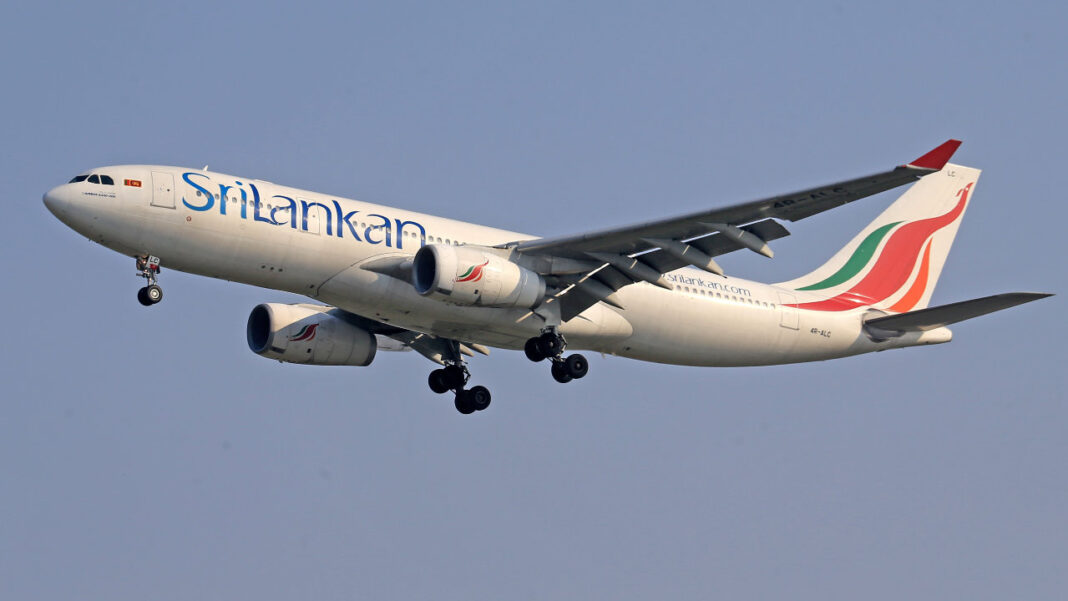
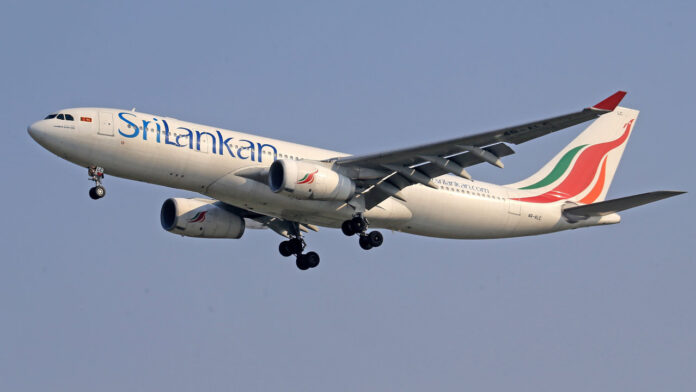

Sri Lankan Airlines has entered into a far-reaching strategic partnership with two major Saudi Arabian airlines: Saudia and Flynas. The new alignment, which will become effective starting June 17, 2026, will establish SriLankan as a stronger player in Saudi Arabia by providing its customers with an even larger complement of one-stop travel options throughout the Middle East and beyond.
This new partnership creates a stronger connection between Colombo and two of Saudi Arabia’s largest airline networks and strengthens the already existing demand for travel on these routes (business, leisure and VFR traffic).
The most important part of this partnership is connectivity. From the perspective of Sri Lankan Airlines, by leveraging Saudia’s 20 airport locations within the Kingdom of Saudi Arabia, Sri Lankan customers will have access to seven additional international points and an additional 13 domestic locations. Further, by utilising Flynas’ existing 14 airports throughout KSA, Sri Lankan customers will be connected to an additional eight international points and an additional six domestic locations. Together, these partnerships create an incredible opportunity for Sri Lankan customers to expand their travel possibilities within the Middle East, with additional destinations such as Amman, Abu Dhabi, Bahrain, Cairo, Dubai, Kuwait City and Los Angeles on Saudia’s network and Addis Ababa, Karachi, Tashkent and Sohag via Flynas.
Furthermore, with the addition of Flynas, domestic connections in the KSA provide added flexibility for travellers between airports in Saudi Arabia, particularly at hubs like Jeddah, Abha, Madinah, Tabuk, Jizan, Najran, and Dammam.
Timing is crucial to a successful business partnership between businesses, such as in the aviation industry. An example of the importance of timing is demonstrated by Sri Lankan Airlines’ ability to offer daily flights from Riyadh to Colombo and from Dammam to Colombo, thanks to their partnership agreement with Saudia Airlines. This partnership enabled them to expand their route networks, thus connecting and strengthening both Sri Lankan and Saudia Airlines.
When an airline flies into 131 cities globally, across 62 countries, using either their own flight service or an airline that is codesharing with them, then establishing a partnership with an airline from Saudi Arabia clearly adds to their overall capacity. Therefore, timing in establishing the partnership with Saudia Airlines allowed them both to establish an effective partnership at the right time and, thereby, develop an efficient partnership as a result.
But the relationship with Saudi Arabia goes beyond just the addition of capacity for Sri Lankan Airlines. Demand for air travel in the Middle East will continue to grow due to the need to transport goods, people, and families. Although tourism drives a significant portion of the demand for aviation services in the Middle East, the supplemental reasons discussed above make the region a very important aviation market for Sri Lankan Airlines.
This announcement is a part of a much bigger story about the aviation industry. Furthermore, Sri Lankan Airlines specifies that it uses only Airbus aircraft (currently flying A330-200, A330-300, A320 and A321) for its fleet. This information is important to know in the context of providing the most effective means of connecting customers via a combination of short-haul and medium-haul routes as efficiently and seamlessly as possible. For example, having an all-Airbus fleet enables an airline such as Sri Lankan Airlines to achieve both connectivity between long-haul hubs and a high-frequency connection to regional destinations. The two markets where these operational characteristics are crucial are Colombo-Riyadh and Colombo-Dammam, where on-time reliability and the quality of the connection (i.e., seat availability) to the passenger are equally as important as the number of seats available.
This alliance is significant due to the manner in which it relocates Sri Lanka onto a wider travel map. In the past, Sri Lankan Airlines has supplied around just one segment of the market from Saudi Arabia and would then attempt to link in to a much larger network from Colombo with airports/types of travel being serviced to/from Saudi Arabia; that being the case,
out of flight connections to/from these other countries, including the Gulf, North Africa, South Asia, and even North America.
The travel experience for a customer has a direct correlation with the number of connections in the airline’s network, which is why this partnership represents a better opportunity for any airline to sell customers more than simply a destination; it is rather a seamless journey (a customer can connect to so many destinations).
It also confirms the ongoing trend in the aviation industry of airlines positioning themselves against each other based upon how large or deep their networks are versus just what specific routes an airline fly.
This collaboration will simplify travel for customers while providing an opportunity for Sri Lankan Airlines to have a stronger presence in Saudi Arabia as well as remain competitive in an area where the ability to connect through a given airport is often the primary influencing factor in whether a customer selects one airline over another. Thus, in a competitive landscape where each connection matters, as a result of the partnership, Sri Lankan Airlines now has much more than just reach; it has leverage.