
New Delhi, August 14, 2026 — An alarming incident in Indian airspace has prompted an unprecedented safety initiative by Air India’s management. The airlines have announced that all pilots of Air India as well as Air India Express should undergo drug tests regularly, which brings an investigation related to a flight to a full‐scale safety exercise.
The announcement was made on August 13, 2026, and was crowded by reporters.
The decision to take such an action became important because of the troubled flight AI‐2379 on August 4, 2026.
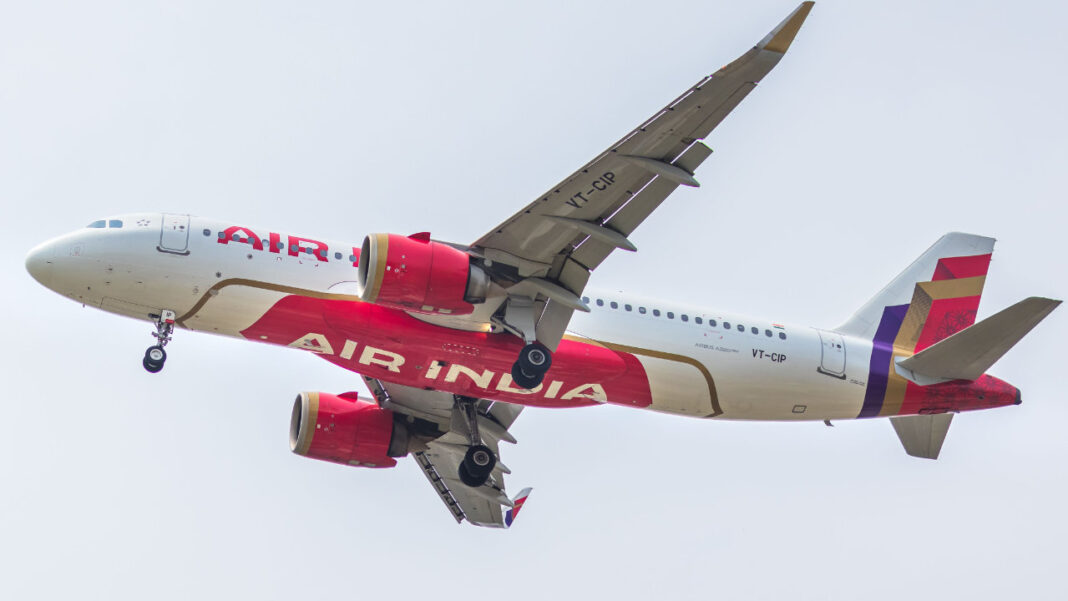
On August 4, 2026, an Air India Airbus A320 operating flight AI2379 from Phuket to Delhi carrying 137 passengers and 8 crew members dropped roughly 300 feet over Odisha, injuring multiple occupants. After the preliminary investigation and some complaints from flight crew members, the Aircraft Accident Investigation Authority (AAIB) and DGCA started their investigation into the fitness and the results of the tests of the pilot.
According to the airline, they have fulfilled the criteria of drug tests set by the Directorate General of Civil Aviation (DGCA), which the airline states is equal to those in North America and Europe. However, the airline has decided to take the initiative to do more than the required drug testing of pilots. The program started on August 13th. The tests are conducted at a number of Air India venues, including Air India’s Gurugram Academy, Air India’s briefings, offices, and various establishments where the training and post-flight procedures take place.
The immediate impetus was the investigation concerning flight number AI-2379. Although reports state that the captain had undergone post-incident testing with the initial results being inconclusive, further testing apparently showed that traces of cannabis were discovered in the captain’s blood. The two pilots were not allowed to fly while the investigation went on.
This incident also raised issues concerning fatigue and drugs. Reports say that the captain revealed to the investigators that he suffers from insomnia and is under medication prescribed by the family doctor.
Noteworthy is the fact that the probe about the altitude loss of AI-2379 continues to progress. Hence, the recent discovery regarding the drug test may not be enough proof of the aircraft’s altitude loss cause and could only serve as a part of the investigation process.
Further on, the Indian government is checking the existing aviation safety measures with respect to their adequacy as far as the pilot drug-testing process is concerned, with the DGCA’s regulations setting higher penalties.
The message regarding the Air India flight that experienced an unexpected altitude descent must be clearly understood. A couple of hundreds of feet up or down resulted in an avalanche of strict scrutiny for the pilots.
The case of the single A320 flight on August 4 is a story that goes beyond a single accident and is a strong signal about the importance of the human factor in the modern aviation world.