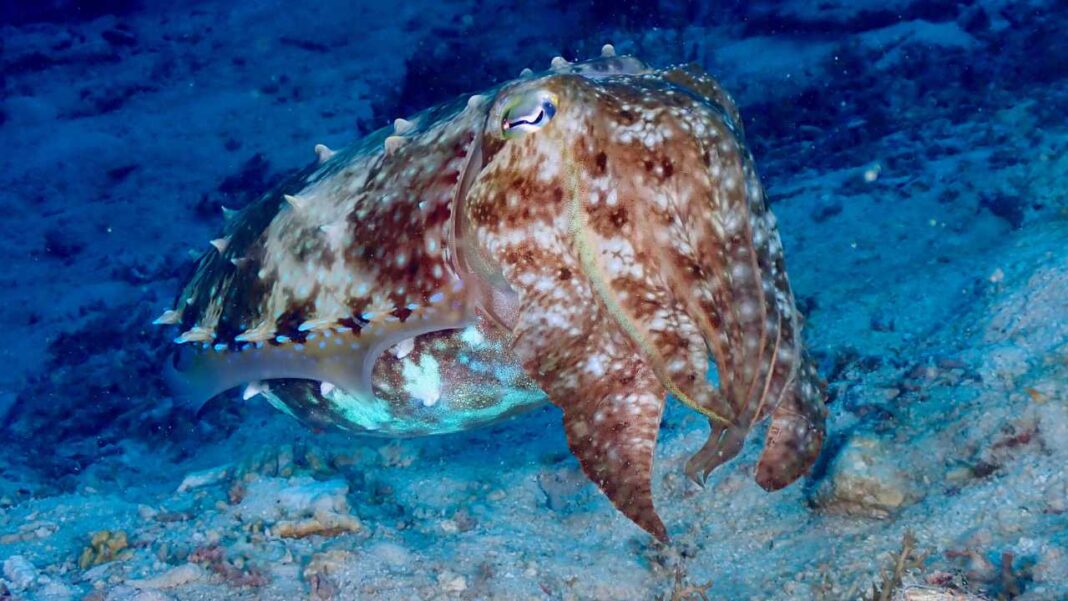

Every winter, giant cuttlefish gather along a small stretch of South Australia‘s coast. This is the biggest cuttlefish mating event in the world. In favorable years, hundreds of thousands of cuttlefish arrive here to breed. Divers travel from far away just to see them.
This year was different. Only 1,811 cuttlefish showed up. Last year, there were 63,000. That’s a drop of 97%. Officials think a toxic algal bloom is the cause. This bloom has been damaging South Australia’s coastline for over a year and a half. Some experts now want the species listed as endangered.
Cuttlefish usually die soon after mating. So each breeding season matters a lot for the species’ survival. Normally, millions of eggs are laid along the coast. This year, researchers found only 440.
Manny Katz leads a conservation group called Eyrelab. His team was asked by the government to survey the coastline and count eggs. They spent two days diving and checking under rocks. Usually, this search would turn up huge numbers of eggs. This time, they found almost none.
Katz explained that cuttlefish only live about a year or so. That means this year’s low egg count could shape next year’s entire population. He’s unsure if the species can recover from such a steep drop. His team also noticed the few adult cuttlefish they saw were acting strangely. They were nervous and hiding under rocks, probably because their numbers were so small.
Katz wasn’t totally surprised. The algal bloom has hurt sea life since March last year. Cuttlefish, along with octopuses and squid, are especially sensitive to this kind of algae. Stefan Andrews, from the Great Southern Reef Foundation, wants the species protected. He said the algal bloom is a likely cause but not yet proven to be the only reason for the decline. Fewer breeding adults now mean fewer young cuttlefish later, making future seasons harder too.
Government officials note that cuttlefish numbers naturally rise and fall. In 2013, there were only 13,500. But by 2020, the number grew to 247,000. After the last major drop, the population recovered within just two years.
Professor Mike Steer helped lead the survey. He called this year’s numbers disappointing but pointed out that cuttlefish have bounced back before. He noted that adults are still laying eggs, offering some hope for future years.