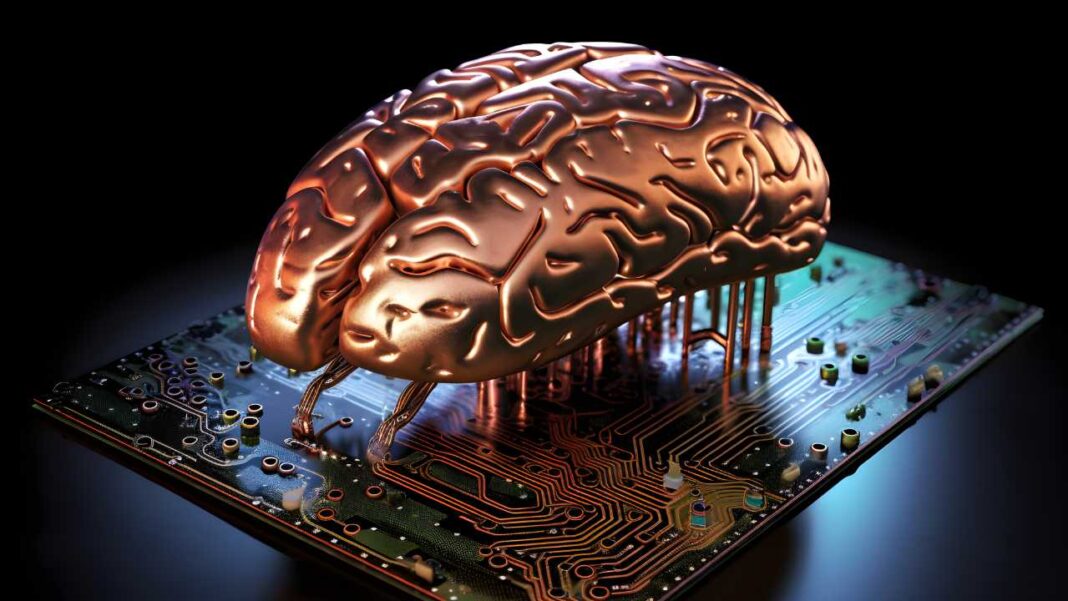

Nanotechnology (Commonwealth Union) – Be inspired by nature in science is nothing new, the most sophisticated systems functioning with perfect coordination has inspired many scientists and inventors. Nanowire Networks which have been modeled human brain have shown great potential in recent years.
Silicon-based digital computing has reshaped almost every area of modern life and played a major role in the rapid development of artificial intelligence. However, as AI systems become increasingly sophisticated and larger in scale, they also require greater amounts of energy, water and computing resources.
Meanwhile, emerging technologies such as satellites, robots and distributed sensor networks increasingly need to analyse data directly at the point where it is collected, often in environments where power and connectivity are constrained.
Researchers at the University of California, Los Angeles (UCLA) have assisted in pioneering a complementary computing approach that could eventually operate alongside conventional silicon-based digital systems to address some of these challenges. In this model, the traditional distinction between hardware and software is removed. Instead of running a neural network as software on a physical device, the hardware itself functions as the neural network. Computation takes place within a self-organizing material whose physical structure can form connections at the nanoscale, with dimensions measured in billionths of a metre.
Over the past 15 years, scientists have identified sophisticated collective behaviors in these systems that could be used to handle complex information in real time while consuming relatively little energy. These capabilities could contribute to the development of physical AI, where computing and learning functions are integrated directly into hardware that senses and responds to its surroundings.
The journal Nature Reviews Physics has now published a forward-looking review examining this emerging computing platform. The article was written by an international group of scientists who have played key roles in developing and advancing the technology.
Among the co-authors are Adam Stieg, a UCLA research scientist and associate director of the California NanoSystems Institute at UCLA, and James Gimzewski, a distinguished professor of chemistry in the UCLA College and a CNSI member. They were lead investigators on one of the early studies that helped establish this approach. More recently, Stieg has worked closely with co-author Zdenka Kuncic, a physicist at the University of Sydney in Australia, to further develop the technology.
“Silicon-based electronics have shaped how we think about computing, but they’re not the only way to do it,” Stieg said. “In our systems, the model evolves in the physical network itself. It adapts and changes.”
These self-organizing networks draw inspiration from features of the human brain’s cortex, the region responsible for functions such as perception, cognition and reasoning.
Similar to the brain, these systems can handle complex information while consuming relatively little energy. According to the review, self-organizing networks have successfully completed a range of machine-learning tasks, including speech and image recognition, in real time. Rather than executing conventional neural-network models through software, they take advantage of the network’s inherent physical dynamics to process information.
The approach could contribute to the development of physical AI through edge computing, where data are processed close to the locations where sensors collect information from the physical world.
Modern sensors can produce vast quantities of data, yet only a small portion may ultimately have practical value. Traditional computing systems generally convert these data into digital form before using algorithms to detect patterns, identify significant features and extract the information required for AI systems to interpret the data.
This approach can be particularly demanding at the edge, where energy, processing capacity and communication bandwidth are often scarce. Satellites, for instance, can gather substantially more information than they can efficiently send back to Earth, making it necessary to compress, filter or otherwise reduce the data before transmission.
The review authors foresee a future in which self-organizing physical networks are integrated directly into the computing process. Instead of functioning merely as hardware that supports software, these networks could modify their physical structure in response to incoming signals, allowing them to learn and perform computations directly. In the longer term, this could enable AI systems to operate continuously and locally in environments where computational resources are limited.