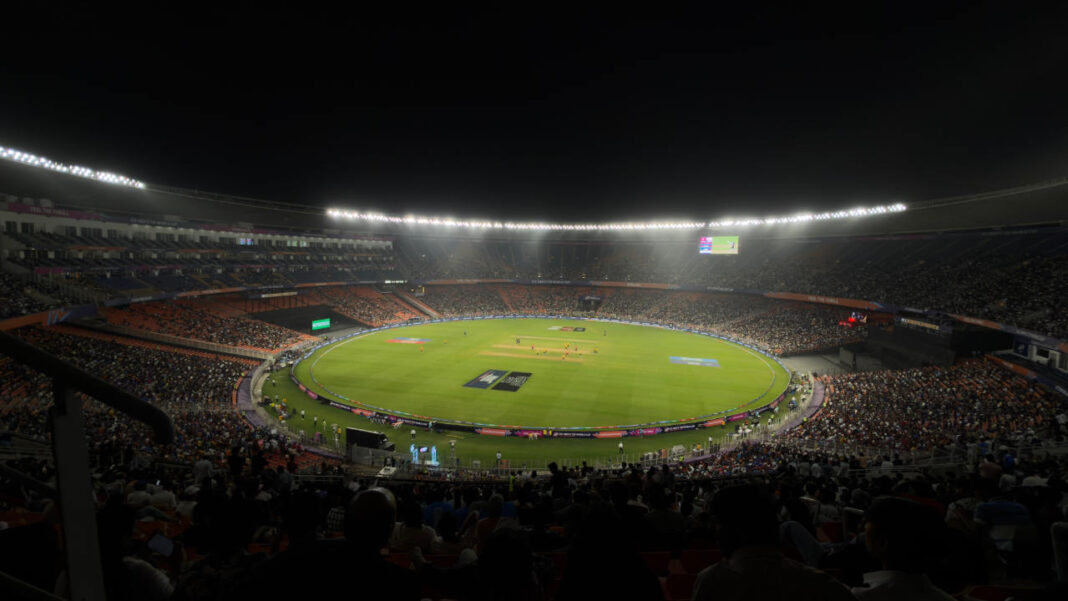

Indian cricket is currently one of the most contradictory stories in the international game. On the global stage, the team has been almost untouchable, collecting the 2024 ICC Men’s T20 World Cup, the 2025 ICC Champions Trophy, and the 2025 Asia Cup. In March 2026, India defended their T20 World Cup title by beating New Zealand by 96 runs in Ahmedabad, becoming the first team to win three titles and the first to lift the trophy on home soil. Weeks ago, they added Asian Games gold by beating Pakistan by 19 runs in the final. However, New Zealand and South Africa have whitewashed the same team in home Tests, and Australia has taken the Border-Gavaskar Trophy from them.
This gap between tournament success and bilateral consistency is not unique to India. Commonwealth cricketing nations such as Australia, England, South Africa, New Zealand, and the West Indies all juggle Tests, one-day internationals, and Twenty20s in a crowded calendar. The mix of long and short formats places heavy physical and tactical demands on elite players. When a board has the financial muscle and player depth of the BCCI, selectors are naturally tempted to rotate frontline players and trial fringe talent in bilateral series. That approach builds squad depth for the future, but it can leave the team exposed against opponents who arrive motivated and well prepared.
The ongoing home series against the West Indies shows this tension clearly. India won the three-match ODI series 2-1, but the visitors made headlines, nonetheless. In the second ODI in Guwahati, the West Indies scored 405/7, their highest total in men’s ODI history, with centuries from John Campbell, captain Shai Hope, and Amir Jangoo. In the final ODI, Hope scored an unbeaten 162 to guide the West Indies to 352, their highest successful ODI chase, even though KL Rahul had hit a career-best 129 for India.
The T20I series has been just as competitive. India won the opener in Lucknow by eight wickets and the third match in Indore by 14 runs, while the West Indies won the second in Ranchi by six wickets. In the fourth match in Hyderabad, Hope hit an unbeaten 102 off 50 balls, his third T20I hundred and a West Indies record, as the visitors posted 247/3. Sanju Samson raced to a fifty off just 20 balls in reply, but Keemo Paul’s five-wicket haul triggered a collapse, and India was bowled out for 223, losing by 24 runs. With the series level at 2-2, the decider takes place in Bengaluru on 17 October.
Such results point to a wider challenge faced by every major cricket board: workload management. Administrators must balance lucrative broadcast commitments against the physical limits of fast bowlers and all-rounders, while also preparing the next generation of match-winners. A team that rests key players in bilateral series risks defeats that frustrate supporters and expose technical weaknesses, yet a team that overplays its stars risks injuries before the major events.
There is also the question of conditions. India’s recent tournament triumphs have come largely on familiar Asian pitches, where spin and slower surfaces help cover small weaknesses. Upcoming global assignments in South Africa, Zimbabwe, Namibia, and Australia will demand adaptability on bouncier, faster tracks, and the 2027 ODI World Cup will test the team’s depth further.
The pattern has also reversed over time. A decade ago, India was dominant in bilateral series at home and away but often faltered under the pressure of knockout tournaments. Today, the team may appear vulnerable in bilateral contests, but they become tactically sharp and mentally resilient when trophies are at stake. Samson’s 321 runs as Player of the Tournament at the T20 World Cup, and Jasprit Bumrah’s 4/15 in the final, show how key players peak when it matters most.
Ultimately, the real test of sustainable greatness for India, and for the wider cricketing community, will be managing workloads wisely and nurturing capable young replacements. Bilateral series should not be dismissed as meaningless, because they are where depth is built and weaknesses are exposed. If India can carry its tournament composure into every format and condition, the current run of trophies may be the start of a long era rather than a peak.