
Science & Technology, Australia (Commonwealth Union) – Mine clearance crawlers play a crucial role in clearing land mines left in war zones, which often can result in disability with loss of limbs and disability and even fatalities.
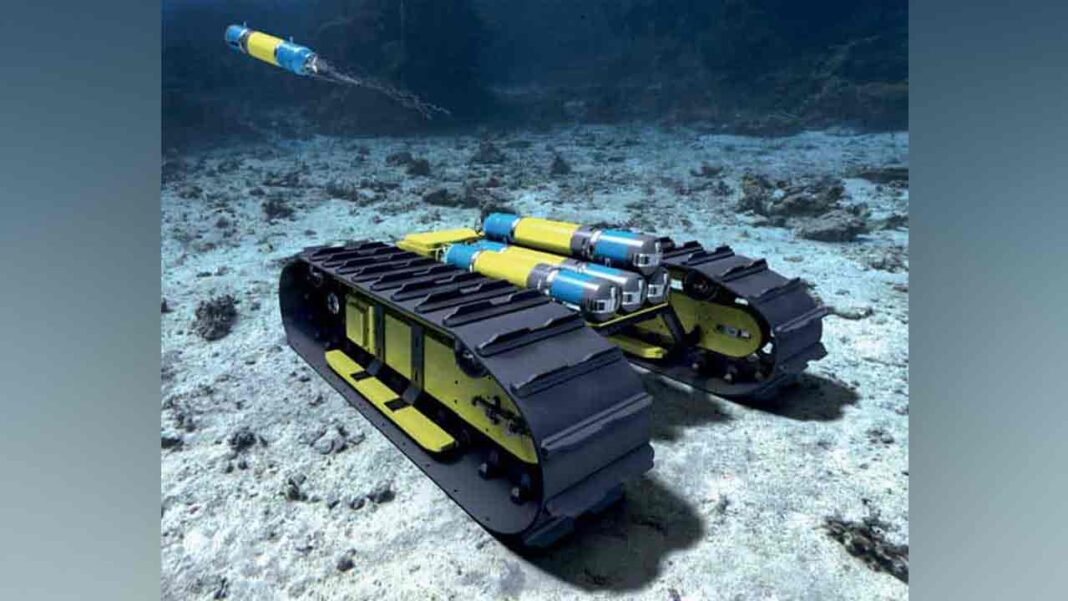
A mine-clearance underwater crawler created by Flinders University was on display as a part of a new technology in the national ‘Mine Counter Measures in a Day’ (MCM) Project.
A collaboration between the Thales Australia, Defence Science Technology (DST) Group, Flinders University, University of Sydney (USyd), University of Technology Sydney (UTS), Western Sydney University (WSU), Australian firms Mission Systems together with Ineni Realtime were on display at Christies Beach showcasing its possibilities with a variety of novel defense equipment.
The MCM in a Day’ is a 3.5-year, $15 million program that receives funds from the Trusted Autonomous Defence CRC, Navy and the Thales Underwater Systems Australia. The application is to utilize uncrewed underwater vehicles in exploring mines, unexploded ordnance and various sea hazards to lower their possible threats to shipping and defense forces.
The project involves the design, development, testing, and evaluation of various teams of Autonomous Underwater Vehicle (AUV) swarms and Autonomous Surface/Subsurface Vessels (ASVs) that will give an autonomous mine clearance ability operating in the amphibious zone near the shore.
The amphibious zone, sometimes referred to as ‘the littoral environment,’ has been noted for being difficult to navigate when exploring underwater mines. Overcoming obstacles such as tides, waves and currents and be set up to function in a low visibility and low communications area will need to be tackled by the system. The MCM In a Day project, will eventually supplement the presently applied methods, utilizing the expertise of Navy Clearance Divers in exploratory Rapid Environmental Assessment (REA) within the area.
Flinders’ Centre for Defence Engineering Research and Training (CDERT) Director Professor Karl Sammut stated that the Subsea Crawler vehicle was formed by the team at CDERT and jointly produced with German partner, iSeaMC targeted at protecting lives. The CDERT team consists of Assoc. Professor Russell Brinkworth, Dr. Phil Skelton and Dr. Aaron Melville-Smith as well.
“Most demining activities are usually conducted with specialised clearance vessels in deeper waters while divers are still required to investigate and clear threats in the relatively shallow and turbulent waters of the surf zone where the wave action and turbidity is significant, putting clearance divers at risk. This project is specifically targeted at addressing this problem and reducing risk to human life,” explained Professor Sammut who also stated that project was built on their expertise in maritime autonomy and provided them an invaluable opportunity to join hand with other excellent partners.
John Best, Thales Australia’s Chief Technical Officer, who attended the demonstration, and made a note of the step-change this ability gives the Royal Australian Navy (RAN).
He also indicated that the project will apply technology to make a change in high risk, and labor-intensive activities and speed up the clearing of the amphibious zone mine by lowering the time needed to clear a landing zone, as well as collecting and analyzing mission critical environmental data while improving personnel safety and collecting operational intelligence.
Richard Price, Defence SA Chief Executive, stated that the project was a great example of the advantages collaborations.
“Collaboration is vital for innovation and the development of this cutting-edge defence technology is a great example of what can be achieved when universities and industry work closely with Defence to co-design solutions to increasingly complex challenges.”
“South Australia has a long history of success in defence research and development and this latest demonstration showcases our strength as a critical testbed for defence technologies.”
The demonstration marked a significant milestone for the project which is in its 2nd year, with more development and demonstration work to go further inro 2023 until the project finishes in early 2024.