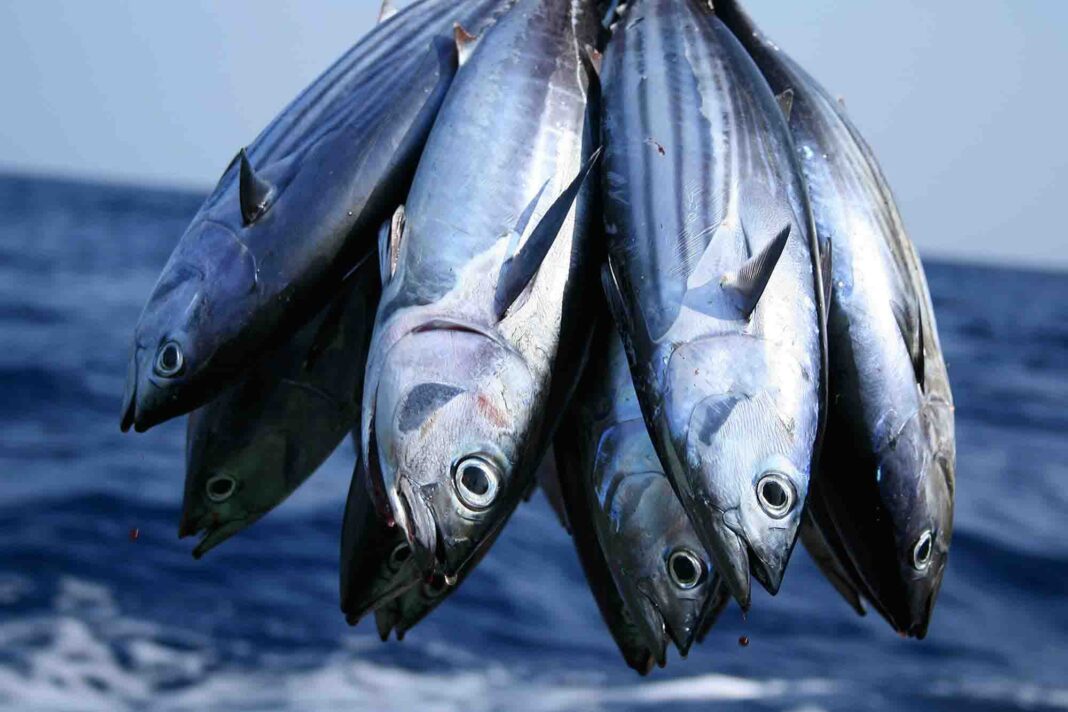

India (Commonwealth Union)_States in the Indian Ocean have decided to temporarily ban the use of industrial fishing gear that is significantly diminishing tuna supplies. This major resolution was a big win for countries that depend on smaller-scale fishing practices to support coastal residents’ livelihoods.
The decision comes on the heels of three days of serious negotiations at the 30-member Indian Ocean Tuna Commission summit held in Mombasa in Kenya, where developing countries were in disagreement with the European Union, whose member nations depend more heavily on purse seines and long liners, which are more damaging to the marine ecosystem. During the weekend, Kenya’s fisheries minister withdrew his support for the new tuna fishing regulations, with some speculating that EU pressure may have played a role in his change of mind. However, eleven additional governments, led by Indonesia, got the resolution through.

According to Putuh Suadela, who led the Indonesian delegation, “The persistence shown by all the proponents proves that unity can bring movement to a better direction for the conservation and management of tuna fisheries in the Indian Ocean”. Hussain Sinan, a Maldivian fisheries specialist, stated that the new laws adopted by coastal governments are of great importance and are capable of reshaping regional marine management.
The EU has been accused in the past of colonial tendencies in the Indian Ocean and of supporting their fishing sector through unjust quotas and opaque fisheries. Further, over two hundred thousand metric tons of fish are harvested yearly by its member nations in the Indian Ocean. According to United Nations regulations, the EU has 120 days to protest the resolution.
According to Frédéric Le Manach, Scientific Director of the French ocean conservation organization Bloom, the new decision may finally allow yellowfin and bigeye populations to recover. He stated, “Coastal nations are still intimidated by the distant waters fishing nations, especially the EU”. He added, “What happened over the past three days sends a very strong signal: the bullying days of the EU may be over.”