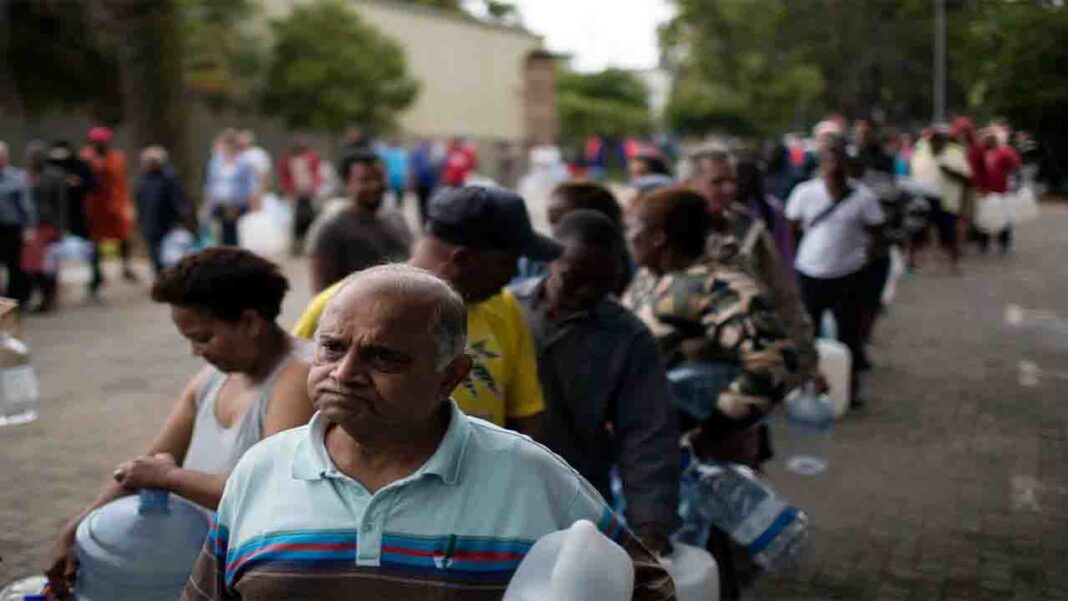

Africa ( Commonwealth Union ) _ To secure its drinking water supply, which is threatened by climate change and rural exodus, the city of Cape Town in South Africa has implemented an ambitious plan, particularly focused on financial measures. The objective of these initiatives is to ensure that the taps in Cape Town never run dry.
After experiencing a severe drought for three years, Cape Town took action in 2018 to avoid a complete water cut-off. The city became the first in the world to reduce its water consumption by 55% without implementing water cuts, according to Michael Killick, the director of the municipality’s water supply.
To further develop the water sector, the authorities have allocated 18.5 billion South African rands (approximately $959 million) over the next four years. This funding aims to meet the needs of Cape Town’s 4.9 million inhabitants.
A portion of the allocated funds, around 38 million rands (almost $2 million), will be used to install new taps in informal settlements within the city. Additionally, the municipality plans to invest 604 million rand (nearly $31.4 million) into the New Water Program (NWP) by 2024. This program includes a groundwater recharge component crucial for sustainable water resource management.
The city authorities aim to produce an additional 300,000 cubic meters of water per day by 2030. To achieve this, they plan to redirect and filter the polluted water from 850 storm basins in the Cape Flats, reintroducing it into the groundwater.
Regarding drinking water infrastructure, 92 million rands will be allocated for the replacement of 50 kilometers of water pipes in Cape Town. An additional 157.5 million rand (over $8 million) is planned for purchasing generators, inverters, and equipment to power sewage pumping stations, as well as drinking water and wastewater treatment plants for the next financial year (2025/2026).
In 2018, Cape Town narrowly avoided a water crisis when three years of drought resulted in depleted dams. The city’s residents had to significantly adjust their daily lives and reduce water consumption to avoid reaching “zero-day,” when taps would have been shut off. However, winter rains postponed this critical situation for the time being.