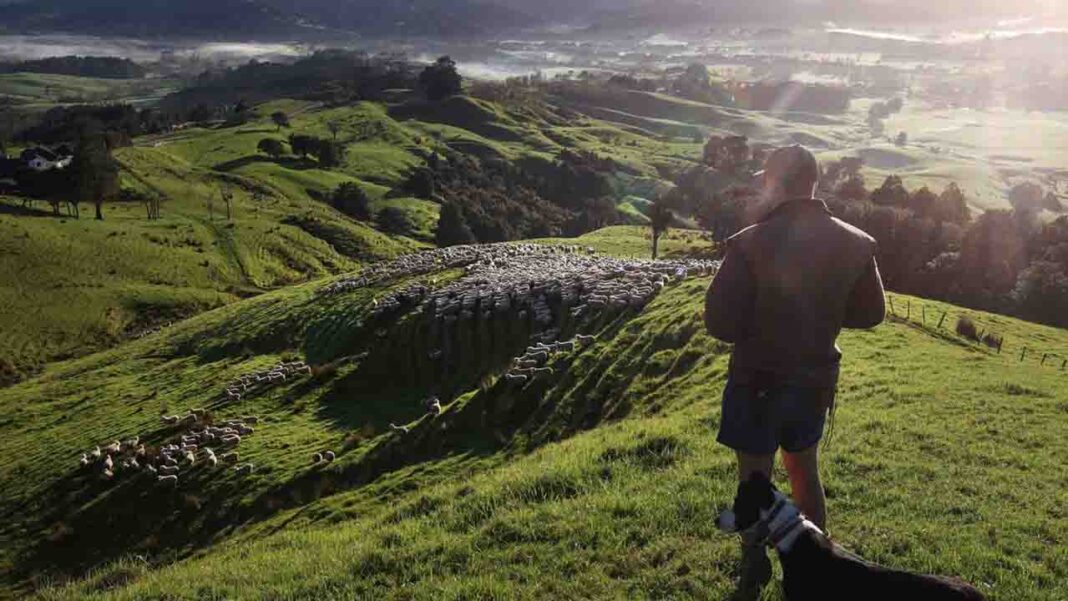

New Zealand (Common Wealth) _ New Zealand Prime Minister Chris Hipkins declared that the country’s farmers were already “well-placed” to fulfill global demand, and that markets such as Europe and the United Kingdom were ideal for maximizing the value of exported products.
This remark was made while attending the Fieldays in Waikato with Agriculture Minister Damien O’Connor.
He also stated that the government has implemented a series of initiatives to assist farmers in reducing greenhouse gas emissions while maintaining a competitive commercial advantage.
They include $17.7 million for a new greenhouse gas testing laboratory and $4.3 million for soil and grass research, including a faster hybrid ryegrass breeding system.
Hipkins went on to say that the government intended to work with farmers to keep New Zealand’s reputation as a low-emissions source of food and fiber.
“More and more people are choosing to buy products that come from a place where animals are treated well, there is a low environmental impact, and production contributes minimally to global emissions,” Hipkins explained.
“These investments in further research and development will make our farms more resilient, improve pasture productivity, and reduce emissions, while also ensuring there is a local support network to help farmers right now.”
O’Connor stated that for the first time, New Zealand’s primary producers earned more than $53 billion in export revenues last year, and that the sector was poised to achieve new heights this year as well.
“Raising our sustainability credentials and lowering our carbon footprint will be critical to future-proofing the industry and securing a path to continued export growth.”
He stated that the new greenhouse gas testing station would provide permanent measuring technology and facilities to help the country’s emissions reduction plan without burdening farmers.
The government would foot the majority of the bill ($11.7 million) for the new structure, which would feature 12 respiration chambers to measure and monitor variations in methane emissions in individual cows.
The Centre for Climate Action on Agricultural Emissions ($4 million), its primary sector joint venture partners, and AgResearch ($2 million) would fund the facility, while Massey University in Palmerston North would provide land and cattle for testing.
The government was devoting $4.3 million to evaluate the effects of post-drought postponed grazing on hill country sheep and beef farms, as well as to figure out how to boost pasture grass yield.
“The new ryegrass pastures under development are expected to increase productivity by around 20% while also providing farmers with options to reduce nitrate leaching, increase carbon sequestration, and improve water use efficiency,” said O’Connor.