

Science & Technology, Singapore (Commonwealth Union) – In the realm of adult insects, such as butterflies and moths, it’s a standard affair to possess merely three pairs of legs. Yet, the enigmatic presence of additional appendages, colloquially known as ‘prolegs,’ of these insects has long puzzled biologists from an evolutionary perspective. A recent study conducted by a team of researchers hailing from the National University of Singapore (NUS) has shed new light on this unique trait by drawing an unexpected link to crustaceans.
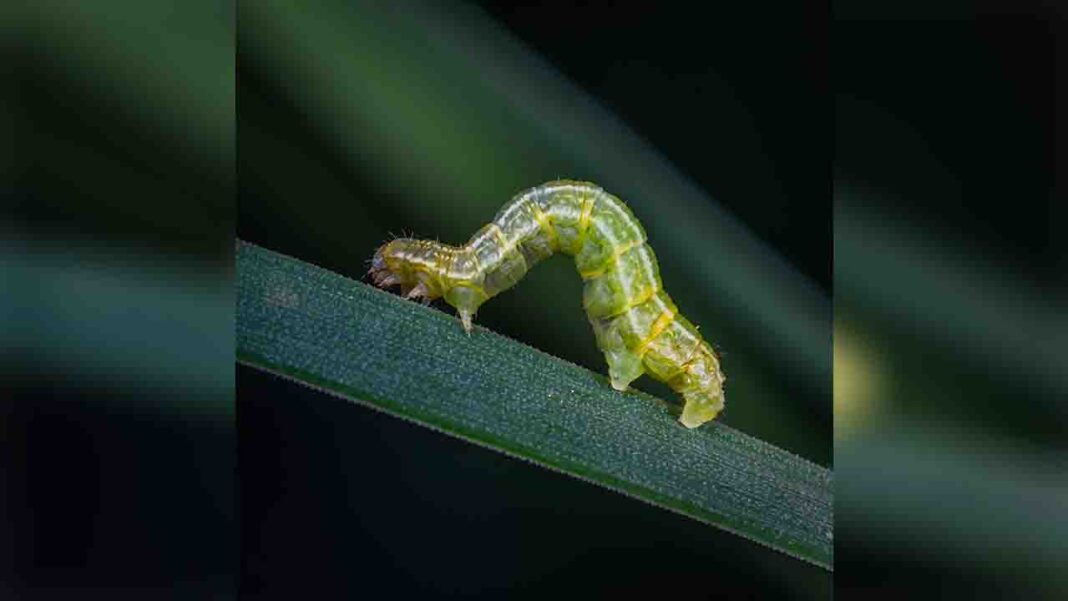
Caterpillars employ their prolegs for gripping onto twigs and leaves, while their thoracic or ‘true’ legs serve the purpose of securing other parts of plants for feeding.
Professor Antónia Monteiro, who led this research endeavor within the Department of Biological Sciences at the NUS Faculty of Science, elucidated the three principal theories concerning the nature of prolegs. These theories proposed that prolegs might be either modified thoracic legs, entirely novel features, or adaptations of primitive thoracic leg lobes (endites). The NUS study now posits that prolegs are indeed novel traits distinct from thoracic legs. However, they trace their origins to a genetic program specifying structures that were initially found in the proximal region of crustacean limbs but had remained dormant in this limb region for millions of years.
The findings of the NUS team have been published in the scientific journal Science Advances recently.
The lead author of the study, Dr. Yuji Matsuoka, formerly a Postdoctoral Research Fellow at the NUS Department of Biological Sciences and currently an Assistant Professor at the National Institutes of Basic Biology in Japan, conducted experiments involving the disruption of a specific Hox gene, abdominal A, in various segments of the abdomen of Bicyclus anynana butterfly larvae where prolegs are situated. Complete disruption of the Hox gene resulted in the absence of prolegs, while partial disruption in the lateral sections unexpectedly led to the development of two distinct features in the abdomen: prolegs and a modified version of thoracic legs. These results indicate that these two traits originate from different locations in the body and are not one and the same.
Dr. Matsuoka indicated that the removal of prolegs through the disruption of this Hox gene indicated that the gene played an important role in initiating proleg development, whereas the appearance of modified thoracic legs, which resembled a type of secretory gland when the gene was disrupted, indicated that the Hox gene was repressing these traits. Dr. Matsuoka also pointed out that this suggests that two traits can potentially coexist in the abdomen of butterflies and moths: prolegs when the gene is active, and glands (modified thoracic legs) when the gene is inactive.
To further unravel the mystery, Dr. Suriya Murugesan, a Research Fellow at NUS Department of Biological Sciences, conducted an in-depth analysis to discern the similarities between prolegs and other features. He systematically isolated the genetic blueprints of various proteins, known as messenger RNAs (mRNAs), from various caterpillar appendages, including horns, mouthparts, legs, and larval wings. His research revealed that the pool of mRNAs expressed in prolegs differed significantly from that in thoracic legs and bore a closer resemblance to the pool found in head horns, which are another unique trait in butterflies and moths.
A connection to crustaceans, a trait more commonly associated with these aquatic creatures, became apparent when the scientists scrutinized the genes uniquely expressed in prolegs. Some of these genes were recognized as markers for endites, components of appendages commonly found in the biramous (two-branched) legs of crustaceans. While endites still exist in the mouthparts of insects, including butterflies, their presence in prolegs unveils a fascinating evolutionary link, as indicated by researchers of the study.