
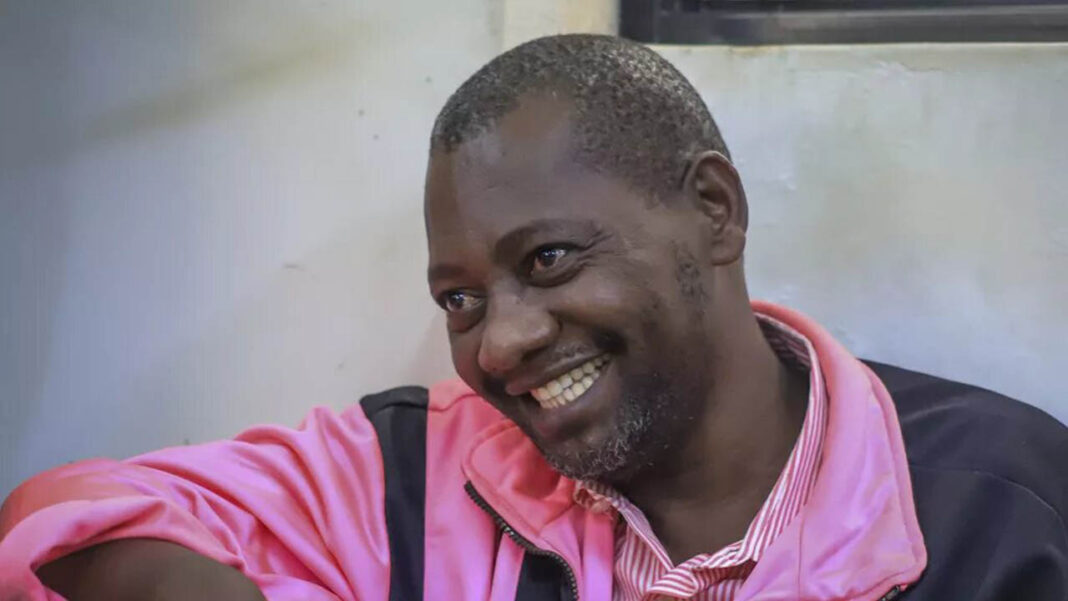


Africa (Commonwealth Union) _ In a case that has shocked the world, Kenyan cult leader Paul Mackenzie is now on trial for manslaughter, following the deaths of over 400 of his followers in what has been deemed one of the deadliest cult tragedies in history. Mackenzie, who led the controversial Good News International Church, is facing severe charges including murder, child torture, and terrorism. These charges were brought after the grim discovery last April of hundreds of bodies, believed to be followers who succumbed to starvation under Mackenzie’s orders.
Previously, Mackenzie had pleaded not guilty to multiple manslaughter charges earlier this year. However, the prosecution plans to leverage Kenyan laws regarding suicide pacts to hold him accountable for these heinous acts. On Monday, Mackenzie, appearing frail yet still seemingly exerting influence over his followers, stood alongside more than 90 other suspects in a Mombasa magistrate’s court.
This case has sparked a nationwide conversation about the lack of regulatory oversight on self-proclaimed pastors and religious leaders in Kenya, a country where faith is deeply embedded in everyday life. Prosecutor Alexander Jami Yamina described the case as unprecedented in Kenya’s legal history, calling it “very unique.” The sensitive nature of the case has led to some witnesses testifying in private.
The trial includes 55 men and 40 women, all charged last month with terrorism related to the mass deaths in Shakahola, alongside additional counts of murder, child torture, and cruelty. Prosecutors allege that these crimes spanned from 2020 to 2023, under Mackenzie’s direction.
In a harrowing process, authorities have begun releasing the bodies of some victims to their grieving families after months of painstaking DNA identification. So far, 34 bodies have been returned.
This tragic case has forced the Kenyan government to reconsider its approach to religious regulation. Both the Kenyan Senate and a state-funded human rights organization have suggested that better oversight could have prevented these deaths. In response, President William Ruto has set up a commission to investigate the tragedy and assess the regulation of religious groups. Last month, the commission recommended a dual approach combining self-regulation with government supervision, aiming to prevent such a tragedy from ever happening again.