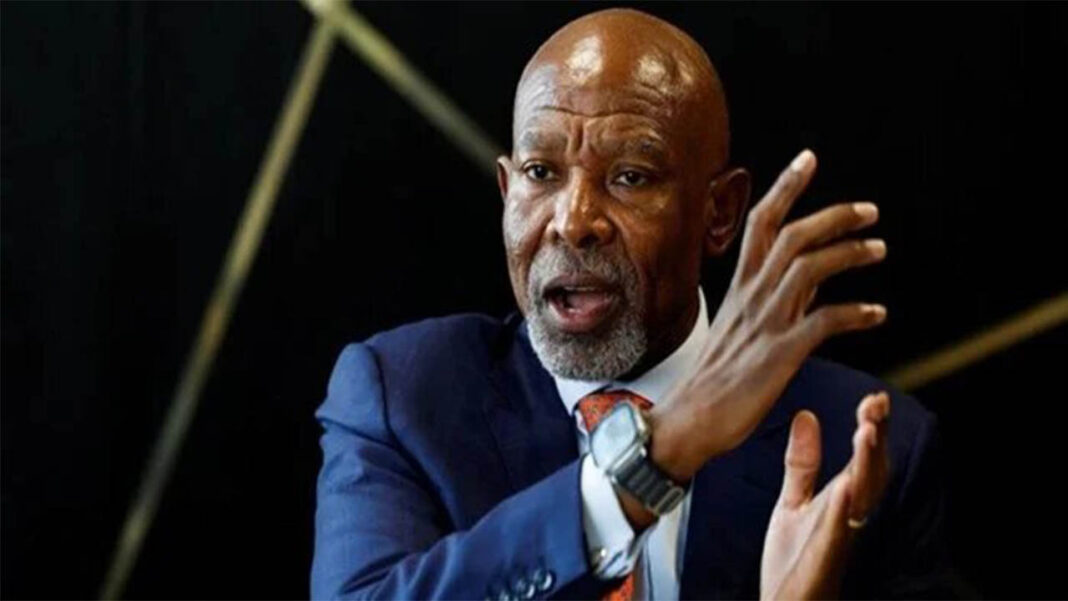

Africa (Commonwealth Union) _ South Africans had hoped for a significant interest rate reduction, but the Monetary Policy Committee (MPC) opted for a cautious cut, lowering the repo rate by just 25 basis points to 8% per annum, effective from September 20. Lesetja Kganyago, Governor of the South African Reserve Bank (SARB), emphasized the prudence of this decision, noting that it aligns with the global trend of cautious central bank actions amid economic uncertainty.
Kganyago explained that the primary focus remains on inflation management rather than interest rates. While inflation had previously been forecasted at 4.9%, SARB has now revised it to an average of 4.6%, indicating stabilizing conditions. The bank’s forecast points to a neutral stance by next year, with inflation expectations improving and headline inflation projected to stabilize between 2025 and 2026.
Despite South Africa’s modest growth recovery in the second half of the year, investment remains a pressing concern. SARB’s caution is influenced by the unpredictable global geopolitical landscape, which could result in inflationary shocks from trade restrictions, supply chain disruptions, and rising debt levels. Kganyago noted that while lower oil prices or a stronger exchange rate could ease inflation, factors like higher housing costs, electricity price hikes, and wage increases pose inflationary risks.
Food inflation also continues to be a concern, with geopolitical risks potentially triggering further economic shocks. Globally, rising debt and policy uncertainty could lead to tighter financial conditions, affecting South Africa and other economies.
On a brighter note, the South African rand has strengthened more than many peer currencies this year. However, the country’s economic output underperformed in the first half of 2023, though growth is expected to improve slightly with a 0.6% rate in both quarters of the second half. Yet, this remains below the longer-term average of 2%, and investment has contracted for four consecutive quarters.
Kganyago stressed that a stronger investment performance is critical for sustained growth, and the scale and speed of an investment recovery will be key indicators of South Africa’s long-term economic prospects. For now, SARB assesses the risks to the country’s growth outlook as balanced.