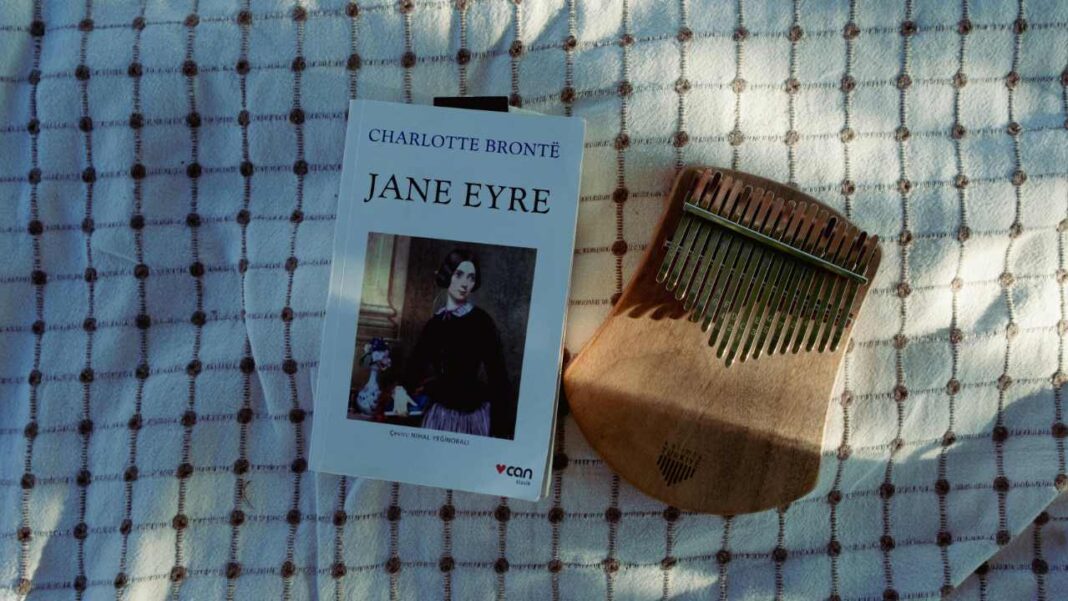

Charlotte Brontë’s Jane Eyre can be described as a Victorian novel. However, it has also been said to represent a psychological protest against the established order of British society. Early on in the novel, Brontë makes it clear that her intention is neither to glorify authority, nor to sentimentalize anguish, nor to disguise ugliness through refinement and respectability. In Brontë’s preface (signed “Currer Bell”), she declares that her goal was to create an accurate depiction of reality and to separate “convention” from morality to create an unquenchable fire for the reader.
Perhaps more than anything else, what makes Jane Eyre so compelling is the character’s voice. The adult Jane’s spoken word expresses an undemanding sincerity that combines an innocence borne from her woundedness and a fierce self-awareness of her own nature. In earlier parts of the novel, the child Jane begins as a victim, but she develops progressively into a ‘consciousness under pressure’—as an observer, judge, memory, and resister. Jane’s confinement in the red room at Gateshead Hall is probably one of the most difficult and disturbing scenes in the English novel. The red room is a cold, silent, sorrowful, and symbolically threatening room where the red room can be considered both a physical and a spiritual expression of punishment.
The brilliance of Charlotte Brontë is found in her ability to give drama to the inner life of her characters through their own suffering. The emotional torment of Jane Eyre, the protagonist, is not portrayed as simply an artistic demonstration of “misery.” Rather, her emotional torment provides not only the basis for her morality but also demonstrations of her strength of character through the philosophical lens of what is right vs. what is wrong and, by extension, successful vs. unsuccessful. So when she asks why she is “always treated brutally” or “always suffering,” Charlotte Brontë has created a new paradigm in literature—one that gives the emotional reality of a child who is impoverished, dependent, unloved, and unable to give up her identity as a human being the dignity of being human.
Additionally, Charlotte Brontë offers a modern viewpoint regarding class, gender, and personal freedoms. Although Jane accepts that she is dependent upon the benevolence of others for her survival, Charlotte Brontë refuses to define Jane’s worth as a human being in accordance with that dependence. The result is that Jane Eyre is a heroine not simply because she survived her suffering, but rather because of her ability to think for herself. In fact, Jane’s early aspirations for education and independence represent the theme of the novel, which is that one should create one’s life based on one’s principles rather than based on one’s submission to others.
Aside from the first element of the book’s unique and intense writing, there is an additional element that gives the book life. The second layer is the book’s atmosphere; Brontë’s ability to move from a scene of domestic realism to a near-gothic scene in one page is fascinating. For example, if you’ve ever been in an old house with a curtained window on a cold winter’s day, heard someone tell you a ghost story about that same building, sat in a candlelit room, and were then shown a picture of the same building with the lights turned out and the creaky corridors… those are all representative of Jane’s emotional states and create a moral landscape within the house.
The reason, then, why Jane Eyre will always be so interesting to readers, contemporaneously or historically, is because while it is primarily a love story, it is equally a story of protest. While it is ultimately a coming-of-age novel, it is also an exploration of conscience’s nature. Most importantly, the novel tells the story of a woman asserting that she has a soul, a will, and the right to exist as such; this assertion resonates with individuals from over a century and a half ago, and even today, it continues to feel revolutionary.