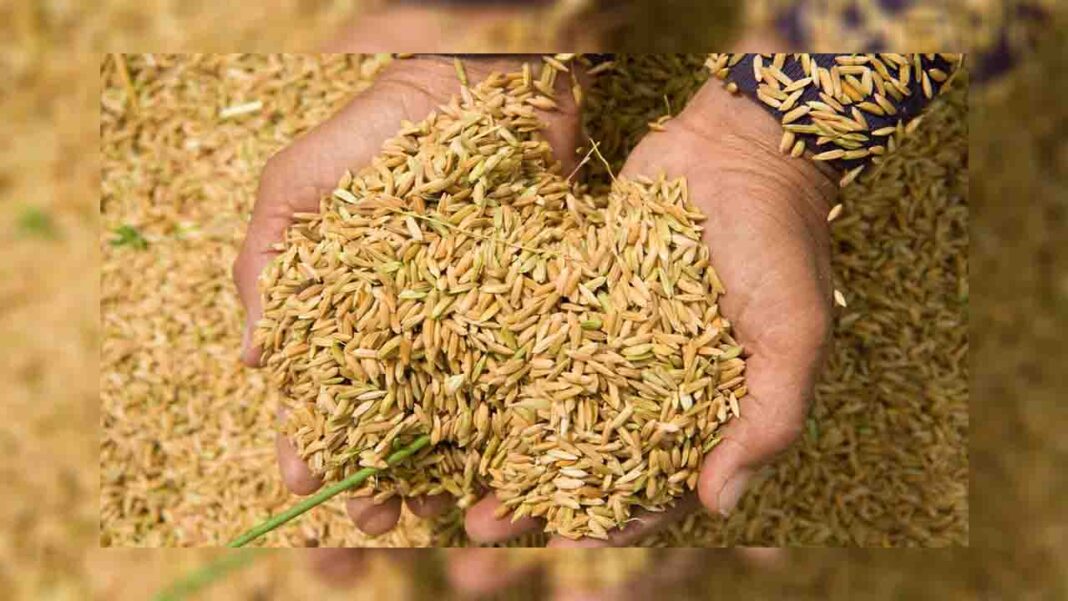

Bangladesh (Commonwealth Union)_ Food Minister Sadhan Chandra Majumder announced that Bangladesh has attained self-sufficiency in food production, attributing this significant milestone to a series of effective government initiatives over three consecutive tenures. According to the United Nations Food and Agriculture Organization’s State of Food Security and Nutrition in the World report, Bangladesh’s production of major food grains has burgeoned by three to fivefold within the 52 years since its independence. Furthermore, Bangladesh now ranks among the top 10 global producers of 12 pivotal agricultural products.
During a discussion held at the Bangladesh Agricultural Research Council (BARC), the Minister emphasized the transformation from a country grappling with severe food shortages to one that boasts a surplus and attributed the success to technology-driven initiatives by the government. He said, “Once Bangladesh faced severe food deficiency…Now the country has turned into a food surplus one through taking technology-based initiatives”. Sadhan added that the country is currently not importing rice, given the abundance of food stocks in the country. Despite ample rice reserves, the government scrutinizes stock levels and rice production to consider imports, ensuring the supply of this staple food item.
The minister underscored the government’s commitment to developing high-yielding crop varieties, urging scientists to intensify their research efforts. The minister emphasized the pivotal role that the agriculture sector plays in the country’s economy. Assuring the nation of food security, Sadhan Chandra reported a successful Boro crop harvest and anticipated a bumper crop of Aman. He shared these insights during a discussion on World Food Day, which centered around the theme “Water is life, water is food. No one will be left behind” at the BARC auditorium.
Despite these achievements, Sadhan Chandra issued a caution to traders, urging them to prioritize consumers’ interests. He raised concerns about the price disparity of rice between production areas and Dhaka, emphasizing the need to address this pricing distortion. He said, “The price of rice significantly increases when it reaches Dhaka. This practice needs to be discontinued.” While acknowledging self-reliance in rice, fish, mango, and vegetable production, the Minister lamented the wastage incurred due to inadequate storage facilities, particularly affecting mangoes and vegetables. He suggested that focusing on the export of processed mangoes and vegetables could be advantageous for farmers.
Regarding rice quality, Sadhan Chandra pointed out that the excessive polishing of rice grains diminishes their nutritional value. He proposed that the adoption of healthier alternatives like red rice, richer in nutrients, might discourage mill owners from producing over-processed rice for commercial purposes, ultimately benefiting public health. Highlighting the water crisis, the Minister stressed the importance of judicious water use, as some farmers tend to employ excessive water for irrigation. He called for heightened awareness and prudent water management practices to curb waste in this crucial resource.