

As AI moves beyond generating simple scripts to directing complex software workflows, fears of technical displacement have spread throughout the global tech sector. But labour economics, market compensation data and U.S. Bureau of Labour Statistics (BLS) data suggest a far more nuanced relationship between automation and tech employment than wholesale replacement. Algorithms are quickly replacing entry-level jobs that require drafting syntax and labelling data in standard ways. But the number of high-paying, high-demand jobs in advanced technology – the kind that involve complex systems architecture, physical infrastructure maintenance and strategic human judgement – is growing faster.
In the tech ecosystem there exists a stratum of specialised, high-paying and AI-resistant jobs (much like hands-on surgical procedures and high-risk utility trades are immune to software disruption).
The Basic Rule: Systemic Accountability vs. Algorithmic Predictability
It’s not the technicality of the job that determines its vulnerability, but the job’s algorithmic predictability. If a job is repetitive and can be expressed as a set of rules—say, translating technical specifications into boilerplate code or running a set of standard database queries—then it is a job that can be automated by autonomous agents.
Conversely, positions requiring multi-dimensional risk assessment, cross-functional stakeholder negotiations, physical hardware deployment, and legal accountability are structurally insulated. Automated models cannot be held operationally responsible for an unplanned infrastructure outage, nor can they be legally accountable for a critical data security violation.
| Strategic Tech Specialisation | Median Annual Salary | Core AI-Resistance Rating |
| Enterprise & Solutions Architect | $155,000 to $225,000 |
High-level systems design, Legacy modernisation, corporate trade-offs |
| Cybersecurity & Threat Architect | $145,000 to $240,000 |
Incident accountability, asymmetric threat defence, crisis triage |
| Data Center & Optical Infrastructure Engineer | $105,000 to $165,000 |
Physical server racking, high voltage power routing and optical diagnostics |
| AI Governance, Privacy & Compliance Lead | $140,000 to $220,000 |
Regulatory audits, algorithmic accountability and cross-border data ethics |
| OT/ICS Industrial Systems Engineer | $115,000 to $170,000 |
Air-gapped physical infrastructure, SCADA, industrial plant control |
- System Orchestrators: Enterprise and Solutions Architects
Large language models can create functional routines in fractions of a second, but they can’t evaluate 40 years of heterogeneous enterprise architecture. Enterprise architects sit at the intersection of business strategy and engineering reality. They define the communication between proprietary legacy applications, hybrid cloud platforms and distributed microservices but ensure that performance doesn’t suffer on sudden traffic spikes.
These decisions represent a trade-off between budgetary constraints, licensing agreements, vendor lock-in risks, and corporate scalability goals. AI is unable to arbitrate between competing executive priorities, navigate corporate governance, or design resilient fault domains that protect enterprise operations.
- Cybersecurity Architects & Incident Commanders
Machine learning may accelerate intrusion detection and automated alert triage, but enterprise defence is still an inherently human cat-and-mouse game. Bad actors are continuously coming up with polymorphic evasion techniques that attack the blind spots of automated defensive tools.
Cybersecurity architects and incident response leads look at the larger strategic motives of threat syndicates, design zero trust perimeters, and lead crisis management during active zero-day breaches. Most importantly, an enterprise under active extortion or ransomware attack has to decide to either disconnect core banking systems or call law enforcement, and that decision requires executive human judgement and accountability that can’t be offloaded to software.
- Data Center and Physical Infrastructure Engineers
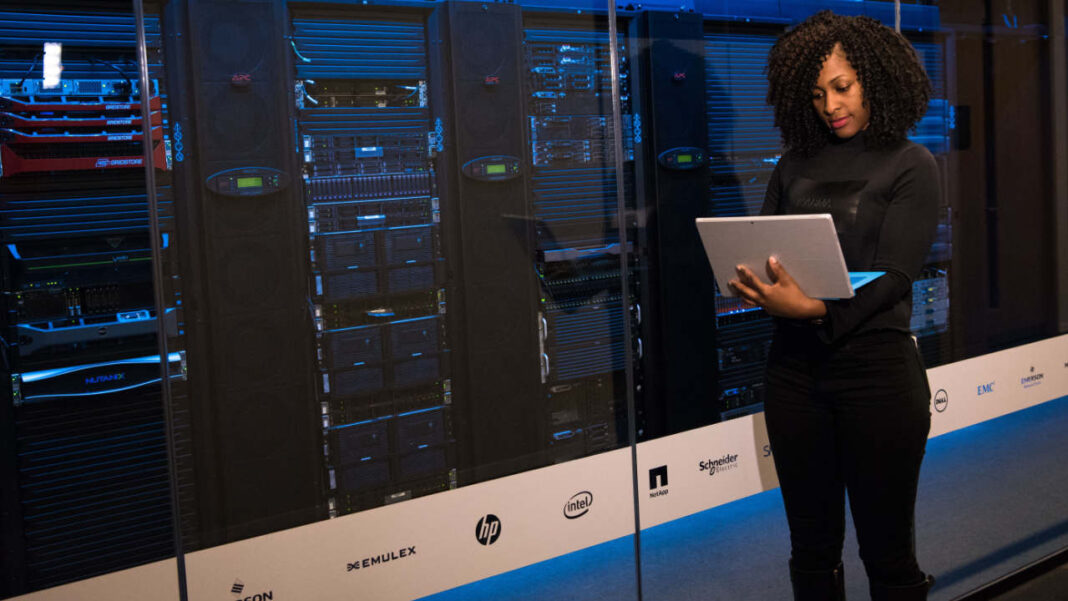
Behind every software innovation, cloud-computing instance and AI cluster are real silicon, power and cooling grids. The worldwide boom in specialised computing has created a huge demand for physical infrastructure specialists.
Physical server racks are managed by data center engineers, optical network specialists and hardware technicians who troubleshoot high-density liquid cooling loops, splice high bandwidth fibre optic trunks and balance three-phase electrical distribution. Hands-on diagnostics, hardware swaps, and the physical deployment of mission-critical hardware are entirely immune to direct software automation because digital models lack a physical presence.
- AI Governance, Risk and Compliance Managers
The rapid proliferation of artificial intelligence has provoked fierce regulatory scrutiny across the world, from the European Union’s AI Act to cross-border financial data protection statutes. Companies running autonomous models face large exposure to copyright infringement, algorithmic bias and unvetted data ingestion.
AI governance leads and Data Protection Officers perform deep algorithmic audits, assess model explainability, build synthetic training pipelines and ensure legal compliance. An AI system cannot impartially audit its own compliance or assume legal liability before regulatory bodies. Certified compliance professionals remain vital corporate leaders.
- Industrial Control Engineers and Operational Technology (OT)
Supervisory Control and Data Acquisition (SCADA) systems and programmable logic controllers (PLCs) constitute the backbone of modern utility networks, water purification plants, automated assembly lines, and transport grids. Unlike consumer cloud services, these operational technology networks are often air-gapped from the public internet to prevent compromise from the outside.
OT engineers work on factory floors and municipal substations directly, coupling physical mechanical actuators with low-level embedded software. The absolute intolerance for physical error means that a software bug could destroy physical equipment or endanger human safety, so physical industrial systems engineering still relies on direct human validation.
From Execution to Strategic Direction Evolution
The tech job market is changing, and the baseline skill level is going up significantly. This is not the death of technical jobs. Pure execution—typing predictable code and compiling rote documentation— is becoming a low-margin game.
By contrast, the market today is paying an unprecedented premium for workers who decide what is engineered, check how it operates securely, and maintain the physical foundations of the modern digital economy.