
Most men diagnosed with prostate cancer that has not spread go on to live for many years. But heart disease and other cancers still threaten their health. So survivors often ask a simple question. What can I do to stay healthy longer? A new study points to one answer: the type of fat we eat.
The study appears in JAMA Network Open. Researchers from the Research Institute of the McGill University Health Centre and the Harvard T.H. Chan School of Public Health led the work. The team followed almost 5,000 men with nonmetastatic prostate cancer for nearly 13 years, using data spanning more than three decades.
The researchers found a clear pattern. Men who ate more saturated fat had a higher risk of dying from any cause. The same was true for men who ate more animal fat, as animal fat is a major source of saturated fats. Most of these deaths were not caused by prostate cancer itself. Instead, they came from heart disease and, to a smaller degree, other cancers.
“Diet after diagnosis may be one modifiable component of survivorship care,” said Lorelei Mucci, a Harvard Chan School epidemiology professor and co-senior author. She noted that protecting heart health matters, since some cancer treatments can affect metabolism and heart function.
This question matters more each year. About 300,000 men live with prostate cancer in Canada. In the U.S., that number reaches 3.5 million. Helping these men stay healthy after treatment is a growing part of cancer care.
Not All Fats Are Equal
Over the study period, 3,040 participants died. Men with the highest saturated fat intake had a 24% higher death rate than those with the lowest intake. Their 10-year risk of death was 26.4%, versus 23.4% for men eating the least. That gap equals about three extra deaths per 100 men over ten years.
The team also modelled what might happen if men swapped one fat for another, keeping total calories the same. Replacing 10% of daily calories from animal fat with plant fat was linked to a 16% lower death rate. A 20% lower rate was associated with substituting 5% of saturated fat calories with monounsaturated fat.
“The message isn’t just to eat less fat,” said David P. Labbé, a scientist at the Institute and associate professor at McGill University, and a co-senior author. “The type and source of fat seem to matter more.” He suggested that swapping some animal and saturated fats for plant-based and unsaturated fats could support long-term health.
These results line up with earlier research in people without cancer, and with dietary advice from the American Heart Association. Still, the authors caution that this study shows a link, not proof of cause and effect. It is not a call to follow an extreme diet or cut out animal products entirely.
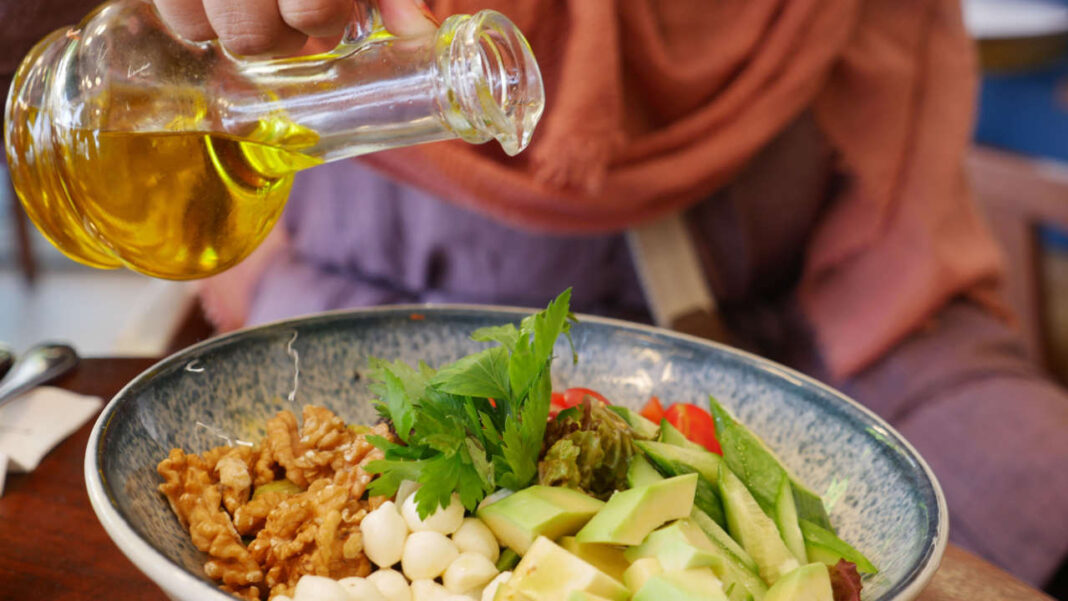
“Focus on simple swaps,” said Edward Giovannucci, a Harvard Chan School professor and co-senior author. He recommends choosing olive oil, nuts, seeds, and avocados more often over foods high in animal or saturated fat.
A Long-Running Study
The research draws on the Health Professionals Follow-Up Study. This project started in 1986 and has tracked more than 50,000 male health professionals across the U.S. From this group, researchers identified 4,884 men diagnosed with nonmetastatic prostate cancer between 1986 and January 2019. Most were white and about 70 years old at diagnosis. Every four years, they filled out detailed surveys about their eating habits. Follow-up continued through December 2022.
The team adjusted for many factors, including age, cancer stage, treatment type, smoking, exercise, weight, and other health conditions. This helped confirm the fat-survival link wasn’t just explained by other differences between the men.
Looking Ahead
The study group was mostly white American men. The researchers now want to test their findings in more diverse populations. They also plan to study specific foods, fatty acids, and broader eating patterns, and whether these links change with different treatments.
“Our goal is to make nutrition a precise, evidence-based part of prostate cancer care,” Labbé said. That means factoring in a patient’s treatment, tumor biology, and heart and metabolic health.