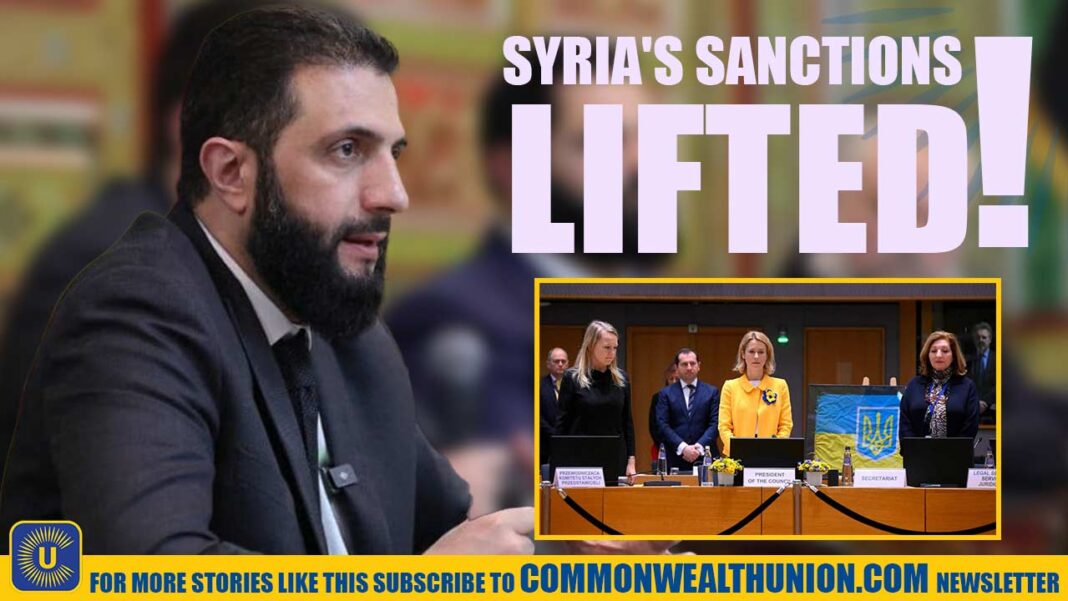

European Union policymakers have taken a step toward regulating economic relations with Syria by partially lifting several sanctions that have long impacted the nation’s energy industry and key sectors. The measures include scrapping bans on importing crude oil and exporting advanced technologies for the oil and gas sector, as well as easing restrictions on financing oil exploration, refining, and new power plant construction.
EU officials explained that the decision is designed to facilitate engagement with Syria’s businesses and citizens in areas such as transport, reconstruction, and banking. Reported sources noted that easing these sanctions is intended to boost the country’s fragile economic recovery while enabling smoother financial and banking transactions. The bloc’s foreign ministers in Brussels emphasized that the changes aim to support Syria’s broader economic recovery and reintegration into the international economy, ensuring that humanitarian aid flows more freely to a country in need.
The suspension of these restrictions comes amid efforts to nurture an inclusive political transition under President Ahmed Al-Sharaa. Diplomatic sources indicated that the easing of the sanctions is contingent upon meaningful reforms, including the representation of minorities in government. Observers reported that EU officials plan to closely monitor Syria’s progress and have reserved the right to reimpose measures should the new leadership stray from its reform commitments.
Syrian Foreign Minister Asaad Hassan al-Shibani stated, “We have spent the past two months engaging in discussions and diplomatic efforts to ease the unjust sanctions that have burdened our people,” a remark that underscored the administration’s optimism regarding the renewed economic engagement. Additional reforms include lifting asset freezes on several banks and easing restrictions on the Syrian central bank, which is expected to help restore access to much-needed financial resources.
Despite the easing, certain restrictions remain in place—particularly those targeting the chemical weapons sector, arms trade, and dual-use technologies—to address continuing security concerns. The recalibration of the sanctions policy is considered a careful balance between encouraging Syria’s return to stability and ensuring that progress toward a peaceful, inclusive political transition is maintained.
The decision has been welcomed by many in the Middle East, where regional players have long awaited steps to restore stability and facilitate reconstruction. The easing of these economic measures is expected to provide a much-needed boost to Syria’s prospects, potentially paving the way for the return of displaced populations and a more resilient future for the nation.