
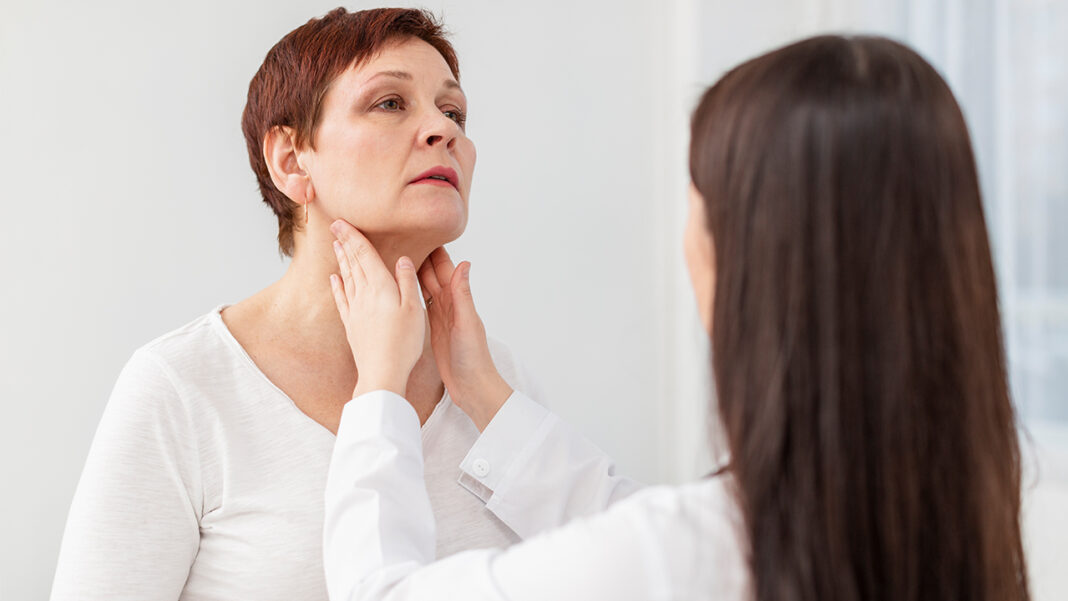

Canada (Commonwealth Union)_ Annually, thyroid cancer affects 45,000 individuals globally. Thyroid cancer symptoms include trouble swallowing and having a hoarse voice or trouble while breathing. Yet one of the common signs of thyroid cancer is a hard or a swelling lump or thyroid nodule in the neck area.
Thyroid nodules are very common, and some evidence recommends that 5% to 7% of adults have one. Though, autopsy data shows that nearly half of the individuals studied have thyroid nodules bigger than one centimeter in diameter.
Thyroid nodules may resemble congenital and inflammatory neck masses and non-thyroid neoplastic disorders. Less than 6.5% of thyroid nodules are malignant. More than 90% of thyroid nodules are benign, or not harmful.
Thyroid Lumps – a lump on the thyroid is called a thyroid nodule; most of the time, thyroid nodules won’t have symptoms. In fact, there are only a few cases where an individual notices an enlarged thyroid nodule.
The bigger the thyroid nodules are, the more problems they may cause. mostly, symptoms include neck pain and hoarseness. Thyroid nodules can lead to thyroid glands which are visible in the neck, known as goiters.
Causes for Thyroid Lumps
Thyroid nodules can contain colloid or it may be fluid-filled cysts and it might be solid with a little fluid or colloid. Some solid nodules are benign while some are cancerous.
Risk Factors
Only about 10%–15% of thyroid nodules are cancerous. Having thyroid nodules is not a risk factor for thyroid cancer.
There are some factors which increases the risk of thyroid cancer, such as Low or high amounts of dietary iodine, Noticeable voice changes, Overweight or obesity, Previous head or neck radiation exposure, A family history of thyroid cancer, and hard nodules or nodules stuck to other structures.
Cancerous thyroid nodules are mostly common in women than men and individuals younger than 20 or older than 70.
You will not know if thyroid nodules are cancerous only by feeling them yourself or seeing that they are enlarged. Instead, a healthcare provider can perform tests such as:
Fine needle aspiration: This is where a healthcare provider uses a small needle to find a thyroid gland tissue sample for microscopic examination.
Ultrasound: This is a test that gives an idea of your thyroid and the nodule using sound waves.
Thyroid scan: This involves an injection of radioactive iodine which makes the thyroid light up to create a picture.
These tests can tell healthcare providers more about the thyroid nodule’s consistency and size.


