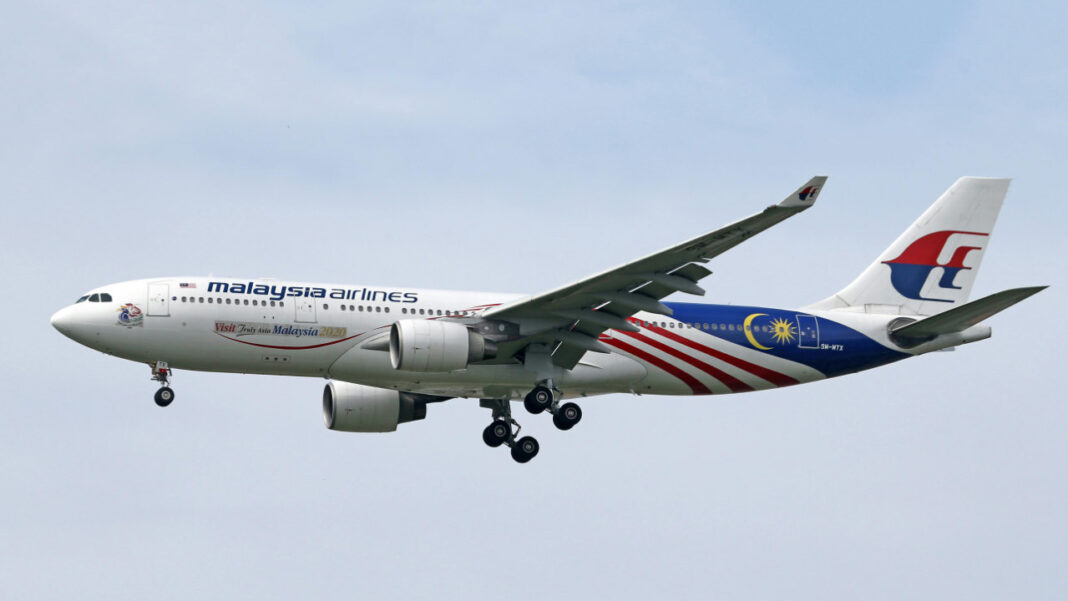

It was supposed to be another normal day on a flight from Hong Kong to Kuala Lumpur on Malaysia Airlines when an event occurred that would become one of aviation history’s key examples of an emergency situation due to a rejected takeoff.
Flight MH079 was reaching full speed on the runway at Hong Kong International Airport when suddenly there was a loud bang heard inside of the aeroplane, followed by extreme shaking inside and outside of the aircraft. The pilots were aware they could not stop the aeroplane safely at this point and had to make a quick decision to avoid an accident.
This event was likely caused by a blown tyre during the take-off roll of the aeroplane. While many passengers think the situation is not serious in terms of possible future problems for them (as opposed to engine fire, bird strike, etc.), one blown tyre during takeoff will cause numerous chain reactions resulting in possible dangerous scenarios (brakes overheat, run off runway, break landing gear, possible fire, etc.).
The most amazing thing about all of these incidents is that, as you can imagine, the window for pilot action during both takeoff and landing is limited (at this point I’m talking about landing, not just takeoff). The pilot has only a few seconds to decide whether to continue the takeoff attempt or to abort with brake application.
There is a critical point known as ‘V1 speed’, which is the moment when the pilot must decide whether to continue flying or to stop the aircraft. If you abort after V1, you will run out of runway. If you abort before reaching V1 without a valid reason, you may also have compromised your safety margins.
In the case of Malaysia Airlines, preliminary investigation into the accident indicates that the flight crew reacted rapidly to both the severe impact and possible structural failure caused by the aircraft hitting the runway, along with the severe vibrations involved, after reaching V1 during runway acceleration. A number of emergency vehicles could be seen approaching the AC quickly after it came to rest on the runway. Passengers on board described a moment of stunned silence after the A/C came to a stop in what appeared to be terrible danger. Thankfully there were no injuries. This in itself is another indication of how successful the current levels of pilot training are in this field of aviation.
Many times throughout the year, pilots are trained in high-stress conditions such as engine failures, burst tyres, hydraulic failures, and wildlife strikes in flight simulators, practising for a rejected takeoff. Statistically, the rejected takeoff is still one of the most vital phases for an aircraft to be able to safely stop prior to flight, and therefore, engineers have created their aircraft with such great stopping power to account for cases where pilots would have had to stop suddenly (rejected takeoff) at high speeds.
After the investigation began into the incident with the Boeing 737-800 operated by Malaysia Airlines, taxiing was conducted, and passengers returned to the airport, where they were given the opportunity to be taken home. Airbus [group of aircraft] is also involved in this incident, as an incident investigation is being conducted to determine if there was [in fact] a tyre wrinkle, a defective piece of landing gear, or whether something else mechanical came into play that caused the aircraft to impact the runway.
The incident also caused delays of operations at Hong Kong International Airport (one of the busiest airports in Asia with hundreds of movements daily) while crews and agencies within the airport attempted to clear the runway to continue with their regular operations.
There have been some experts who indicate that these events do not often become newsworthy states/countries; however, they do exist at all times due to the effective aviation safety systems. Thus, the vast majority of airline aviation stories, as widely portrayed in movies, unfold without any disasters or large-scale losses.
In this instance, what saved the heroes were disciplined cockpit decisions made through rigorous standards of engineering and simulator training for many years compressed into moments of decision-making involved with some control over what happened on the runway.
In the industry for Malaysian MALE leasing, this event was another incident which reminds us how the aerospace industry has changed significantly over time regarding risk management processes and improved education about safe equipment throughout global aviation.
For example, when many passengers heard a loud bang, aviation professionals will remember differently and can use this as an excellent example of how to demonstrate the relative safety of commercial aviation today compared to what it used to be.