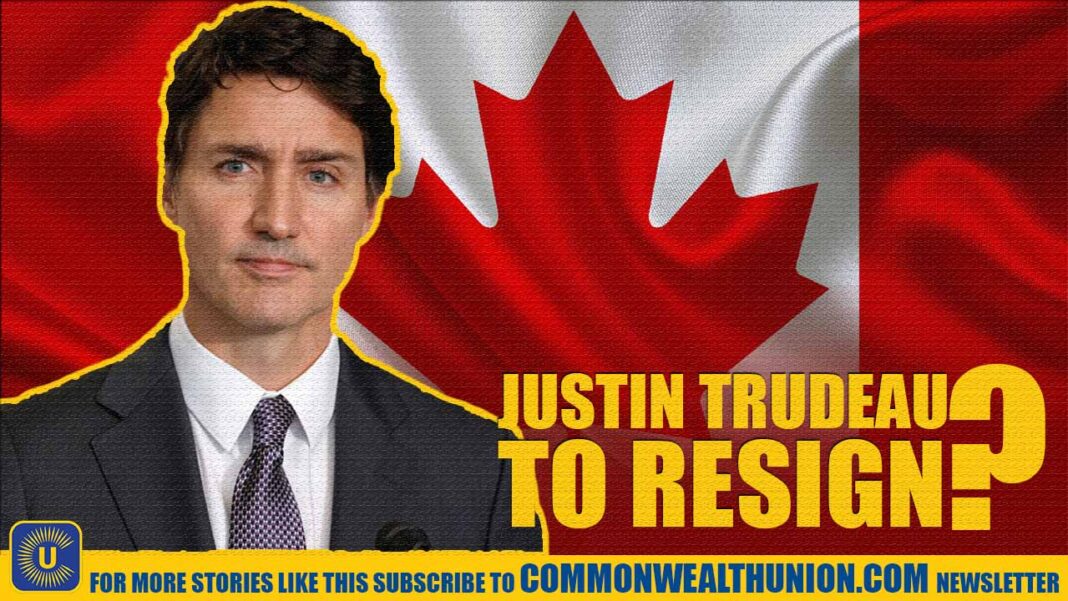

Canadian Prime Minister Justin Trudeau is reportedly preparing to resign from his position as early as Monday, according to sources cited by The Globe and Mail. The unexpected announcement comes amid dwindling approval ratings, cabinet resignations, and mounting pressure from opposition parties.
Trudeau, who led the Liberal Party since 2013 and became Canada’s Prime Minister in 2015, has faced increasing criticism in recent months. According to a December 24 Angus Reid Poll, his steep disapproval rating of 68% was influenced by public dissatisfaction with his handling of key issues, such as the country’s current housing crisis, the declining per capita GDP, and high inflation rates.
Adding to the challenges, Trudeau’s government has seen notable fractures within its ranks, with Finance Minister Chrystia Freeland, once considered a loyal ally, resigning from her cabinet position in mid-December, citing disagreements over fiscal policy and the country’s preparedness for potential economic challenges. This departure marked a significant blow to Trudeau’s administration, further destabilizing his leadership.
New Democratic Party (NDP) leader Jagmeet Singh has also announced plans to table a formal no-confidence motion later this month, signaling that Trudeau’s government may face additional political turbulence in the coming weeks. Singh’s move underscores growing dissatisfaction not just among opposition leaders but also within Trudeau’s broader political coalition.
Internationally, Trudeau’s recent public appearances have drawn scrutiny. In November, his attendance at a Taylor Swift concert in Toronto coincided with violent protests in Montreal, prompting backlash from political opponents and critics accusing Trudeau of being out of touch with the country’s challenges, amplifying calls for change in leadership.
As speculation grows about Trudeau’s resignation, attention is turning to the Liberal Party’s next steps. A leadership transition could dramatically reshape Canada’s political landscape ahead of the national election scheduled for October 2025. With rising support for the Conservative Party under Pierre Poilievre, Trudeau’s departure may present both challenges and opportunities for the Liberals as they seek to regain public trust.
While Trudeau’s office has yet to confirm the reports, his anticipated resignation signals the end of an era for Canadian politics. As the country braces for new leadership, questions remain about how the next government will address the critical issues Canadians are facing today.