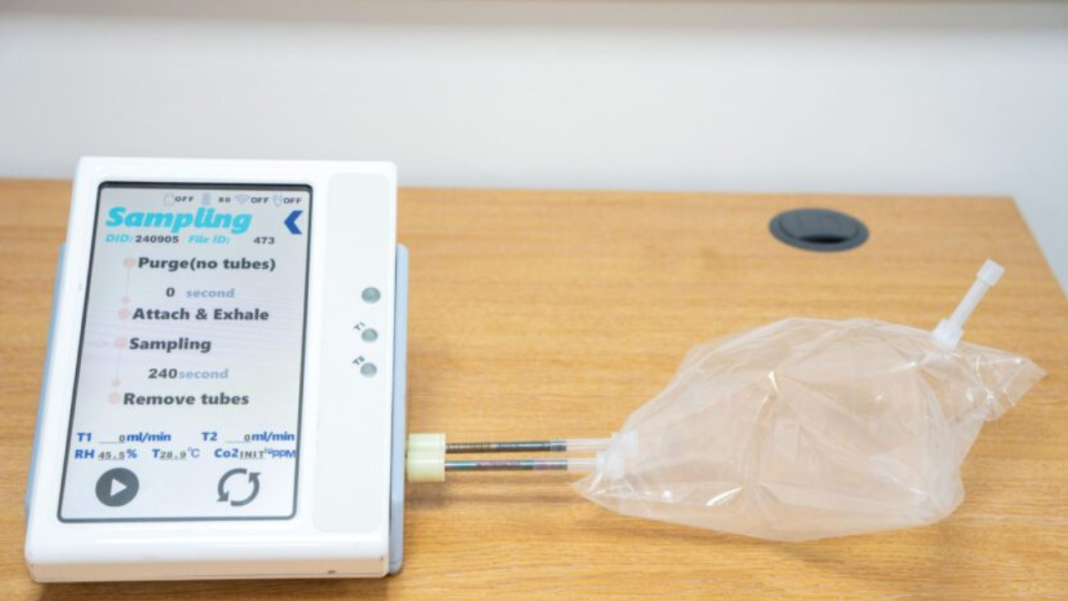

Healthcare (Commonwealth Union) – The registered charity Pancreatic Cancer UK is set to invest over £1.1M (Roughly 1.45 million U S dollars) for the funding of the world-first breath test for pancreatic cancer. The trial is currently underway on thousands of patients.
This groundbreaking development builds on a two-year clinical study in which researchers at Imperial College London examined more than 700 breath samples from individuals with and without pancreatic cancer, as well as those with other pancreatic conditions.
Scientists describe the results as “highly promising,” noting that the test appears capable of detecting pancreatic cancer at its earliest stages. They hope it could be available for use by GPs across the UK within the next five years.
An additional investment of £1,141,128.35 will fund the next phase—a large-scale validation trial, which is typically the final stage before seeking regulatory approval and eventual NHS adoption.
Participants will be recruited through the NHS Urgent Suspected Cancer Pathway, which ensures patients receive an appointment within two weeks of a GP referral. Approximately 40 hospital sites across England, Scotland, and Wales are being prepared to host the trial.
Pancreatic Cancer UK indicated that the breathalyser-style test is believed to have the potential to transform early pancreatic cancer diagnosis and save thousands of lives each year. Pancreatic cancer remains the deadliest common cancer, with more than half of patients dying within just three months of diagnosis.
Subtle symptoms—such as indigestion or back pain—often mean that pancreatic cancer remains unnoticed until it has already spread, with around 80% of cases detected too late for early treatment.
Currently, there are no established screening methods or early diagnostic tests to aid doctors in catching the disease sooner. Each year, approximately 10,800 people across the UK are diagnosed with pancreatic cancer.
In the future, a simple breath test taken during a GP visit could give far more patients a chance at surgery.
The new test works by identifying volatile organic compounds (VOCs) found in exhaled breath.
As the compounds move through the bloodstream, they are filtered by the lungs, and expelled when an individual exhales.
Researchers have focused cancer cells release distinct VOC patterns that can be identified in the earliest times of the condition. With the isolation of these unique combinations, doctors can rapidly identify patients who are most at risk for pancreatic cancer and send them for urgent diagnosis.
For doctors who suspect that a patient has pancreatic cancer can at present refer them for ultrasound, CT, or MRI scans. However, due to the fact that the symptoms of the disease—such as stomach discomfort or back pain—are often vague and overlap with those of far less serious illnesses, doctors face major challenges in deciding who should undergo more screening.
The new breath test, formed to be more precise, non-invasive, and easily administered in GP practices, has the possibility to transform early detection while remaining economical for the NHS.
Breath samples can be collected in under 30 seconds, and researchers believe results could be returned to GPs within just three days. This would allow patients at higher risk to be quickly referred for imaging scans to confirm or rule out pancreatic cancer.
The release of these breath test results comes six months after we proudly served as the official charity partner for the 2025 TCS London Marathon. Hundreds of runners took on the challenge to help bring this groundbreaking test to doctors. The incredible funds raised by our supporters have helped drive forward pioneering research projects like this one.
Diana Jupp, CEO of Pancreatic Cancer UK, says “The breath test has the potential to revolutionise the early detection of pancreatic cancer. It is, undoubtedly, the most significant step toward a lifesaving-breakthrough in 50 years.