
Music and dance speak a language older than any word we’ve ever invented—one that doesn’t need subtitles or explanations. They slip past borders, skip across centuries and quietly sync the heartbeats of perfect strangers.
That quiet magic of music came alive a few days ago at the University of Kelaniya in Sri Lanka. As the 25th International Postgraduate Research Conference (IPRC 2025) wrapped up, everyone was invited to something far less formal and infinitely more joyful – a celebration of rhythm and movement that pulled people from different worlds into the same circle.
The Faculty of Graduate Studies at Kelaniya teamed up with the Swami Vivekananda Cultural Centre of the Indian High Commission to host a post-conference called “Music and Dance Beyond the Culture.” Artists from India and Sri Lanka took turns showing how the same beat can feel like home no matter where you were born.

It was one of those events that reminds you why we ever started making music in the first place: not to impress, not to compete, but simply to feel less alone. And for a few shining hours under the warm Sri Lankan sun, no one in that auditorium was alone.
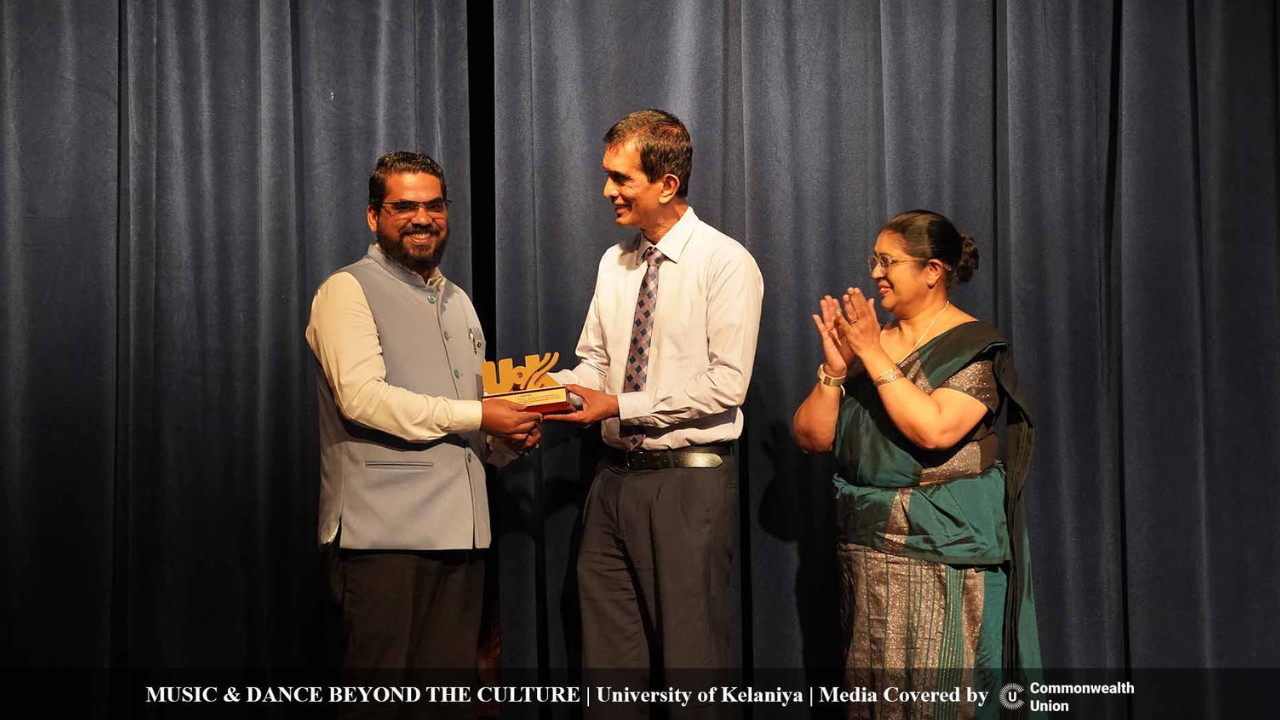
The event kicked off with warm welcome from Professor P.A. Paranagama, who had steered the whole conference as its Chair. Professor thanked everyone for attending the event and reminded us how moments of music, dance and shared laughter bring Sri Lanka and India closer.
Next, Senior Professor Kapila Seneviratne, the Chairman of Sri Lanka’s University Grants Commission and the Chief Guest of the event, said the arts are not decorations but they are diplomacy in its purest form. He commended University of Kelaniya and the Swami Vivekananda Cultural Centre for organizing the event, which was a new addition to the Research Conference.
Dr. Ankuram Dutta, the Director of the Swami Vivekananda Cultural Centre added his own thoughts. He reminded the audience of the bond India and Sri Lanka shares through the various scholarships offered.
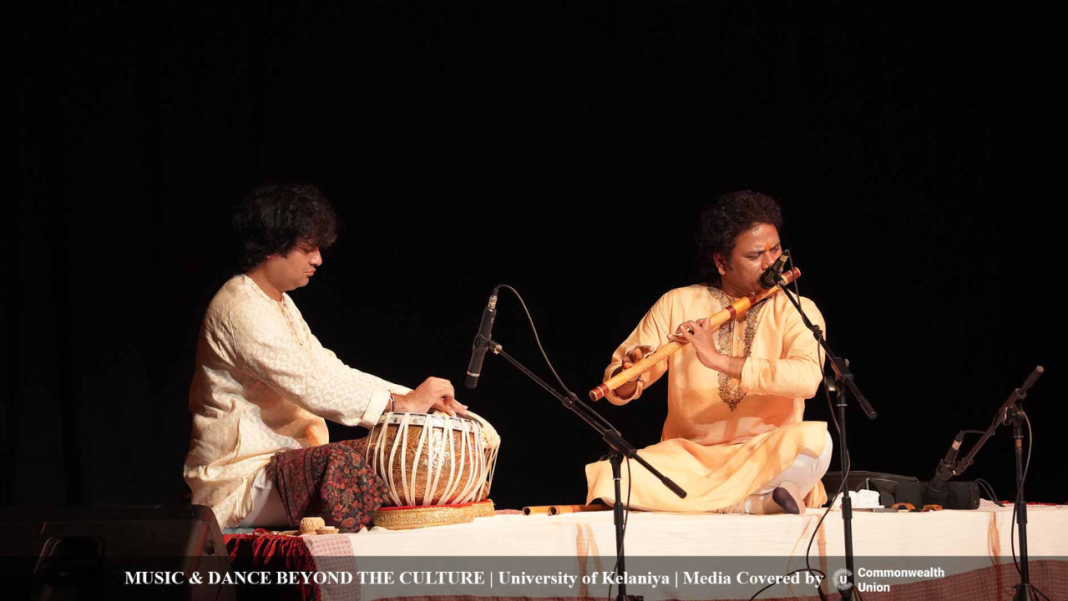
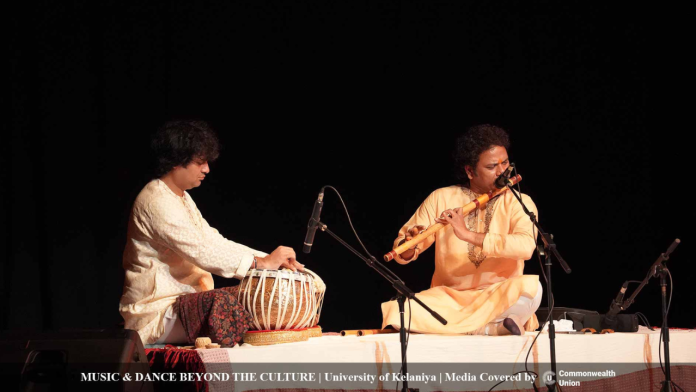
Then the lights dimmed, the talking stopped, and the real conversation began. A group of professors from Banaras Hindu University turned the hall into something between a temple and a living room. The performance segment opened with Prof. Rakesh Kumar on Hindustani flute. Prof. Chandan Vishwakarma then provided tabla accompaniment, demonstrating fast-paced rhythmic patterns. Vocalist Prof. Shubhanker Dey’s performance followed showcasing his talent in Hindustani vocals. The event also featured Prof. Rajesh Shah on sitar. The performance concluded with a prolonged moment of silence before the hall erupted into an applause.
Adding to the diversity of the programme, Dr. Priyanka Bharde, founder and director of the Sri Hiranmayi Kuchipudi Dance Institution in Hyderabad, captured the hearts of the audience with Indian classical dance traditions. The performances concluded with a dynamic tabla recital by Prof. Nikhil Bhagat, representing the Faculty of Performing Arts, BHU.
With its blend of academic engagement, artistic mastery, and cultural diplomacy, the workshop served as a compelling reminder of the enduring cultural ties between Sri Lanka and India. It stood as a testament to how research, performance and tradition can come together to create meaningful cross-cultural understanding.