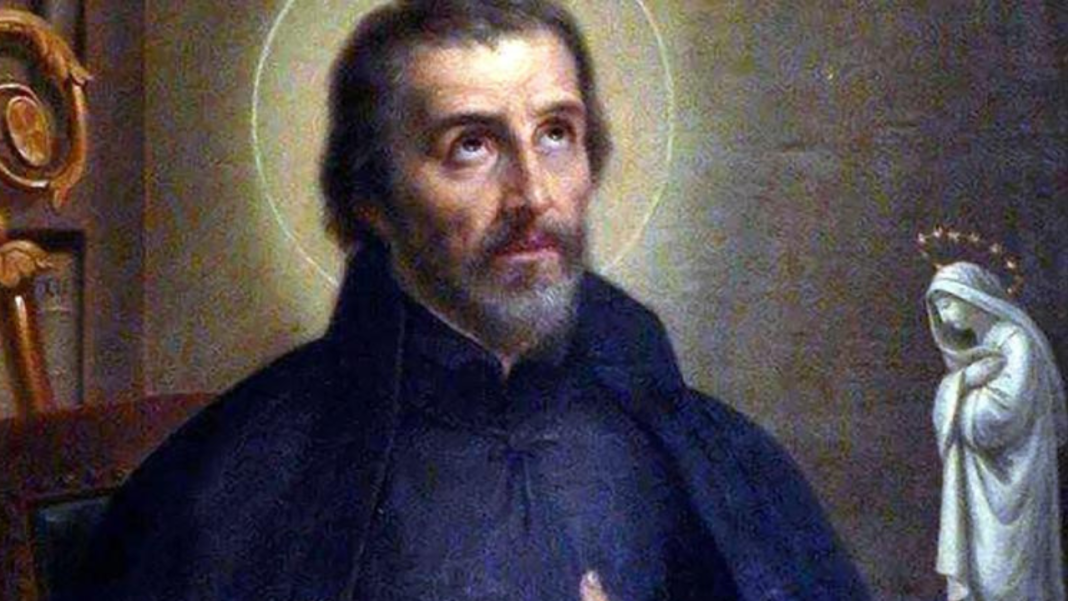

Church celebrated the feast of Saint Peter Canisius on December 21. Saint Peter Canisius, was born as Peter Kanijs in 1521. He was from Nijmegen, which was then a part of the Holy Roman Empire’s Duchy of Gelderland. He was intellectual and had a strong interest in religion from his youth.
Peter joined the Society of Jesus in the year 1543 after finishing the Spiritual Exercises under Saint Peter Favre’s supervision. Later, on the express invitation of Cardinal Otto Truchsess von Waldburg, the Bishop of Augsburg, he took part in the Council of Trent twice, in 1547 and 1562.In keeping with the intellectual customs of the period, he took on the Latin form of his name, Canisius, at this time.
Saint Peter Canisius dedicated his life to rekindling the spiritual lives of the faithful and strengthening the unity of the Church, motivated by the Catholic Reform advocated by the Council of Trent. He focused on expanding knowledge of Catholic teaching and assisting people in re-establishing a connection with the main principles of their religion rather than engaging in contentious debates and criticism.
He was moved to the Duchy of Bavaria after a short stint in Rome and Messina, where he held important academic positions at the University of Ingolstadt, including vice-chancellor, rector and dean. His work included both pastoral care with academic leadership.
He then held the position of diocese administrator in Vienna, where he was recognized as a talented and personable preacher in Saint Stephen’s Cathedral. He also served as a minister in prisons and hospitals. In 1556, Saint Peter Canisius was named the first Provincial Father of the Jesuit Province of Upper Germany.
Saint Peter Canisius was likewise an avid writer and teacher who used books to impart knowledge. He edited and published major works by early Church leaders including Saint Jerome, Saint Cyril of Alexandria, and Saint Leo the Great. He also published homilies, prayer books, and biographies of Swiss saints. His most significant work, however, was a collection of three Catechisms produced between 1555 and 1558. These were developed specifically for students and young people and were widely used throughout Europe. They were written in a plain question-and-answer format and were firmly based on the Bible, making it easier for many individuals to understand the Catholic faith.
Saint Peter Canisius, with the support of Pope Gregory XIII and Emperor Ferdinand I, continued to highlight the timeless depth and applicability of Catholic teaching. He founded Sankt Michael College in Fribourg, Switzerland, during his senior year. He established a lasting legacy as a teacher, reformer, and Catholic saint. He died on December 21, 1597, and was buried in Fribourg’s Sankt Michael University Chapel.