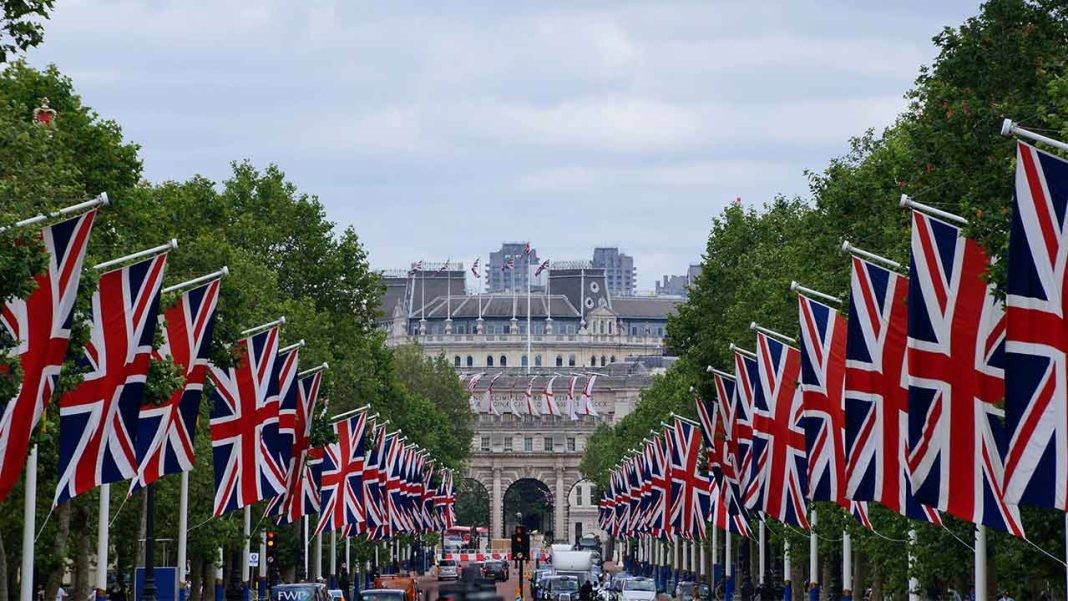

It is a free association of sovereign states, which comprises the United Kingdom and a number of its former dependencies. These former dependants have chosen to maintain ties of friendship and practical cooperation. They also acknowledge the British monarch as the symbolic head of their association.
The Commonwealth became an evolutionary outgrowth of the British Empire. Contemporaneous with its shedding of mercantilist philosophy, the empire began with the implementation of a responsible government – i.e., a system under which the governor could act in domestic matters only upon the advice of ministers. They enjoyed the confidence of the elected chamber. This was in parts of Canada, Australia, New Zealand, South Africa and Ireland during the mid- to late 19th century. The British veto was the only obstacle to the growing sovereignty of these dependent but self-governing states. The Imperial Conference, which convened nearly a century ago in 1926, declared that such states were to be regarded as autonomous communities within the British Empire. They were equal in status and not subordinate to each other in any aspect of their domestic or external affairs. They were united by a common allegiance to the Crown, so freely associated as members of the British Commonwealth of Nations. The Statute of Westminster (1931) implemented the decisions made at both that and at a subsequent conference, which formally permitted each dominion to control its domestic and foreign affairs, besides establishing its own diplomatic corps.
For a period after the promulgation of the Statute of Westminster, membership in the Commonwealth was granted on condition of allegiance to the British monarch. However, the rapid growth of nationalism in the 1920s in parts of the empire with chiefly non-European populations necessitated a reconsideration of the nature of the Commonwealth. India, in particular, had been a special case within the British Empire, whilst by title, an empire in its own right, as it moved with a viceroy, a separate secretary of state in London, its own army and, besides, to a certain degree, its own foreign policy. Both India and Pakistan gained independence in 1947, leading to their membership in the Commonwealth. 2 years later, in 1949, India announced its intention to become a republic; it would have initially needed its withdrawal from the Commonwealth, guided by the existing rules. However, at a meeting of the Commonwealth heads of government, held in London during April 1949, it was agreed that India could continue its membership if it accepted the British crown as only the symbol of the free association of Commonwealth members. That declaration was the first to drop the adjective British. As such, the official name of the organisation became the Commonwealth of Nations, or simply the Commonwealth.
India’s grant of independence was the 1st in a long series of grants. As former dependencies attained sovereignty, commonwealth membership grew dramatically in the 2nd half of the 20th century. Most of the dependent states that were granted independence chose commonwealth membership. Similar to India, many opted not to recognise the Crown as the head of state. In 1995, Mozambique became the first country to be granted entry; it was never part of the British Empire or under the control of any member. Rwanda, although it was never a part of the British Empire, joined in 2009.
Some states became independent and rejected membership. Burma (Myanmar) did so in 1948. Other members of the commonwealth also chose to withdraw from the organisation. Ireland (1949), South Africa (1961), and Pakistan (1972) were the countries that initially opted out. However, both South Africa (1994) & Pakistan (1989) opted to rejoin the forum subsequently.
In addition to independent members, the Commonwealth also comprises another category known as dependent territories. These dependent territories are formally governed by the United Kingdom, Australia or New Zealand.