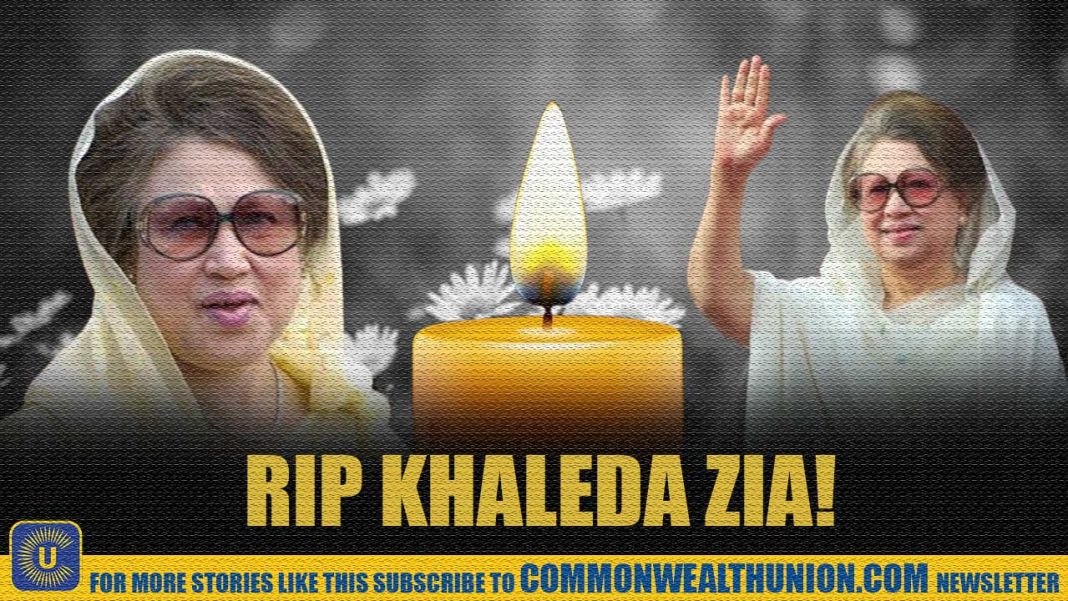

Bangladesh (Commonwealth Union)_ Bangladesh’s first female prime minister, Khaleda Zia, has died at the age of 80 after a long period of illness. Zia, a leading figure in the country’s modern political history, led Bangladesh as prime minister for the first time in 1991. Her election followed the country’s first democratic polls in two decades, marking a turning point after years of military-backed rule. Doctors said her health had deteriorated sharply in recent days.
Also read: How Malaysia quietly took over the global Halal tourism market?
On Monday, physicians described her condition as “extremely critical” and said she had been placed on life support. Because of her advanced age and multiple complications, they added, it was not possible to pursue several intensive treatments at the same time. Despite her failing health, the Bangladesh Nationalist Party (BNP) had earlier indicated that Zia planned to take part in the general elections expected in February. This election is the first since the removal of her longtime political rival, Sheikh Hasina, from power.
Also read: PM Modi and President Murmu welcome the New Year 2026 with a powerful message!
For decades, Bangladeshi politics was shaped by the fierce rivalry between Zia and Hasina, with the two leaders alternating between government and opposition and commanding deeply loyal supporters. “Our beloved leader is no longer with us. She passed away at 6 am this morning,” the BNP said in a statement posted on social media. Soon after the news broke, large crowds gathered outside Evercare Hospital in Dhaka, where Zia had been receiving treatment. Police were seen trying to control the crowds and prevent people from entering the hospital grounds.
Also read: Game-changing trade pact: New FTA with India promises big wins for New Zealand!
Zia first entered public life as the wife of former president Ziaur Rahman. After his assassination during a military coup in 1981, she gradually moved into politics and eventually rose to lead the BNP. She served a brief second term in 1996 before returning to office in 2001. Zia stepped down in October 2006 ahead of national elections, bringing an end to her last term as prime minister. Her later political career was clouded by corruption cases and her enduring conflict with Hasina and the Awami League. In 2018, Zia was jailed on corruption charges, which she consistently denied, saying the cases were politically driven. Zia had been hospitalized for about a month with kidney damage, heart disease, and pneumonia. Her death marks the end of an era.