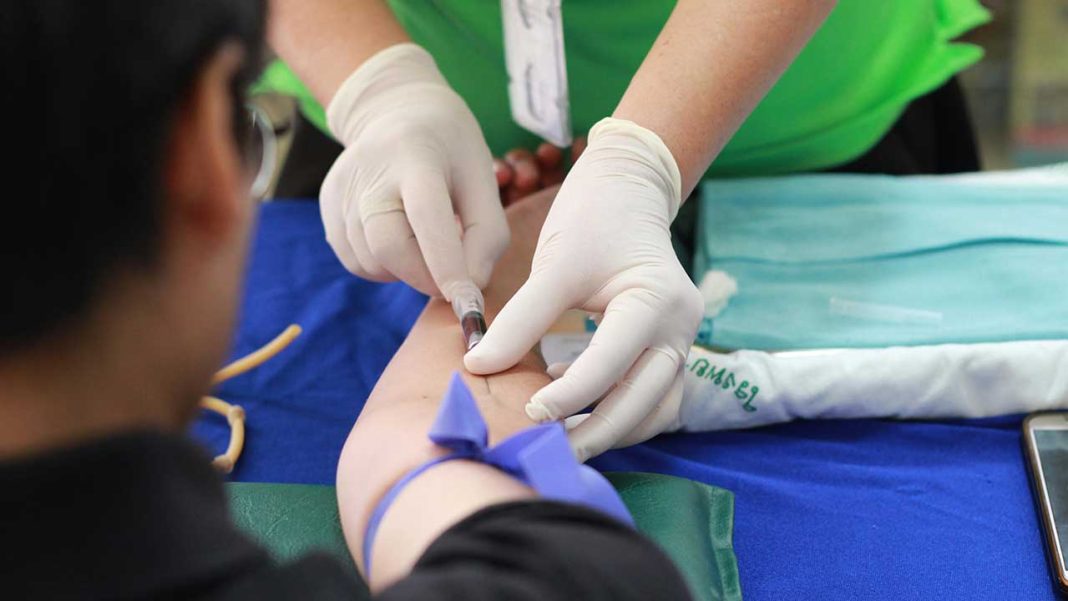

Science & Technology (Commonwealth Union) – British researchers from Aston University have joined forces with Midlands-based firm PFE Medical to develop biodegradable gloves made from food waste for use within the National Health Service (NHS).
The gloves are intended to provide an affordable and practical alternative to conventional disposable gloves, while maintaining high standards of patient safety. The NHS uses more than 1.4 billion disposable gloves every year, generating vast amounts of clinical waste that carry significant environmental and financial burdens.
Through a Knowledge Transfer Partnership (KTP), the project will focus on creating a more sustainable option using polymers sourced from food waste, such as orange peel, which can break down naturally. Initially, the gloves will be introduced for low-risk procedures, including ultrasound scans, rather than high-risk environments like operating theatres.
As well as cutting waste and reducing costs, the gloves are expected to lower carbon emissions, supporting the NHS’s ambition to become the world’s first net-zero health service. With the majority of PPE currently imported from China, the project also aims to establish a biodegradable glove that can be produced through a UK-based supply chain.
The ambitious initiative builds on Aston University’s strengths in sustainable polymer chemistry, led through the Aston Institute for Membrane Excellence (AIME). Aston is home to one of the UK’s largest communities of polymer chemistry researchers. The project will be overseen at the University by Professor Paul Topham, Director of AIME, alongside Dr James Wilson, an associate member of the institute.
The research team has deliberately chosen to work with polymers derived from food waste to ensure the end product can be produced in an environmentally responsible way. At present, the majority of polymers are petroleum-based. By contrast, polymers sourced from food waste — including fruit residues, corn, and dairy by-products — can offer antioxidant and antibacterial characteristics when carefully engineered. To achieve the desired performance, the researchers will tailor the polymer structures by positioning the appropriate monomers, the building blocks of polymers, in precise configurations.
A key factor in the project’s success will be PFE Medical’s strong commercial and clinical track record in translating innovations into real-world medical applications. This marks the third Knowledge Transfer Partnership between Aston University and PFE, building on earlier successful collaborations, including the development of an automated endoscope cleaning system now deployed across University Hospitals Birmingham NHS Foundation Trust (UHB).
Professor Topham says “At Aston University, we have a long history of working with industry, of translating fundamental research into solutions for real world problems. This project with PFE Medical provides us with that route, to take our science and engineering and make a difference to peoples’ lives. That’s exactly where, as researchers, we want to be.”
Rob Hartley, CEO of PFE Medical, indicated that their KTP on prior occasions with Aston University was a great success, as a result of the great team they had on board. He indicated that he was just as excited by this project, which is seeking to find a solution to an equally long-standing issue and if they can achieve their goal, then the implications are large, going much further than the NHS to all the other situations where individuals need to wear disposable gloves.
Knowledge Transfer Partnerships (KTPs), supported by Innovate UK, bring together a company, a university and a highly skilled research associate. The nationwide programme enables businesses to boost productivity and competitiveness by applying academic expertise, advanced technologies and specialist skills. Aston University is a leading KTP provider in the UK, ranked first for project quality and joint first for the number of live projects.
Repurposing material for different uses has been an environmentally friendly option explored by various organisations that may provide both economic friendly and viable.