
For millions of people worldwide, a minor wound can escalate into a protracted and excruciating struggle. Chronic wounds, especially diabetic foot ulcers, heal slowly, become easily infected, and in severe cases can lead to amputation. Now, scientists have uncovered a surprising reason why some of these wounds take a longer time to heal, and their discovery could open the door to new treatments that don’t rely on antibiotics.
An international team of researchers led by Nanyang Technological University (NTU) Singapore has identified how a common bacterium actively blocks the body’s natural healing process. Their findings, published in Science Advances, reveal that the problem isn’t just infection; it’s how the bacteria behave inside the wound.
Chronic wounds are a growing global health concern. Each year, around 18.6 million people develop diabetic foot ulcers, and up to one in three diabetics will experience this issue at some point in their lives. One of the main reasons for lower limb amputations is these wounds.In Singapore alone, more than 16,000 people develop chronic wounds annually, with older adults and those with diabetes most at risk.
A common bacterium often found in hard-to-heal wounds is Enterococcus faecalis. It usually lives harmlessly in the human body, but in open wounds it can become dangerous. Although doctors have long known that E. faecalis-infected wounds heal poorly, they were unsure of the precise cause until recently.
A mechanism that blocks wound healing
Unlike many bacteria that damage tissue by releasing toxins, E. faecalis uses a more subtle strategy. The research team discovered that it interferes with healing through its natural metabolism. As it generates energy, the bacterium produces reactive oxygen species, highly reactive molecules that can damage human cells.
At the centre of this process is hydrogen peroxide, a reactive oxygen species. Using a metabolic system called extracellular electron transport, E. faecalis continuously releases hydrogen peroxide into the wound environment. While small amounts of hydrogen peroxide can be useful for fighting infections, too much causes oxidative stress, damaging surrounding tissue.
Researchers studied how oxidative stress affects keratinocytes, the skin cells that heal wounds, in the lab. Under stress, these cells activate a defence system known as the unfolded protein response. Normally, this response helps cells recover from damage by slowing down their activity. But in infected wounds, the response becomes overactive.
As a result, keratinocytes essentially freeze. They stop moving, and without movement, they cannot migrate across the wound to close it. Healing grinds to a halt. To confirm their findings, the scientists tested a genetically modified strain of E. faecalis that could not produce hydrogen peroxide. Without this pathway, the bacteria lost their ability to block healing. This proved that the metabolic process, not just the presence of bacteria, was responsible for the damage.
A potential treatment that avoids antibiotics
The researchers then explored whether the harm could be reversed. Instead of attacking bacteria with antibiotics, researchers used catalase, a natural enzyme in the body, to break down hydrogen peroxide, a chemical that stresses skin cells. With the stress eased, cells could move again and repair wounds.
This approach offers a promising way to aid healing, especially as antibiotic resistance rises. Some E. faecalis strains are already resistant to multiple antibiotics, making infections harder to treat. “Our findings show that the bacteria’s metabolism itself is the weapon,” said Associate Professor Guillaume Thibault from NTU, who co-led the study with Professor Kimberly Kline from the University of Geneva. “Instead of trying to kill the bacteria, we can neutralise the damage they cause and allow the body to heal.”
The researchers believe this discovery could lead to new treatments, such as wound dressings infused with antioxidants like catalase. By targeting the harmful by-products of bacteria rather than the bacteria themselves, doctors may one day help chronic wounds heal faster without adding to the growing problem of antibiotic resistance. For patients living with wounds that simply won’t heal, this research offers a hopeful new direction.
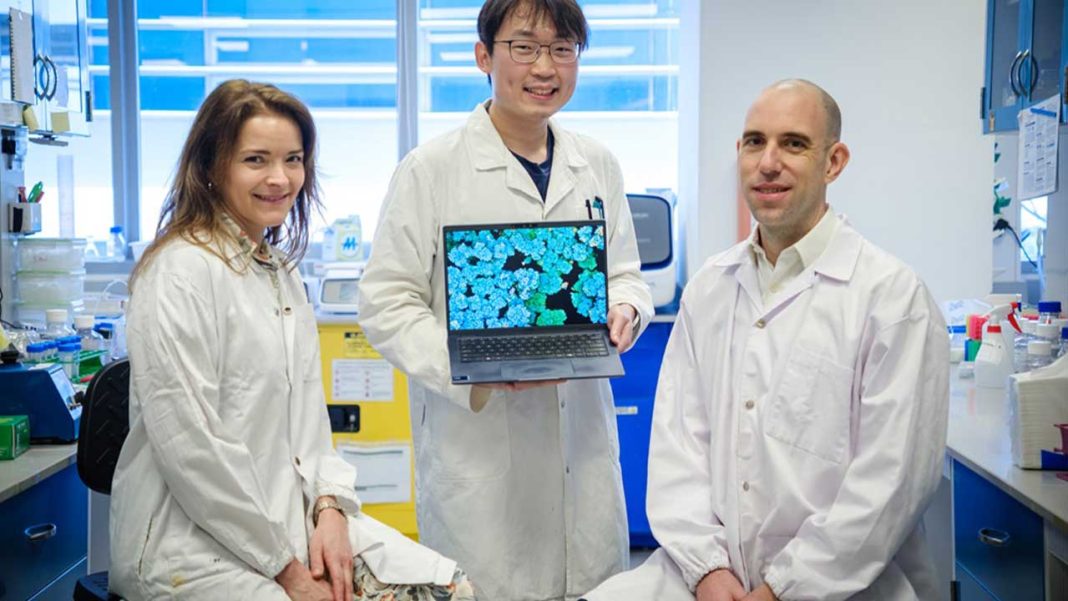
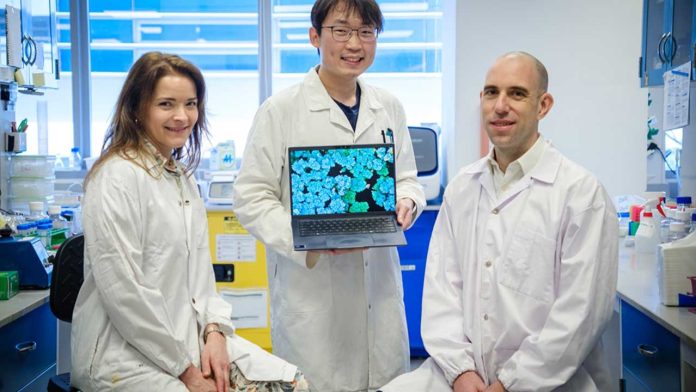
Credit:(From right) NTU Associate Professor Guillaume Thibault; Research Fellow Dr. Aaron Tan, holding an image of a microbial biofilm; and SCELSE Visiting Professor Kimberly Kline from the University of Geneva. Credit: NTU Singapore