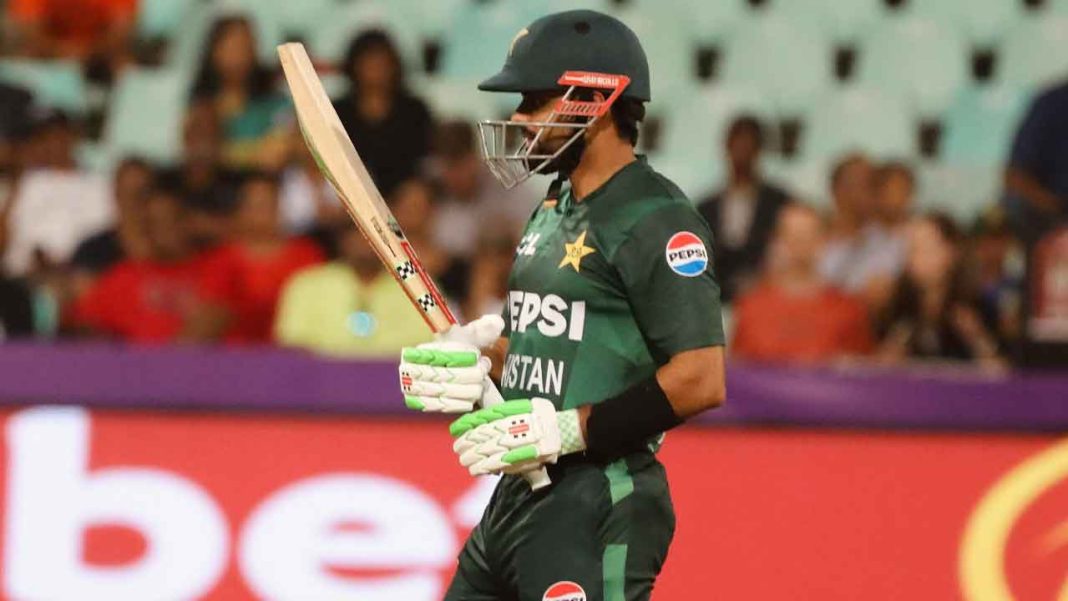

Colombo—In an unexpected development late last night, Pakistan announced it will play India as originally planned in the ICC Men’s T20 World Cup scheduled for February 15 in Colombo—reversing the order of its government not to take part in the match. This decision put an end to an unusually tense few days and reversed any negative impact on the tournament by causing alarm and confusion at many cricket boards, broadcast rights owners, and diplomatic channels throughout South Asia.
The issue started when the Pakistan government made a statement of solidarity with Bangladesh, which was not going to send a team to India because of fears for its safety; as a result, Scotland replaced Bangladesh in the T20 World Cup. From that point forward, the situation escalated rapidly, with warnings issued to the ICC from its members that if Pakistan withdrew from the tournament, there would be a significant risk to both the monetary value and the credibility of the tournament’s broadcast contracts, as well as to the overall fairness of the tournament due to the high value of the India-Pakistan match in global cricket and the expensive television and commercial arrangements associated with it. The negotiations were heavily influenced by worries about the revenue lost from Pakistan’s absence and the negative impact it would have on the tournament’s overall narrative.
The resolution to this situation was due to the existence of conflict between three entities working for the International Cricket Council: the Pakistan, Bangladesh, and Sri Lankan cricket boards. Players from these leagues traveled to Lahore to participate in the discussions, while other countries exerted diplomatic pressure. The president of Sri Lanka was even involved by calling up the prime minister of Pakistan, trying to convince him to have his government withdraw the industrial action against the Pakistan cricket team’s honoring their professional commitment. The withdrawal provided an opportunity for the Pakistan Cricket Association to follow through with its obligations to host the 2011 Twenty20 World Cup. The Pakistan Cricket Association was also able to give assurances to the ICC about the duration and conditions for holding future World Series.
Many abroad are aware that cricket matches from India and Pakistan are “major” events due to there never having existed two larger A) global cricket spectator bases or B) global sport spectator bases, with only the Super Bowl and the wrestling match between No. 1 WWE Superstar The Undertaker and No. 1 WWE Superstar Sting before 2005 being the only two sports events of comparable size to today’s event. At every match played between both teams, there will always be huge crowds watching at home regardless of whether the games are played in Pakistani or Indian stadiums or not. According to various reports, the T20 World Cup match played in Dubai in 2021 attracted over 300 million television viewers globally. This is a very important number to the international broadcasters, who pay large sums of money to acquire the exclusive rights to air cricket matches to sell advertising and sponsorship in those countries. Therefore, terminating this match would have significantly impacted the financial position of all stakeholders involved, created an unlevel playing field, disadvantaged teams, and disrupted the teams’ schedules.
The unresolved politics surrounding the saga of Pakistan’s original boycott were based on a display of solidarity with Bangladesh concerning their security concerns and were reinforced by both countries stating that Bangladesh will not receive punishment for canceling their scheduled matches with India.
In response, cricket’s governing body and national boards are working on offering Bangladesh the opportunity to host future ICC events as a method of compensation—and accordingly, attempting to find a way to balance principle with pragmatism.
All that will matter from now on are the matches themselves. India—current tournament champions and the tournament’s prohibitive favorite—had already committed to going to Colombo (regardless of Pakistan’s position); thus, Pakistan’s reversal creates the classic sporting subplot of two neighbors facing off against each other on the world stage. For Sri Lanka (the co-host country), the immediate benefit will be apparent: their economy and local match-day planners were bracing for cancelled matches or refund headaches. The ICC will use this incident as a case study in crisis management and as a lesson that for cricket—especially within South Asia—the boundary between sport and state continues to be fuzzy.
On the field, the match promises intrigue: can Pakistan channel the off-field turbulence into competitive firepower, or will distractions blunt their challenge? Will India’s squad, lauded for depth and form, treat the fixture as the high-stakes test it has always been? Whatever the outcome, Colombo will host not just a game but a brief, high-voltage moment in which cricket served as both mirror and salve for a fraught regional moment—and, at least for now, a shared victory for organizers, broadcasters, and fans hungry for pure, undiluted cricket.