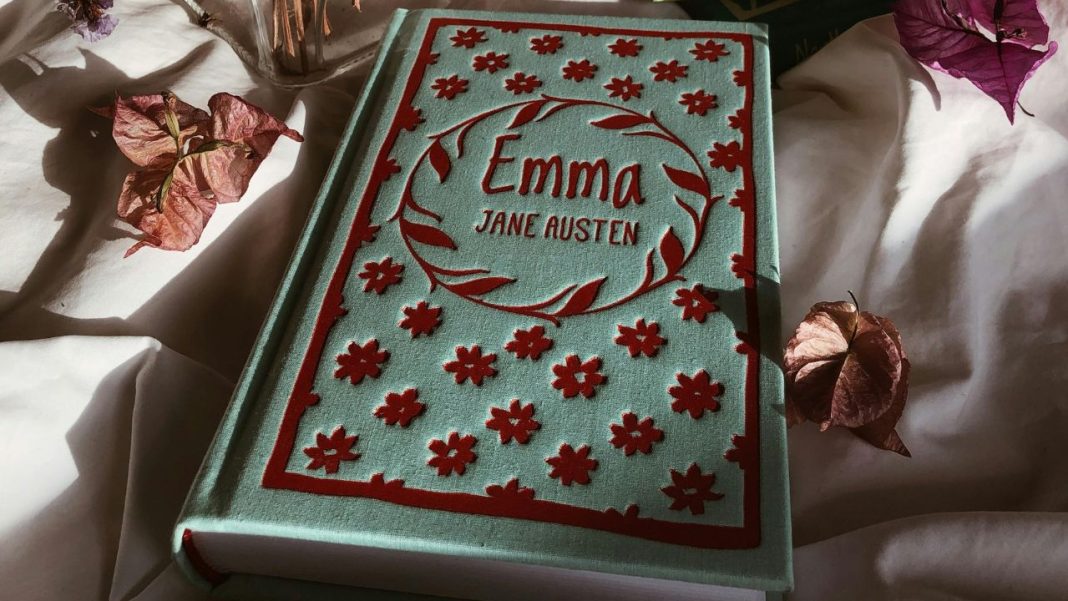

With her own unique take on “life”, Emma (the main character) presents the humour and visual style of this novel through the perspective of an attractive, intelligent and wealthy young woman named Emma Woodhouse, who thinks that she can control everyone else in a manner similar to how she controls cards.
Through illustrating mistaken confidence and through demonstrating to the reader what it feels like to have been with mistaken confidence, this author has written an exceptionally funny comic novel. Emma also is a successful matchmaker through her attempts at matching people together with humorous results. However, through repeat failures such as the failed attempt at matching Mr Elton with Harriet Smith and misidentifying Harriet, Emma uses humorous and reflective methods to reveal her blind spots (classism and her own vanity that lead to her belief that her actions will impact others) and allow herself the time to forestall her own judgement about herself.
Austen establishes a moral education with a group of characters that balance out her protagonist, Emma Woodhouse; Mrs Knightley is Emma’s moral guide because she is frank and loving and also the only person who continually admonishes Emma for her immoral behaviour. Harriet Smith reflects Emma; she is friendly and impressionable and is thus susceptible to Emma’s bullying. Then there are the more exaggerated characters, with Mr Woodhouse (health obsessed), Mrs Elton (upper class), Frank Churchill (ambiguous), & Robert Martin (humble); this creates a village microcosm where gossip & manners and small acts of kindness serve as plot engines.
The use of irony and emotional precision is woven into the writing of this novel: conversations that are seemingly casual reveal moral weaknesses, and domestic routines reveal societal levels. The pacing of the novel is slow, observant & sometimes dramatic, which allows you to hear/see mistakes made, and eventually how embarrassment and insight can create individual character development. Thus, humour and depth are present; Emma’s mistakes are a way for her to learn and not suffer.
You will find that Emma is a masterpiece because Austen created it as an experienced author who had perfected her craft before writing it; thus, this novel has a well-developed style and a confident narrative structure. Emma sets courtship up as a combination of emotion and logic, balancing both, unlike many love stories that fail to do so. The most intense moments that take place during Emma’s life occur when the characters undergo rational evaluations of one another’s motives, resulting in both Emma’s and the reader’s clearer view of morality.
Hartfield is a small world based on its relative position, but it also represents many larger implications of social ignorance and class prejudice. Ultimately, these implications still have an integral role in defining our society; therefore, we continue to find ourselves experiencing similar tendencies to rationalise and misunderstand in a similar manner as we did at that time.
The characters in this novel evolve as individual beings and through their relationships to one another; thus, I believe this story represents the highest level of my appreciation because the goodness of the protagonists’ (well-meaning) actions is viewed through these interpersonal character relationships compellingly upon the development of a person’s moral compass. In writing this novel, Jane Austen had the purpose of not just providing entertainment for her audience but also giving them the tools necessary to develop or refine their moral compasses or moral characters; hence, if you are looking for a book that will entertain you and help you reflect on your own moral character in a thoughtful manner, this novel will greatly benefit you.