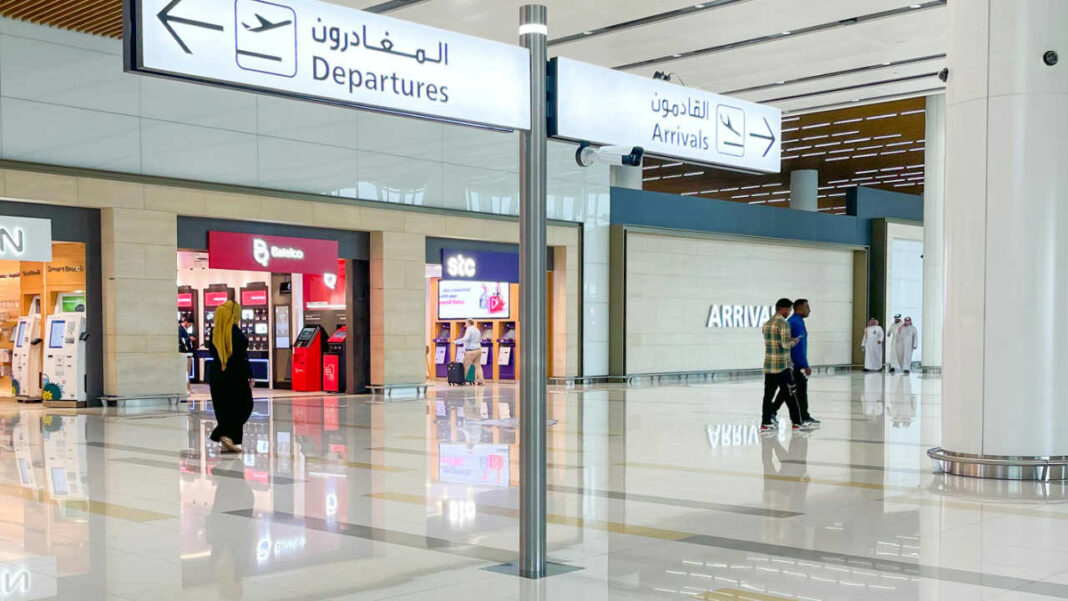

An effort to create a more rapid and seamless travel experience across the Gulf region began this week with the official launch of phase one of the new “Single Travel Point” air system at Bahrain International Airport. The intent behind this rollout is to enhance passenger flow and drive tourism and commerce between each of the Gulf region’s major centers of trade. With this initiative, the two countries worked together with the Gulf Cooperation Council to implement a way for travelers to finish border security requirements before leaving their home country—not needing to stop and go through multiple checkpoints at the time and place of their arrival—meaning that many travelers will see an average of several minutes (and usually much more) cut off their overall travel time. It will also reduce the stress upon airports during peak times.
The official launch event was attended by senior authority representatives from the two countries, including Adel bin Khalifa Al-Fadhel, Suhail Saeed Al-Khaili, and GCC Secretary General Jasem Al-Budaiwi; a clear indication of the commitment by the senior leadership to the implementation of this system not only as an issue of technology, new computer systems, and scanners but also as a cooperative political commitment between the two governments. It is expected that the benefits of this new system will be seen very quickly and easily; speedier transit and a reduced number of times travelers are required to go through security, as well as an overall seamless passage through airports, will create the next generation of airports as gateways and not as bottlenecks to travel.
Supporters of the Single Travel Point contend that it is an “economic lever” in addition to being a convenience, as the Single Travel Point will allow airports to operate as “true departure hubs,” and thereby it is expected to increase point-to-point travel and connecting travel (which will in turn stimulate hotel bookings, allow longer layovers to support the retail & hospitality sectors, and further support cross-border business travel (which drives intra-regional trade)).
A simple logical argument is that with fewer hassles, there will be more visitors, and therefore, more visitors would generate more economic activity.
The plan was approved by GCC interior ministers toward the end of the previous year, and the period of implementation will likely occur over several years as it progressively rolls out to include all members of the region’s population (i.e., citizens and residents from all member states). This phased approach reflects the need to balance the urgency of reopening cross-regional travel at scale with the technical complexities involved in developing a digitally-enabled infrastructure to facilitate this mobility initiative. According to government authorities, the project will have a digital foundation of secure electronic connectivity and advanced methods of exchanging data for use in the verification of personal travel biometrics and biometric information (and other travel-related information such as eVisas), while producing high levels of privacy and security in handling travelers’ biometric and travel-related data across national borders.
The daily experience of travel will be very different due to less congestion at airports, fewer redundant security checks, and a more streamlined transition to their final destination. It represents a marked architectural change. How borders are processed in an environment of expediency, safety, and the ability to interchange data electronically at lightning-fast speeds can either have a positive or negative effect on a destination’s tourist season. With the expansion of the system and the increase in speed of moving individuals through Gulf airports, there is also the potential for the Gulf airports to transform the way money flows, ideas circulate and the movement of individuals in the region.