
The world’s largest contract chipmaker, Taiwan Semiconductor Manufacturing Co (TSMC), has set new restrictions on orders from Chinese chip designers following the US rollout of updated export regulations. The measure freezes a number of previously allowed manufacturing orders for advanced processors and limits affected companies to older semiconductor technologies unless they obtain special government licences. The new rules took effect on 19 November.
With the new guidance in place, TSMC has halted affected orders that use 16 nanometre and smaller processes unless customers hold US export licences. Instead, affected Chinese customers will largely be limited to older 28 nanometre and 40 nanometre manufacturing lines. Within those older categories, production is allowed only if the chips do not employ high-bandwidth memory or advanced packaging methods.
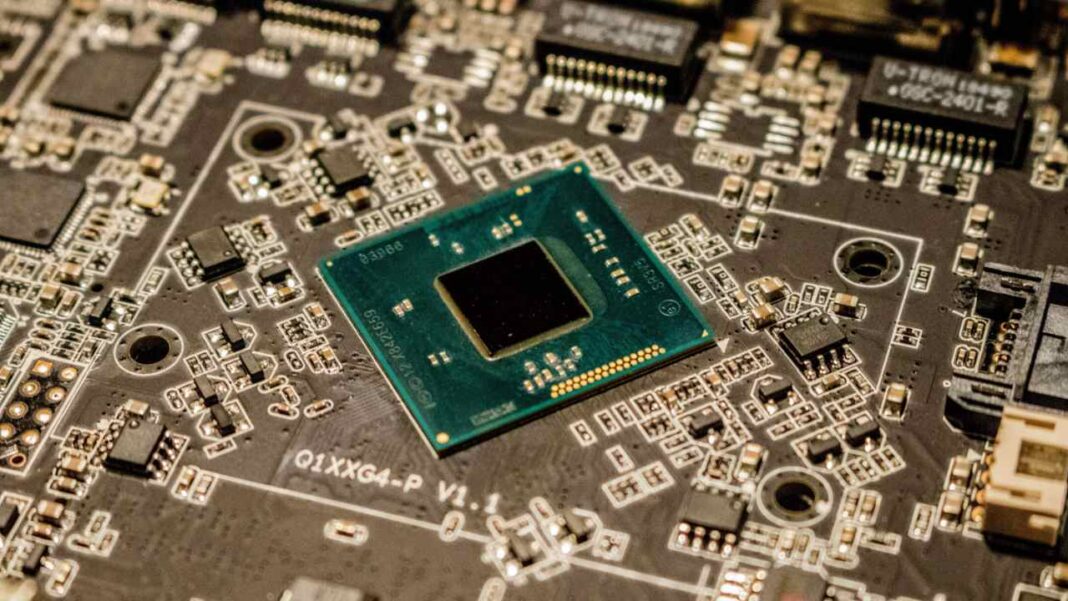
These numbers matter. To see why, it helps to consider how computer chips operate. In semiconductor manufacturing, a nanometre figure is a label for the generation of manufacturing technology, and smaller numbers generally mean smaller microscopic transistors etched onto silicon wafers. Engineers can fit many more transistors on a single chip at smaller scales – think 7 nanometres or less. This leads to faster processing speeds and lower electricity consumption, both of which are crucial to running modern artificial intelligence applications.
High-bandwidth memory is like a wide, multi-lane highway that moves massive amounts of data into a processor without bottlenecks, whereas advanced packaging stacks or connects multiple chips closely together for more computing power. Older 28-nanometre and 40-nanometre chips are still widely used in everyday electronics, home appliances and automotive systems but don’t have the speed and capacity to train large-scale AI models.
The policy shift follows new regulations issued by the US Department of Commerce. In the past, contract manufacturers, also known as foundries, were allowed to review the computing power and technical specs of some Chinese chip designs to determine whether they were outside US export restrictions. The self-verification path is no longer available under the new rules. Affected Chinese firms’ advanced designs are now automatically presumed to be subject to export controls, meaning firms must apply for individual export licences from the US government before production can proceed.
The regulatory squeeze is not just a TSMC problem. Samsung Electronics of South Korea also halted some semiconductor shipments to customers in China after the updated rules. A CLSA analyst, Sanjeev Rana, said Samsung’s foundry business could face extra customer due diligence and licensing requirements. China’s Commerce Ministry meanwhile has condemned the expanded trade curbs and suggested Beijing might consider countermeasures.
According to the Financial Times, which first reported the halts, the suspensions affect both AI and consumer products, including projects for ByteDance and Baidu’s Kunlun AI unit at Samsung and smartphone chips for Xiaomi at TSMC. Reports also say the rule closes a loophole that let some Chinese designers use independent packaging and testing firms to avoid direct US approval.
The move poses huge challenges for Chinese tech companies seeking to build their own domestic alternatives to the high-end AI processors produced by American firms like Nvidia. The US government’s list of pre-approved chip designers includes big US names like Nvidia, Advanced Micro Devices (AMD) and Apple, as well as Taiwanese designers MediaTek and Realtek, but no mainland Chinese companies.
Some Chinese AI chip designers could still access TSMC’s 7 nanometre manufacturing lines before the new rules took effect. TSMC’s internal compliance guidance calls for more stringent background checks to stop companies from finding ways around the updated controls via indirect routes. The company is taking into account customers’ physical operating locations, parent organisations, major shareholders, packaging partners, and shipping routes. The checks are not only for direct orders from mainland China but also for orders placed through subsidiaries overseas or third-party intermediaries based in Taiwan, the United States, Europe, Japan and Southeast Asia.
As global demand for AI computing continues to surge, the new rules highlight the continuing intersection between semiconductor supply chains and international trade policies and regulatory oversight.