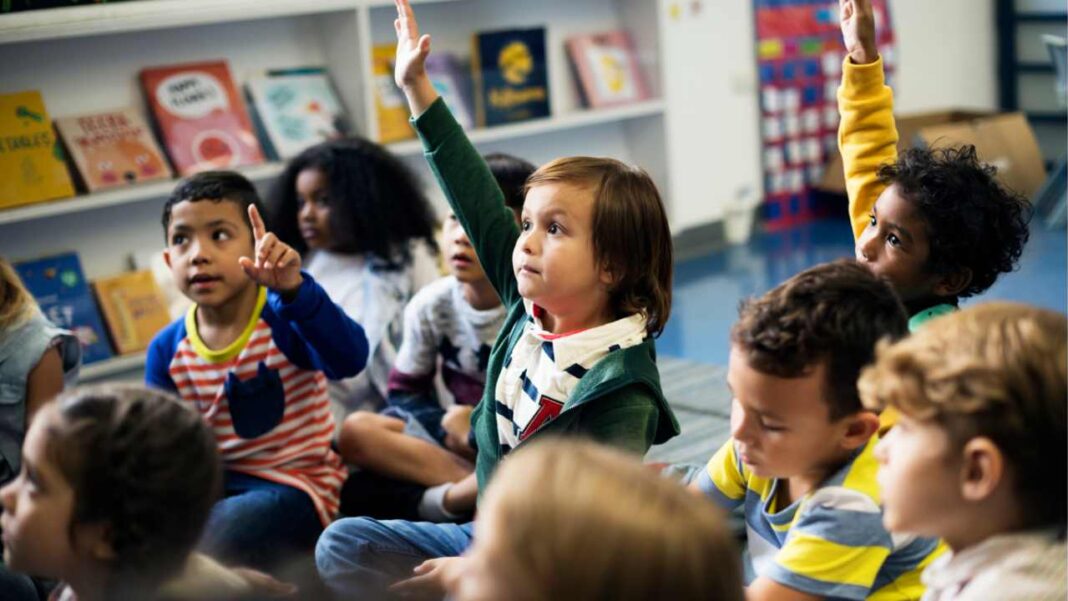

On most mornings in Panjgur, a dusty town in southern Balochistan, the school bell rings long before the day’s labour begins. For years, 13-year-old Suleman listened to its chime from a distance, its sound floating across fields and unfinished roads, while he prepared for work instead of class. Books, uniforms and transport were expenses his family simply could not afford. “We had to choose between eating and educating,” his father explained. “And we chose survival.”
Today, Suleman excitedly walks through the school gate. His return to the classroom was made possible through the Benazir Taleemi Wazaif programme, a conditional cash transfer scheme of Benazir Income Support Programme (BISP) supported by Education Above All Foundation (EAA) in partnership with Asian Development Bank (ADB). The stipend, modest but regular, is tied to attendance. For families living on the edge of poverty, it has proved decisive.
Suleman is now enrolled in Class five at a government primary school in Panjgur. His attendance is consistent, his teachers say he participates actively and his aspirations are clear, he wants to become a doctor. “For him, school is no longer an interruption to life or an option he cannot choose” said one of his teachers. “It is where life begins to open up.”
Balochistan has one of the highest numbers of out of school children (OOSC) in Pakistan. Geographic disparities, poverty, climate change, and deeply entrenched gender norms combine to keep children out of education, particularly in rural areas. Provincial authorities have repeatedly acknowledged that a lack of reliable data and household-level economic pressure continue to drive dropout rates.
EAA Foundation’s work in the province focuses on a simple yet often overlooked reality: while families may value education, but they cannot always afford it. By supporting stipends that offset direct and indirect schooling costs, the Foundation aims not only to enrol children, but to ensure, they stay enrolled.
“Conventional education systems often assume that once a child enters school, the job is done,” said Derek Langford, Senior Engagement Specialist at Education Above All Foundation. “What we see on the ground is different. The real challenge is continuity. A modest, yet predictable stipend can be the difference between a child staying in class or being pulled out to work.”
In Panjgur alone, more than 7,100 families receive support through the Benazir Kafaalat programme, with over 10,900 children benefiting from education stipends across hundreds of partner schools.
A longer road for girls
If Suleman’s story is one of economic barriers, 14-year-old Bibi Hameeda’s journey from Kharan reflects another, more deeply rooted challenge: permission.
In her village, girls’ education has long been met with suspicion. “Girls don’t need school,” many elders claimed. “What will books teach them about life?” So Hameeda spent her days helping at home, her world defined by chores and tradition.
Her father, never attended school himself, and wanted something different for his daughter. But that was not enough. “Convincing the community elders was harder than crossing the desert,” he said. “Affording books was one thing. Getting permission was another.”
The introduction of the Taleemi Wazaif stipend changed the conversation. The financial support, tied to attendance, gave the family both leverage and reassurance. With the help of a local community mobiliser, permission was granted. Hameeda enrolled late, joining class five older than many of her classmates.
Now, she walks to school each day in a blue uniform, her confidence growing steadily. Her favourite time, she says, is recess. “We play tag and football. I laugh so much my cheeks hurt,” she said. She dreams of becoming a veterinarian. “Animals can’t speak like us. I want to be their voice.”
Her teacher recalls how shy she was at first. “There was a class project where she barely spoke,” she said. “After weeks of practice, she stood up and presented clearly. The whole class clapped. You could see her transform in that moment.”
In Kharan, more than 15,900 children are currently benefiting from education stipends linked to the programme, across over 500 schools. Community workers report that Hameeda’s enrolment has had a ripple effect, with other families beginning to ask how their daughters might also attend school.
These shifts are incremental and fragile. Teachers point out that families still rely heavily on child labour, and economic shocks can quickly undo progress. But there is a growing sense that access to quality education, once viewed as unattainable or unnecessary, is possible and valuable.
“This isn’t about charity,” Langford said. “It’s about recognising the real costs families face and responding in a way that respects their dignity. When parents see that education doesn’t mean hunger, attitudes start to change.”
Listening for the bell
For Suleman, the school bell is no longer a reminder of what he cannot have. It marks the start of the day. He talks about science lessons, playing with friends, and feeling safe inside the classroom walls. At home, he helps his younger siblings with reading.
For Hameeda, school has expanded her world beyond the boundaries of her village. Her father says she asks more questions now, laughs more and speaks more. “It’s a big transformation,” he said.
Across rural Balochistan, thousands of similar stories remain unfinished, teetering between progress and precarity. Yet in classrooms where children are returning, staying, and beginning to imagine futures once closed to them, the sound of the bell is being answered – one at a time.