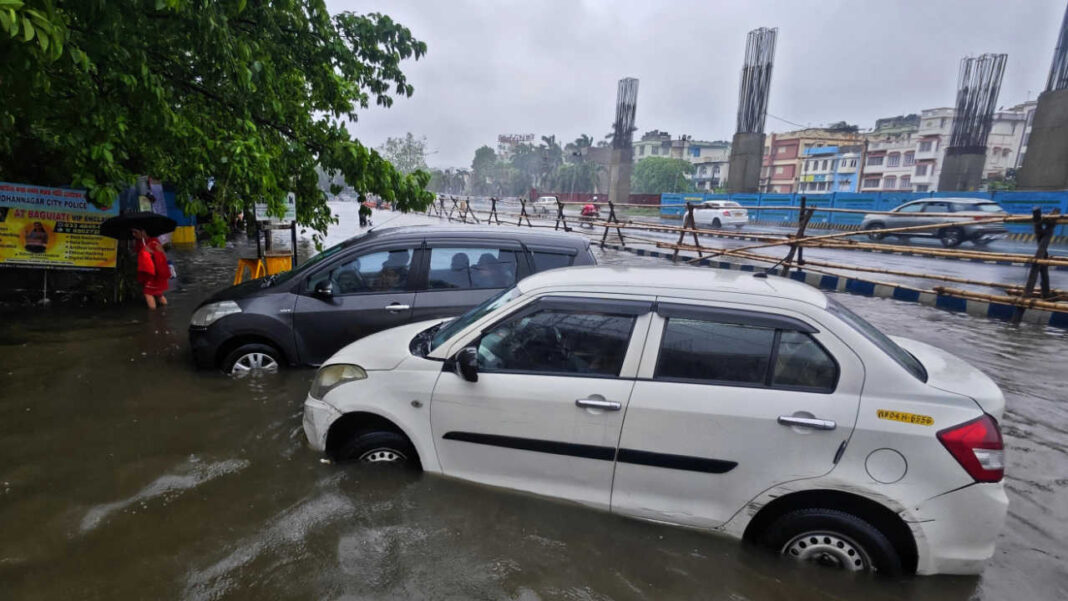

Heavy rains in Kenya have caused severe flooding, leading to the deaths of four more people, according to police. This brings the total number of deaths over the past week to at least 66. The capital city, Nairobi, also experienced more heavy rain overnight, although no new deaths were reported there.
Rescue teams from the Kenya Red Cross saved 11 people after a minibus taxi, locally known as a matatu, became trapped in rising floodwater in Nairobi. Two children were also rescued from a house that had filled with water. The heavy rainfall during the past week has caused rivers to overflow, leading to flash floods that have damaged homes, roads, power lines, and water systems. Heavy rain on Saturday damaged bridges, leading to the closure of several roads in Nairobi and the flooding of some schools.
The country’s interior ministry warned that more rain could fall in different parts of Kenya, increasing the danger of further flooding. Officials have asked people living in low-lying areas to move to safer places. More than 2,000 residents have already left their homes and moved to temporary shelters.
Police said search and rescue teams are still working in many affected areas after what they described as “torrential rain” and destructive flooding. About half of the people who died, 33, were in Nairobi. Experts say poor drainage systems and construction that blocks rivers and waterways have made flooding worse in the city.
A resident of the Parklands area in Nairobi, businessman Kareem Hassan Ali, said floodwater outside his apartment building rose to about two meters on Saturday night before going down later. Although water did not flood his apartment, it completely covered the cars parked in the underground parking area.
Another Parklands resident, auditor Deenesh Patel, said he decided to stay at a friend’s house after hearing warnings about the heavy rain. Both residents said the government should improve drainage systems and stop building on natural waterways.
President William Ruto said authorities are working to clear blocked drainage systems and are providing food and medical support to people affected by the floods. However, some residents say they have not yet seen government workers in their neighbourhoods. The flooding has also affected neighbouring Ethiopia, where more than 100 people have died due to floods and landslides in the southern part of the country.
Several factors, including rising global temperatures linked to climate change, can cause flooding, but they are also increasing the chances of extreme rainfall, according to scientists. The planet has already warmed by about 1.1°C since the industrial era, and temperatures could continue rising if countries do not significantly reduce greenhouse gas emissions.