

The escalating conflict in Iran, involving US and Israeli strikes on Iranian facilities, has triggered the largest oil market disruption that is so far on record. It has witnessed crude prices surging. Furthermore, raising fears of fresh concerns about global inflation. Yet, according to economists at Goldman Sachs, this energy shock is unlikely to spiral into a broad-based supply chain crisis reminiscent of the COVID-19 pandemic or the 2022 Russia-Ukraine war fallout.
Crude oil futures have climbed more than 70% year-to-date, with Brent crude prices jumping sharply following disruptions in the Strait of Hormuz—the critical chokepoint through which roughly one-fifth of global oil and LNG supplies normally flow. Vessel tracking data shows Persian Gulf exports plummeting to just 3% of normal levels recently. This incident is a shock that dwarfs historical events like the 1973 OPEC embargo or the 1990 Gulf War in its immediate intensity. The International Energy Agency (IEA) has described it as the biggest oil supply disruption ever recorded. It is affecting around 7.5% of global supply initially.
Goldman Sachs’ commodity research team, led by Daan Struyven, co-head of Global Commodities Research, asserted that the disruption stems not from a complete closure of the Strait but from a “wait-and-see” approach by shippers amid damaged vessels. This skyrocketed insurance premiums and heightened geopolitical risks. The firm has embedded a significant risk premium into oil prices—estimated at around $14 per barrel shortly after the strikes, equivalent to the impact of a full four-week halt in Hormuz flows (partially offset by spare pipeline capacity). In more severe scenarios, prices could test USD150 per barrel if disruptions persist.
The bank has increased its oil price forecasts accordingly. They highlight that refined products like jet fuel, diesel, and fuel oil are bearing the brunt of the shock. “Prices have rallied much more, weighted toward many refined products than crude,” analysts Yulia Zhestkova Grigsby and Struyven observed in a recent note. This imbalance reflects bottlenecks in refining capacity and the specific quality of disrupted medium-heavy crudes from the region, which are key feedstocks for those fuels.
Despite the energy turmoil, Goldman Sachs economists argue the ripple effects will remain largely contained to the oil-and-gas sector. In a client note, they contrasted the current situation with the 2022 energy price spike, which was just one element of a much larger global supply chain breakdown and inflation surge driven by pandemic lockdowns, labour shortages, and logistical snarls. “Today’s shock is more narrowly focused in the energy sector,” the economists shared. Global supply chains outside energy appear resilient, with no signs of the widespread port congestion, container shortages, or factory shutdowns seen recently.
Economically, the bank projects a modest drag: higher oil prices could shave about 0.3 percentage points off global GDP growth while lifting headline inflation by 0.5 to 0.6 percentage points over the next year. A smaller 0.1 to 0.2 point increase in core inflation is forecast. Goldman has trimmed its global growth forecast to 2.6% from 2.9% pre-conflict and now sees headline inflation at 2.9% on a fourth-quarter basis. Central banks, still scarred by post-pandemic inflation, are expected to remain vigilant, potentially delaying rate cuts—the Fed’s first easing is now eyed for September rather than earlier.
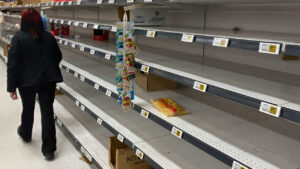
This containment impact stems from several factors. Unlike COVID-era disruptions, which hit manufacturing, semiconductors, and consumer goods simultaneously, Iran’s conflicts’ effects tend to be energy-centric. Global inventories provide some buffer; alternative shipping routes (though costlier) exist. Many economies have reduced oil dependence through efficiency gains and diversification, which has helped mitigate the impact of energy-centric conflicts like those in Iran on their economic stability. Stock markets have reflected volatility. The downside risks to the S&P 500 could increase if crude oil prices spike further. However, Goldman sees the broader economy weathering the storm better than in past shocks, suggesting that factors such as strong consumer spending and robust corporate earnings may help mitigate the impact of market volatility. The bank has adjusted investment recommendations. It is turning defensive, favouring healthcare and materials. The result is by pulling back on consumer and construction-exposed stocks.
Of course, risks remain. Prolonged closure of Hormuz could amplify effects. The impact may be on aviation, trucking, and petrochemicals. This indirectly pressurises certain supply chains, like automobiles or agriculture, with higher transport costs. Geopolitical escalation may also lead to further strikes and retaliatory actions. An involvement of other Gulf states may change the calculus quickly, potentially leading to increased instability in global markets and further impacting supply chains in sectors like automobiles and agriculture. Goldman CEO David Solomon has expressed surprise at the relatively muted initial market reaction. Solomon suggests investors might have underestimated longer-term costs.
History offers perspective. Geopolitical oil spikes, from the 1970s to the early 2020s, have often proven to be temporary. This is due to markets adjusting through higher production elsewhere, globally. Additionally, demand destruction and diplomatic resolutions also play a role. U.S. shale and OPEC+ spare capacity (though somewhat strained), besides strategic reserves, may help in mitigating some pain.
In summary, the war in Iran results in a significant oil shock. This situation comes with an inflationary impact and poses challenges to economic growth. Goldman Sachs views it as a targeted energy disruption rather than a systemic threat to global commerce. Policymakers and businesses may need to monitor refined product markets closely and prepare for volatility. However, doomsday scenarios of cascading supply failures appear off the table, at least in the near future, as current assessments suggest that supply chains remain resilient despite potential disruptions. So, the coming weeks may be crucial, as they will test whether this assessment holds true as the conflict evolves.