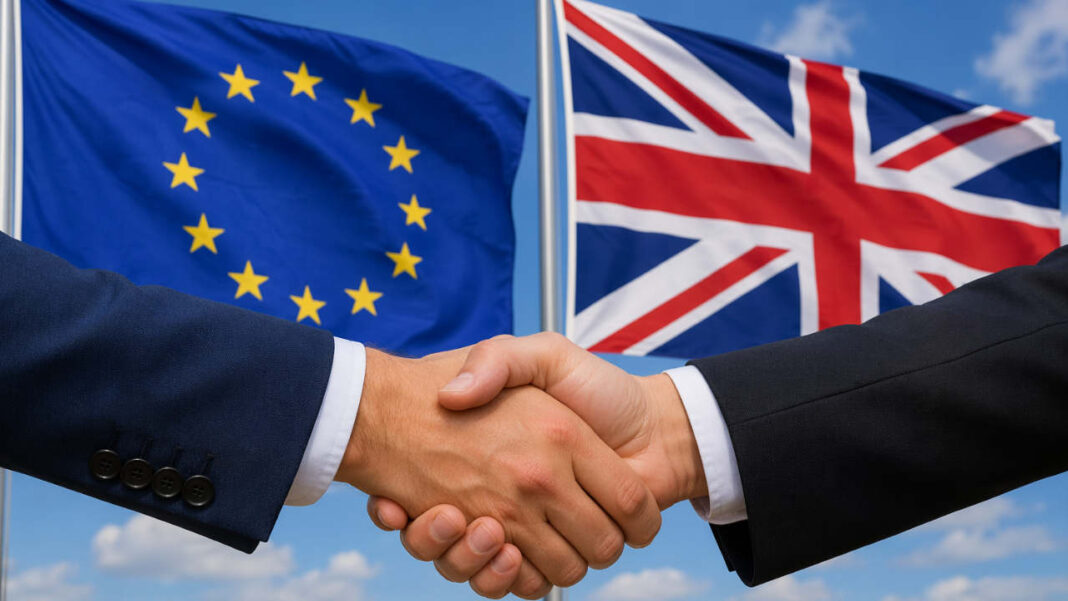

On Monday, 30 March ’26, the council formally authorised the commission to open negotiations with the United Kingdom on two agreements concerning the UK’s participation in the EU’s internal electricity market and the UK’s relevant financial contribution to the EU’s cohesion policy. The Council unanimously agreed to allow the UK to continue participating in the EU’s Erasmus+ programme until ’27.
The deputy minister for European affairs of the Republic of Cyprus, Marilena Raouna, was of the view that strengthening the relationship between the Union & the UK is a key priority of the Cyprus Presidency. The decision on 30 March marks tangible progress in achieving the objectives of the 1st EU-UK summit last May ’25, where a new chapter was opened in the partnership. By promoting learning mobility through Erasmus+ (a program that supports education, training, youth, and sport in Europe), they are promoting common interests and strengthening people-to-people partnerships, especially among young people. Simultaneously, by deepening cooperation on electricity, they are increasing energy security, besides creating new opportunities for businesses. Such decisions are undoubtedly an important step towards creating a strong, mutually beneficial & forward-looking EU-UK partnership.

The aim of the electricity agreement is to enable the UK to participate in the EU’s internal electricity market by harmonising with the relevant regulations. This may significantly contribute to the energy security of both sides. This is especially true in the current geopolitically unstable scenario.
The agreement on the UK’s financial contribution to reducing disparities between EU regions by strengthening the EU’s economic, social & territorial cohesion as part of a consistent EU policy linking enabling market access to a third country to a fair financial contribution that reflects the benefits of such access.
Energy contract
The energy agreement may permit the UK to participate in the EU’s internal electricity market for both wholesale & retail. It may provide a dynamic alignment of UK legislation with EU rules to create a level playing field.