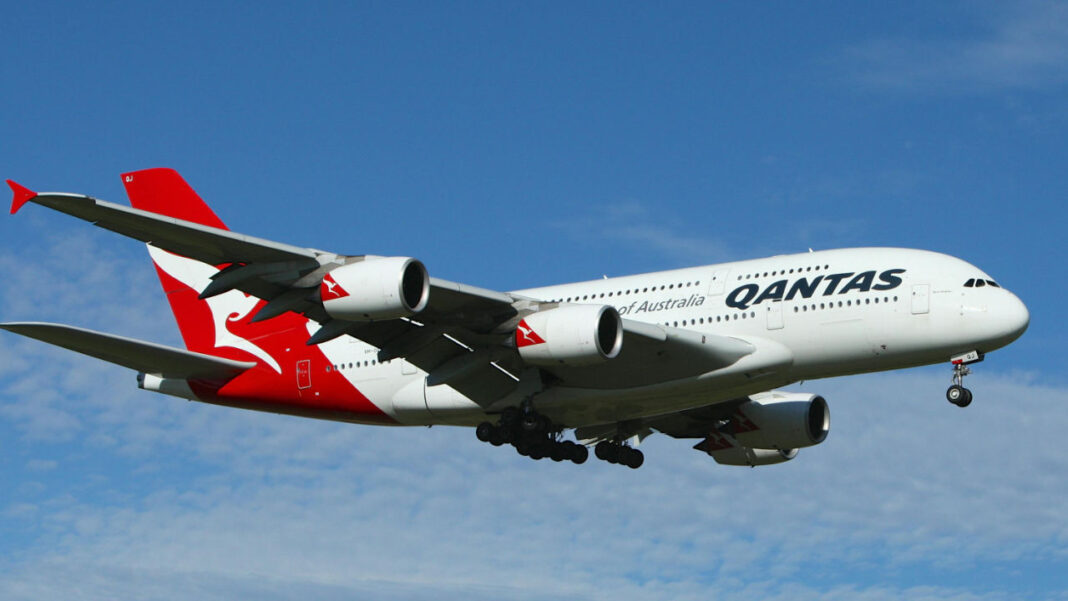

A major change has begun to take place in one of the busiest flight paths in the Southern Hemisphere with Sydney’s airspace transition to a whole new type of airspace design – not just flight paths, but redesigning an entire metropolitan aerial traffic system. The new airspace design will begin on July 9, 2026, as part of a major reconfiguration of how aircraft operate in the skies above Australia’s largest city, marking a tremendous milestone in modern aviation planning.
Central to this major overhaul is the long-awaited opening of Western Sydney International Airport (Nancy-Bird Walton), a major infrastructure project to relieve the pressure on the current Sydney Kingsford Smith Airport (SKSA) and offload all of the traffic to the new airport. To incorporate both airports into the local metropolitan airspace, a complete redesign of the current air traffic control system will be undertaken to create new ‘in-visible’, or new highways, in the sky.
This is more than just an expansion of an existing air traffic control structure; it is fundamentally transforming how all planes fly in and out of Sydney using new flight paths created by using 3 years’ worth of development and input from over 8,400 members of the public. The redesign of air traffic control and use of airspace will allow better use of existing resources while at the same time considering 3 competing interests: safety, efficiency, and community impact.
What makes this airspace redesign crucial is size and significance within Sydney. An aviation expert states that the project is one of the largest airspace redesigns in the history of Sydney and will change how planes arrive and depart from Sydney Airport and from Bankstown Airport by taking into account a new network that will serve both airports optimally. Therefore, many planes will no longer fly along previous flight paths for many years but will instead use new routes specifically designed for dual airport operations.
Yet despite their advanced technical sophistication, there is still an important human issue, which is noise. To try to address this, planner(s) have developed and implemented a novel, yet controversial, method called Reciprocal Runway Operations (RRO). This process will operate during the period of time from 11:00 PM to 5:30 AM by creating a reciprocal operation allowing for both take-off and landing to occur in the same direction, creating reduced noise levels over areas with high population density such as the Western Sydney area and pockets of the Blue Mountains section of the Greater Sydney. Although changing only the manner in which aircraft take off and land may appear to be a minor adjustment, the resulting reconfiguration of the distribution of noise across communities is quite significant in that what used to be concentrated in traditional flight corridors has now been completely redistributed across the various neighbourhoods at the airports.
In addition, there is also a comprehensive noise monitoring system now being put into place. There is a network of 9 permanent monitoring stations located throughout the area, along with a series of portable/ rotating stations deployed on a 5-year cycle. Furthermore, residents will have access to live flight tracking and noise data, giving them increased transparency and making a transition towards an accountability-based data method of aviation governance.
The most futuristic aspect of the reconstruction will be on the ground, and all of the above will be managed virtually. The new airport will utilise a digital aerodrome service with remote controllers using high-definition cameras to provide live video feeds, which will serve as a “virtual control tower.” This is a major step forward in next-generation air traffic control & management by combining automated systems and air traffic control (ATC) personnel, who will increase flight operations accuracy.
As the original question remains, can a complex system of airport reconstruction achieve both growth and liveability?
Local government officials report that the site of the new airport is designed utilising an unparalleled level of community involvement and technical precision. However, in the past, airspace changes have led to protracted public debate and discussion, especially when residents feel they are experiencing noise unfairness and inequities in the amount of noise distributed among residents in the affected areas. The formation of an independent airspace advisory board indicates that the authorities are anticipating continued public scrutiny in the long term and will have a need to make adjustments.
The improvements that have been made to the transportation network of Sydney will be more than just infrastructure upgrades; they will also provide a unique opportunity for research on how future cities can balance competing demands for transportation, sustainability, and quality of life.
When the first commercial cargo flights begin operating in July, followed by commercial passenger service in October, the airspace above Sydney will become an experimental laboratory for urban engineers to test their ambitions against the reality of day-to-day human activity (e.g., how congestion and lack of infrastructure limit mobility and how access to good, sustainable transportation affects overall quality of life in a city). Every time a plane takes off or lands over Sydney, the city will be learning how to share its airspace efficiently with other forms of transportation.